Plants / Selection
Terrarium plants
Browse plants for humid terrariums, open succulent displays, and air-plant arrangements. Use their growing conditions to build a shortlist you can actually maintain.
By Terrarium GuideSources & editorial method
The short answer
Choose terrarium plants by the light, root moisture, growing space, and access your display provides. Compare the planting method and growth you can manage: a moist rooted bed, an individually watered pot, a drying succulent root zone, or an open air-plant support. Inclusion in the list below is not a recommendation for every container.
Browse plants · Compare display conditions · Choosing for lower light
Browse the plant list
Need to narrow the list? Choose the comparison for your next decision. For a dry display, check drainage first. Each card below includes its main care or space caution.
Link to these filters — copy this link to return to the same selection.
45 plants
Delta Maidenhair
Adiantum raddianum
Fern
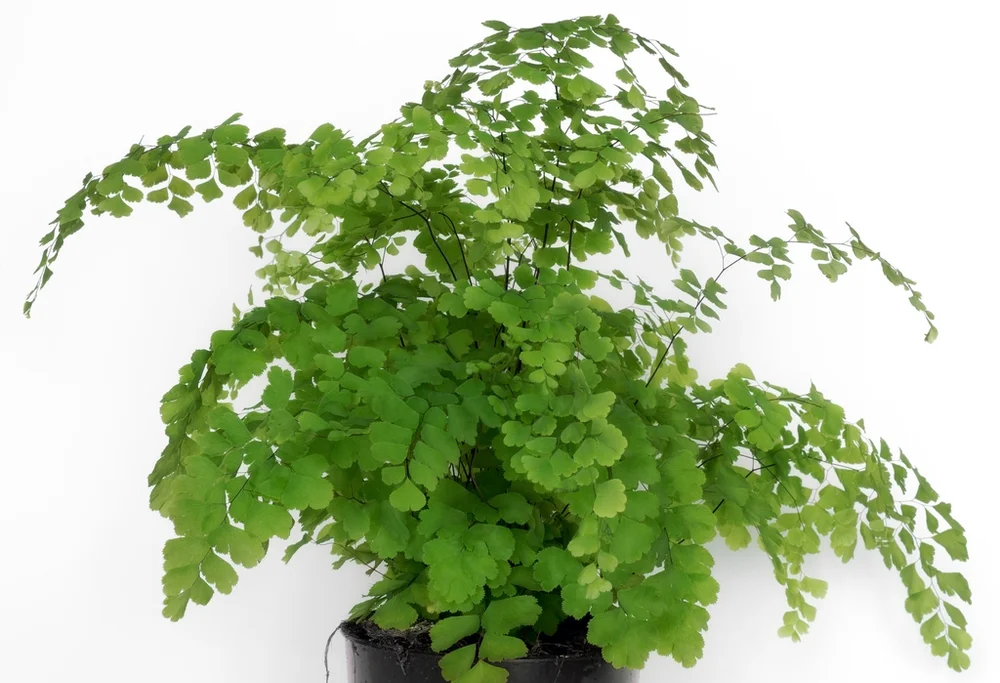
Adiantum raddianum Image: André Karwath · CC BY-SA 2.5 Fine leaflets still make spreading fronds. Protect roots from drying and compare the whole canopy with the actual opening and growing room.
Compare true-fern growth and root care →Evidence[16]
- Light
- Partial shade
- Moisture around the roots
- Moist to wet
Aloe succotrina
Aloe succotrina
Succulent
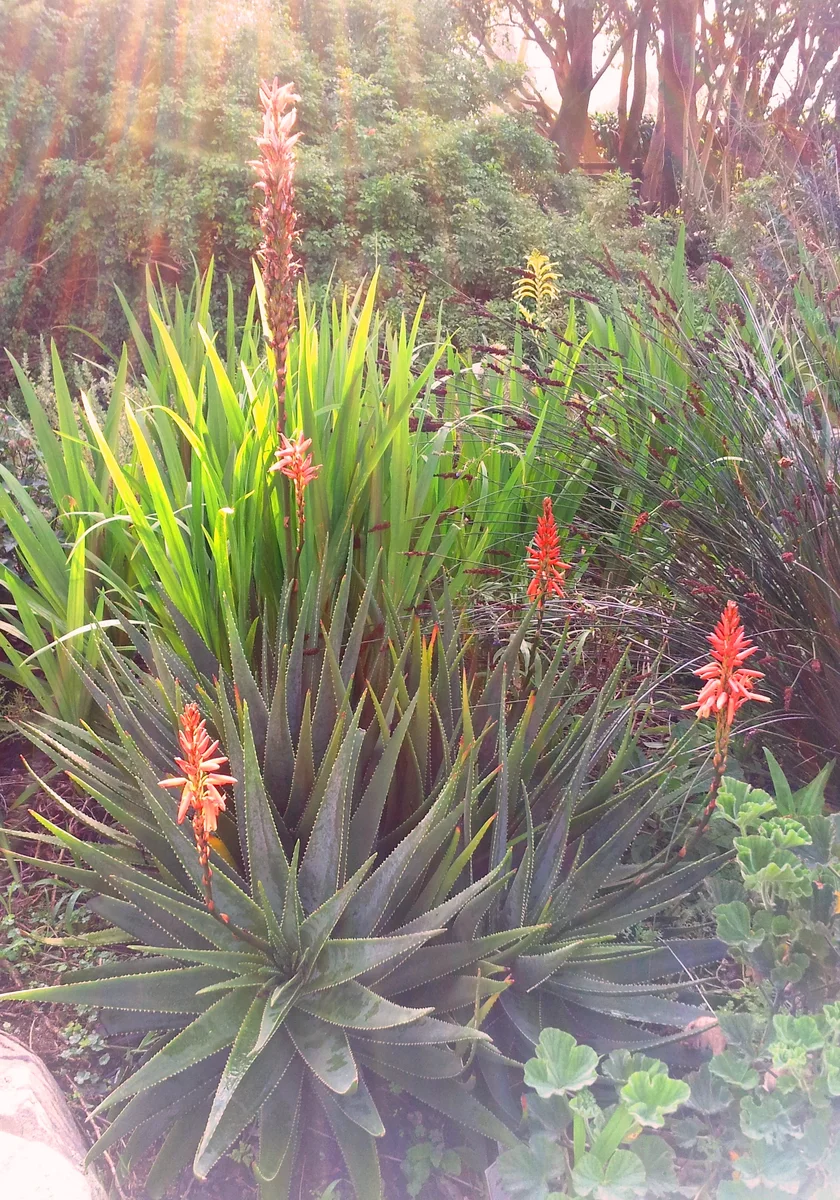
Aloe succotrina Image: Abu Shawka · CC0 1.0 The care shown is outdoor winter-rainfall and container guidance. It is not a recommendation for a moist jar or evidence of compact indoor growth.
Evidence[73]
- Light
- Sunny location / Semi shade
- Planting method
- Rooted in substrate
- Moisture around the roots
- Watering: Protect from excessive summer rain; use freely draining sandy soil.
Outdoor winter-rainfall gardens and container culture; protect from frost and excess summer rain.
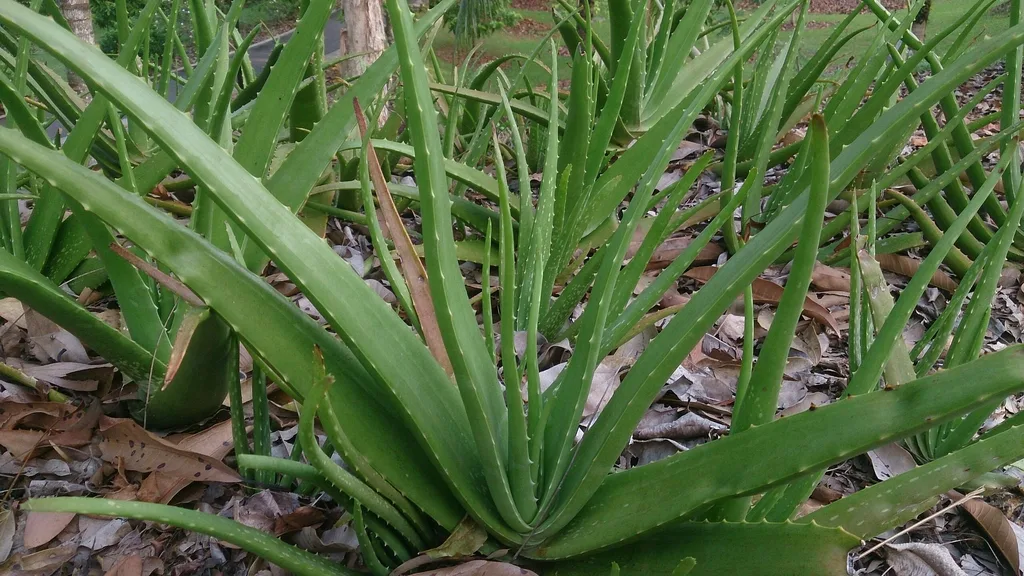
Aloe vera Image: Mokkie · CC BY-SA 3.0 For a bright, drying display with a real drainage outlet. A moist closed bed is a poor match; an open top and stones do not provide drainage holes.
Check succulent container drainage →Evidence[17]
- Light
- Partial shade / Full sun
- Moisture around the roots
- Dry thoroughly between waterings
- Planting method
- Rooted in substrate
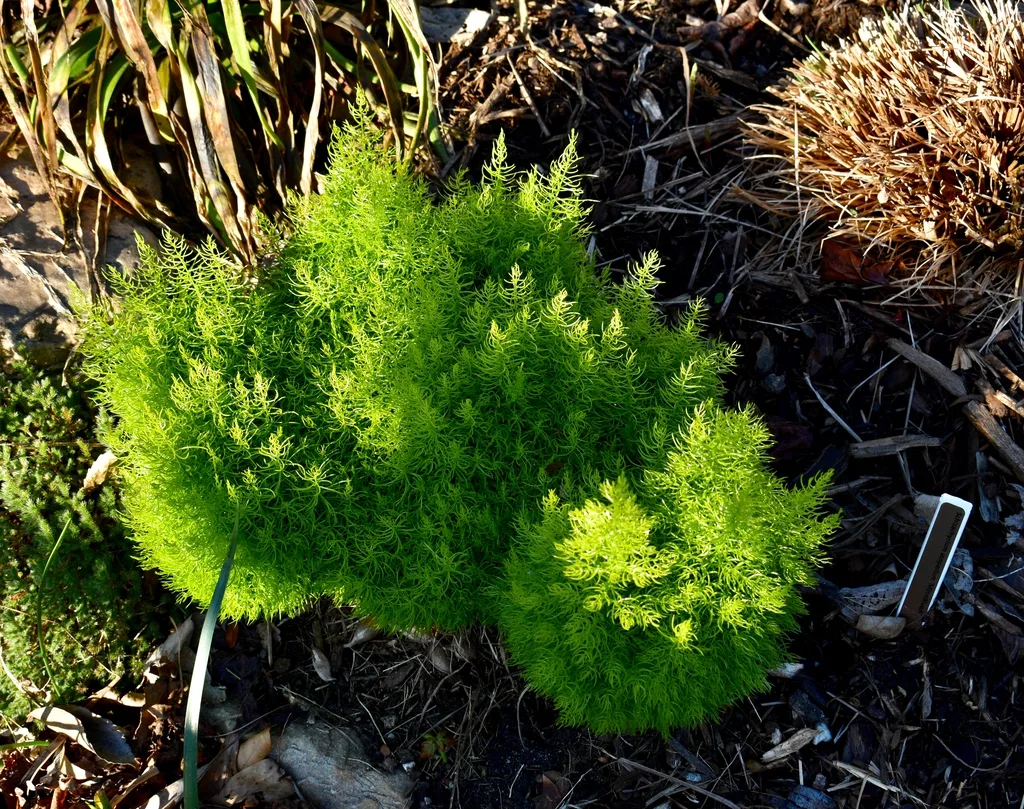
Form 'Graham Cracker' Image: Cathy Dewitt · CC BY 4.0 The pictured Sprengeri Group has broad arching growth. Plan for expansion and removal; these facts do not establish compactness for every asparagus fern.
Compare larger foliage choices →Evidence[18]
- Light
- dappled shade / deep shade
- Moisture around the roots
- regular moisture spring–autumn / reduced moisture in winter
- Planting method
- Rooted in substrate
Source conditions apply to Asparagus densiflorus Sprengeri Group.
Growing conditions and terrarium care →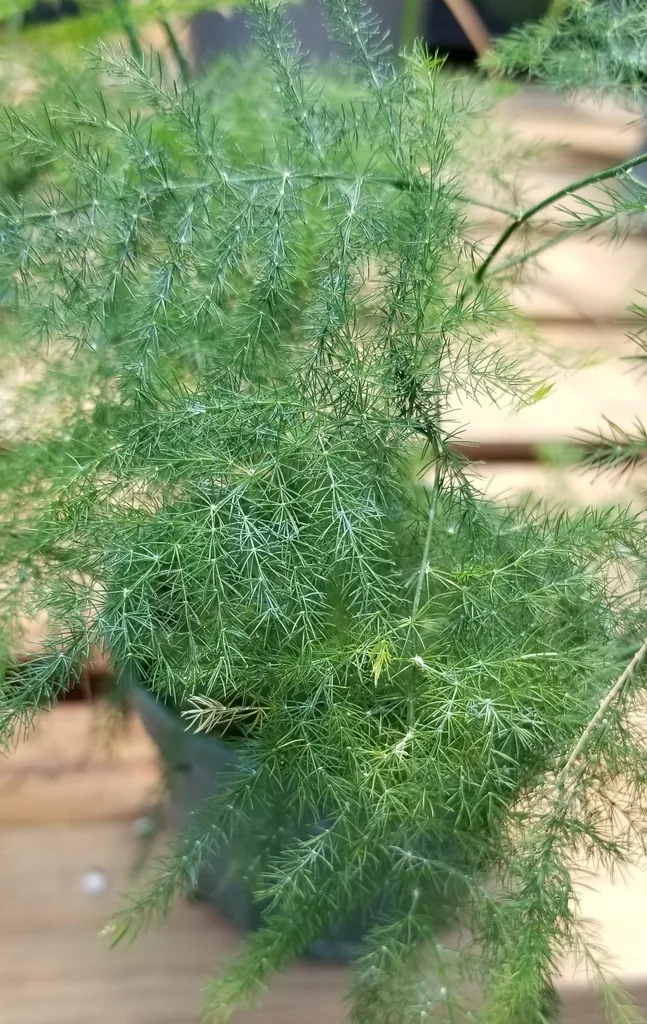
Asparagus setaceus Image: Cindy Christian · CC BY 4.0 A climbing asparagus, not a true fern. Its supported shoots and root space make it a demanding choice for a small or inaccessible bottle.
Check support and long-term space →Evidence[66]
- Light
- Bright indirect light
- Moisture around the roots
- Moist well drained
- Planting method
- Rooted in substrate
Bird's Nest Fern
Asplenium nidus
Fern
The tropical bird’s-nest fern discussed here forms a broad frond rosette. A small juvenile does not establish permanent fit in a narrow bottle.
Compare bird’s-nest fern space →Evidence[20]
- Light
- bright light or light shade
- Moisture around the roots
- moist, porous medium
Rough-stalked feather-moss
Brachythecium rutabulum
Moss
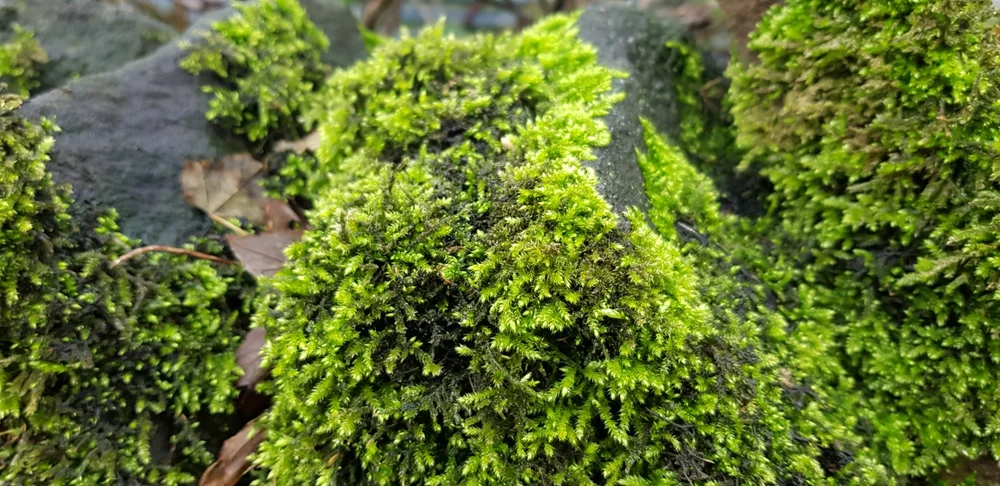
Brachythecium rutabulum Image: Helen Waterman · CC BY 4.0 A named spreading moss reference with varied habitats and appearance. A similar-looking sheet from a seller still needs its own identity and culture details.
Compare moss surfaces and planting →Evidence[70]
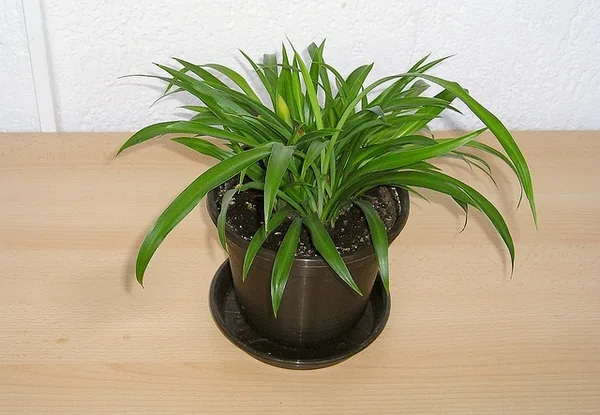
Chlorophytum comosum Image: Maja Dumat · CC BY 4.0 Arching leaves and plantlet stems need lateral and downward space. Consider a wider, accessible display rather than a small bottle.
Check space and individual pot care →Evidence[22]
- Light
- Medium light
- Moisture around the roots
- Moist
- Planting method
- Rooted in substrate
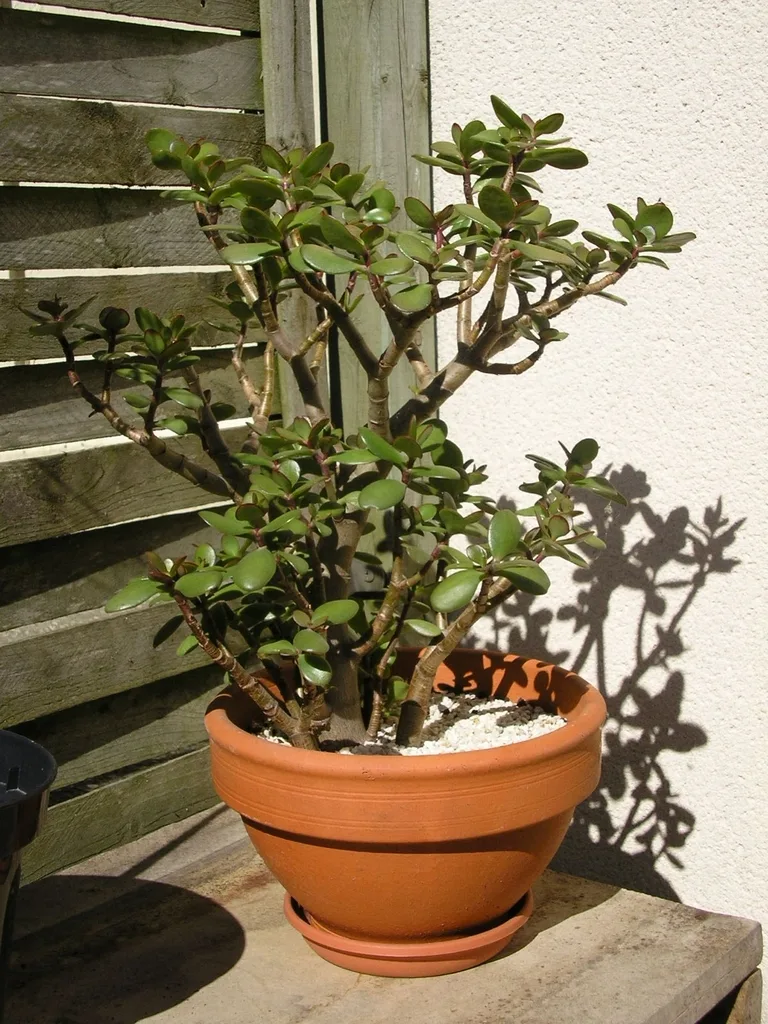
Crassula ovata Image: Cyril Gourdan · CC BY-SA 3.0 Jade needs bright light and drying between waterings. Its woody canopy needs growing room; keep it out of a persistently moist groundcover bed.
Check the drying succulent plan →Evidence[23]
- Light
- Bright light / Sunny indoor location
- Moisture around the roots
- Water after soil dries
- Planting method
- Rooted in substrate
Crassula sarmentosa
Crassula sarmentosa
Foliage · Succulent
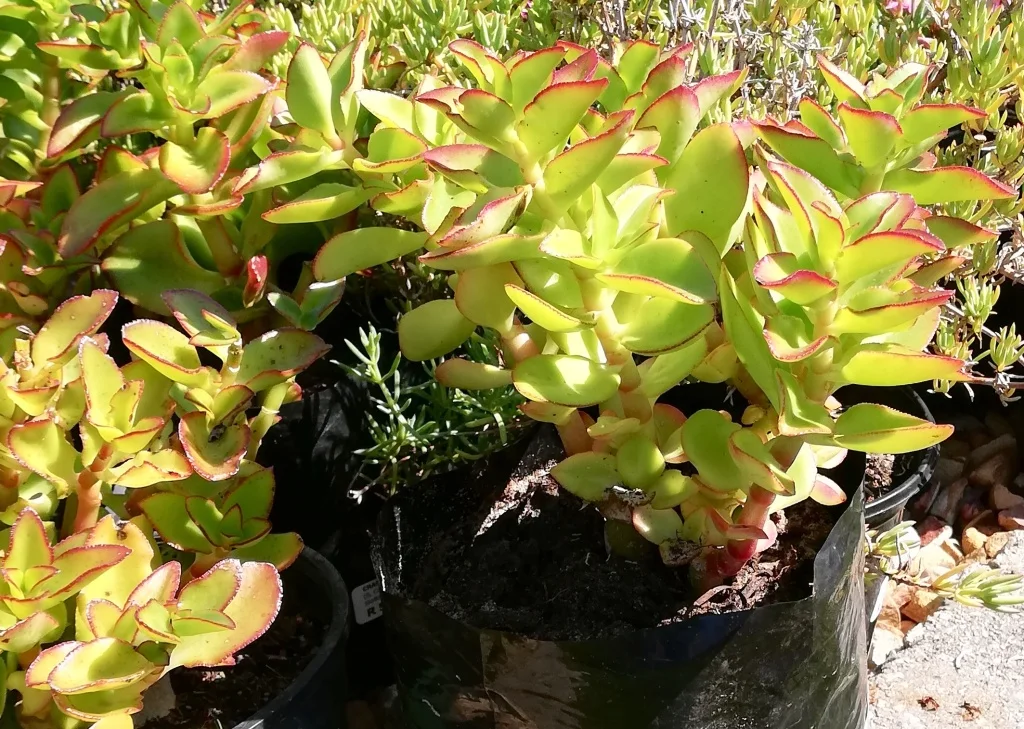
Crassula sarmentosa Image: S Molteno · CC BY-SA 4.0 Read the variety-specific context before choosing. A drying watering routine should not be combined with the continuously moist routine of humid groundcovers.
Evidence[74]
- Light
- full sun / semi-shade / indirect sunlight
- Moisture around the roots
- Watering: Water infrequently and let the growing medium dry between applications.
- Planting method
- Rooted in substrate
Source conditions apply to Crassula sarmentosa var. sarmentosa.
Dainty Rabbits-Foot Fern
Davallia fejeensis
Fern
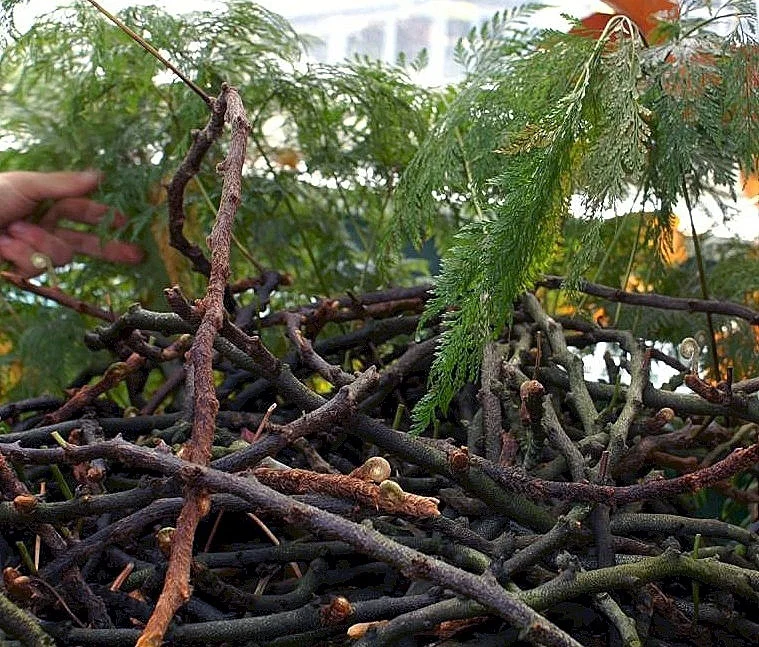
Davallia fejeensis Image: David J. Stang · CC BY-SA 4.0 Keep the fuzzy creeping rhizome above the medium and leave space beside the pot. Its moist-root routine includes some surface drying.
Compare exposed-rhizome fern care →Evidence[24]
- Light
- Indirect light
- Moisture around the roots
- moist with the top half inch drying between watering
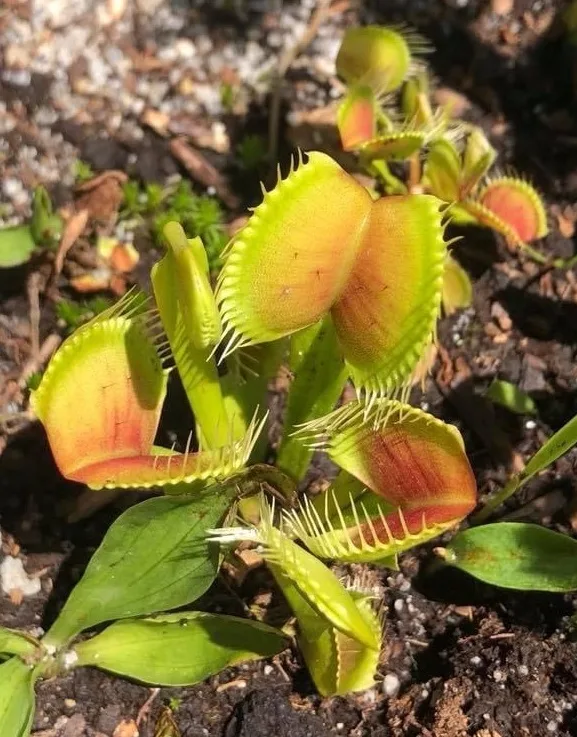
Dionaea muscipula Image: Cathy Dewitt · CC BY 4.0 A specialist choice: strong light, low-mineral water, and an appropriate unfertilized growing medium matter more than a humid jar. Plan its growing season and indoor lighting separately.
Choose a flytrap growing routine →- Light
- Full sun / Partial shade
- Moisture around the roots
- Wet / Frequent standing water
- Planting method
- Rooted in substrate
Lance-leaf Sundew
Drosera adelae
Carnivorous
A humid specialist whose roots can send plantlets into neighboring pots. Keep feeding, root moisture and spread under separate management.
Follow the complete lance-leaved sundew routine →Evidence[12]
- Moisture around the roots
- consistently moist
Cape sundew
Drosera capensis
Carnivorous
A bright moist-root sundew. The under-glass routine protects it from hot sun; do not transfer that routine to every sundew.
Compare sundew and other carnivore routines →Evidence[67]
- Light
- full light protected from hot sun under glass
- Moisture around the roots
- continually moist
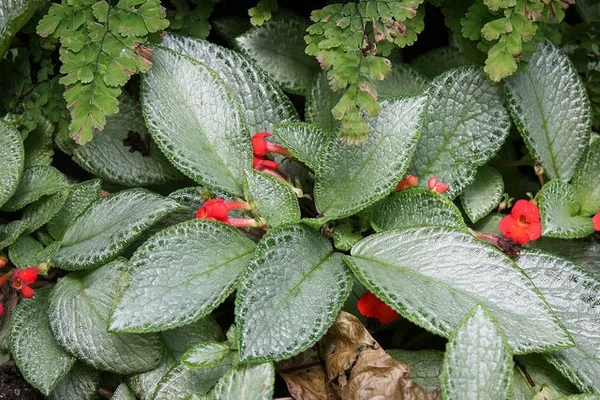
Episcia cupreata 'Silver Sheen' Image: Maja Dumat · CC BY 2.0 Spreading runners need reachable growing room. Keep leaves dry when watering and avoid stagnant air; a warm, humid display still needs circulation.
Check runner growth and airflow →Evidence[26]
- Light
- Bright indirect light
- Moisture around the roots
- Moist in summer
- Planting method
- Rooted in substrate
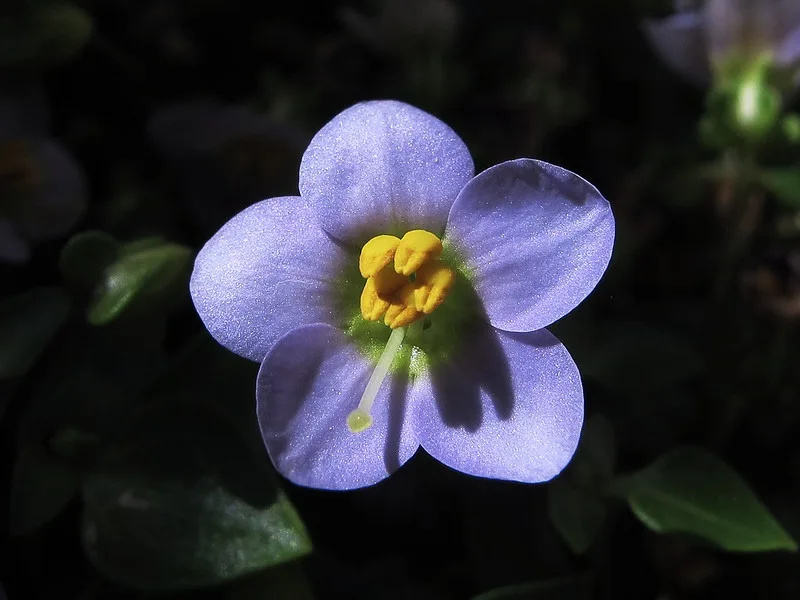
Exacum affine Image: Jacinta Lluch Valero · CC BY-SA 2.0 Choose it as a seasonal flowering accent only if replacement is acceptable. The flower close-up cannot show the canopy or rootball space you must check.
Check seasonal care and replacement →Evidence[27]
- Light
- Partial shade
- Moisture around the roots
- Moist
- Planting method
- Rooted in substrate
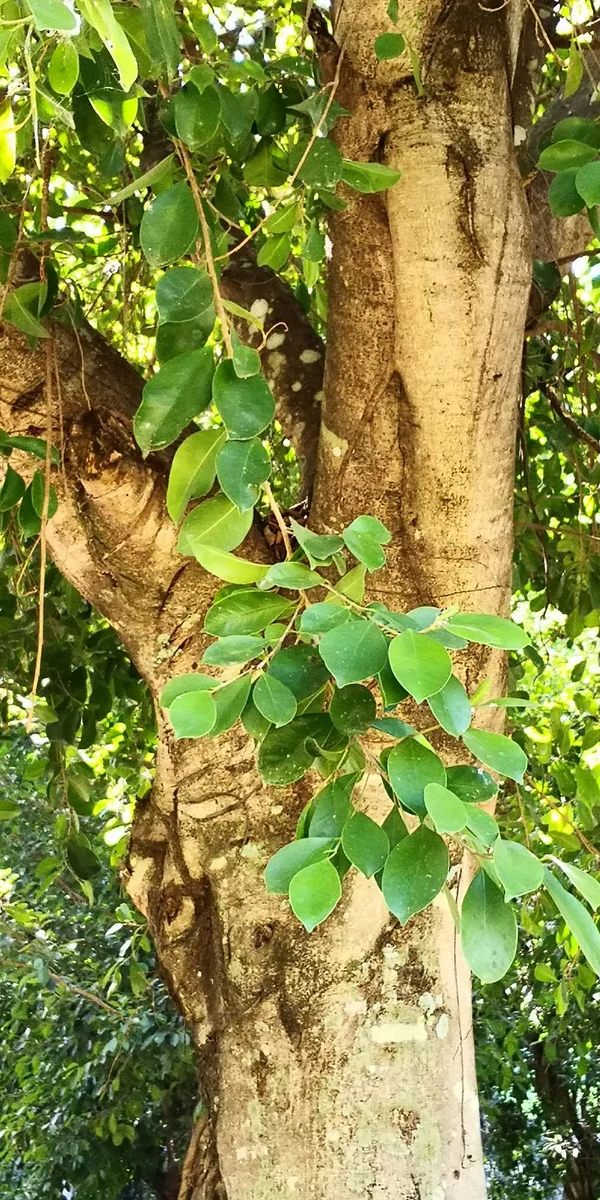
Ficus microcarpa Image: Alialb · CC BY-SA 4.0 A tree-form plant: a small starter can outgrow a glass display. For a small bottle, choose a compact foliage plant instead of relying on constant size control.
Check tree-form space and removal →Evidence[47]
- Light
- Semi shade / Full sun
- Moisture around the roots
- Moist well drained
- Planting method
- Rooted in substrate
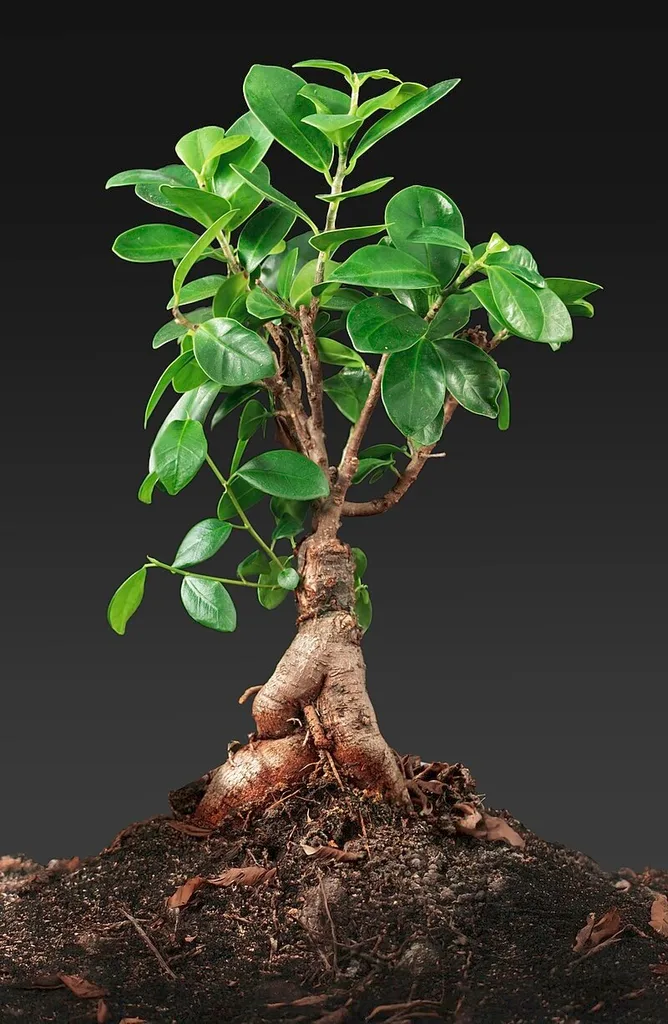
Ficus microcarpa 'Ginseng' - Bonsai Form in July Image: Didier Descouens · CC BY-SA 4.0 A trained horticultural form, not a promise of permanent dwarf size. Check the actual canopy, root base, pruning access, and a route to remove the whole plant.
Check the Ginseng form and tool access →Evidence[28]
- Light
- Sunny location / Full sun
- Moisture around the roots
- Moist well drained / Consistent moisture
- Planting method
- Rooted in substrate
Ficus punctata
Ficus punctata
Climber · Woody
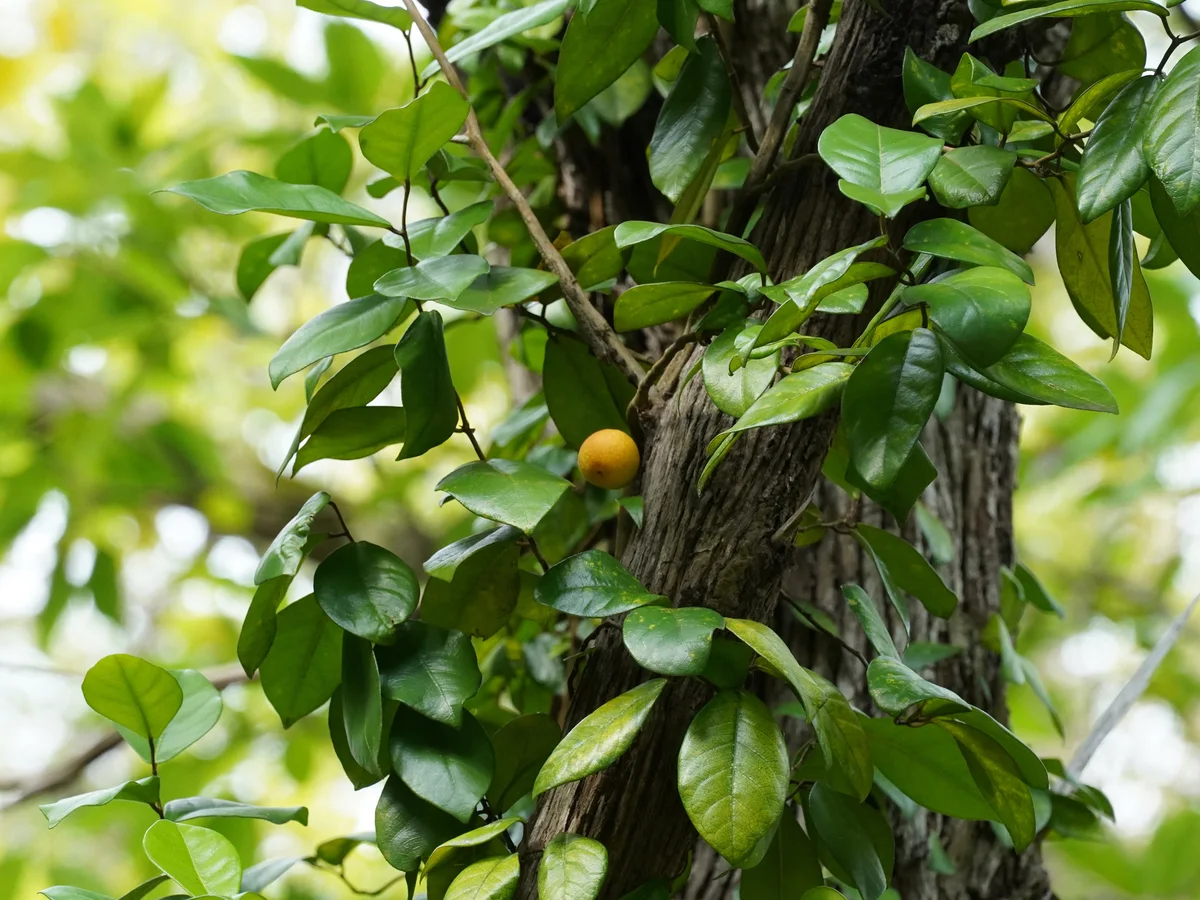
Ficus punctata Image: Cheongweei Gan · CC BY 4.0 Ficus thonningii
Ficus thonningii
Woody
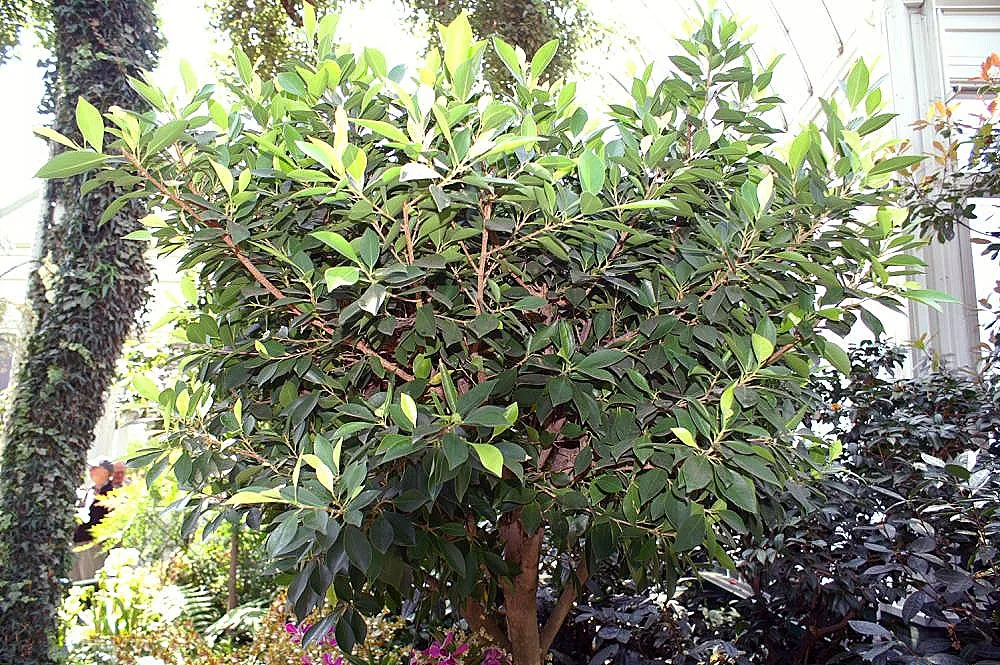
Ficus thonningii Image: David J. Stang · CC BY-SA 4.0 This record describes an outdoor tree. Do not select a small indoor bottle from its light and drought-tolerance tags; they are not bonsai or terrarium care instructions.
Evidence[13]
- Planting method
- Rooted in substrate
- Light
- clear skies / very bright
- Moisture around the roots
- Watering: Use freely draining ground; established outdoor trees tolerate drought.
Outdoor tree ecology. Outdoor tree and agroforestry conditions; not indoor bonsai measurements.
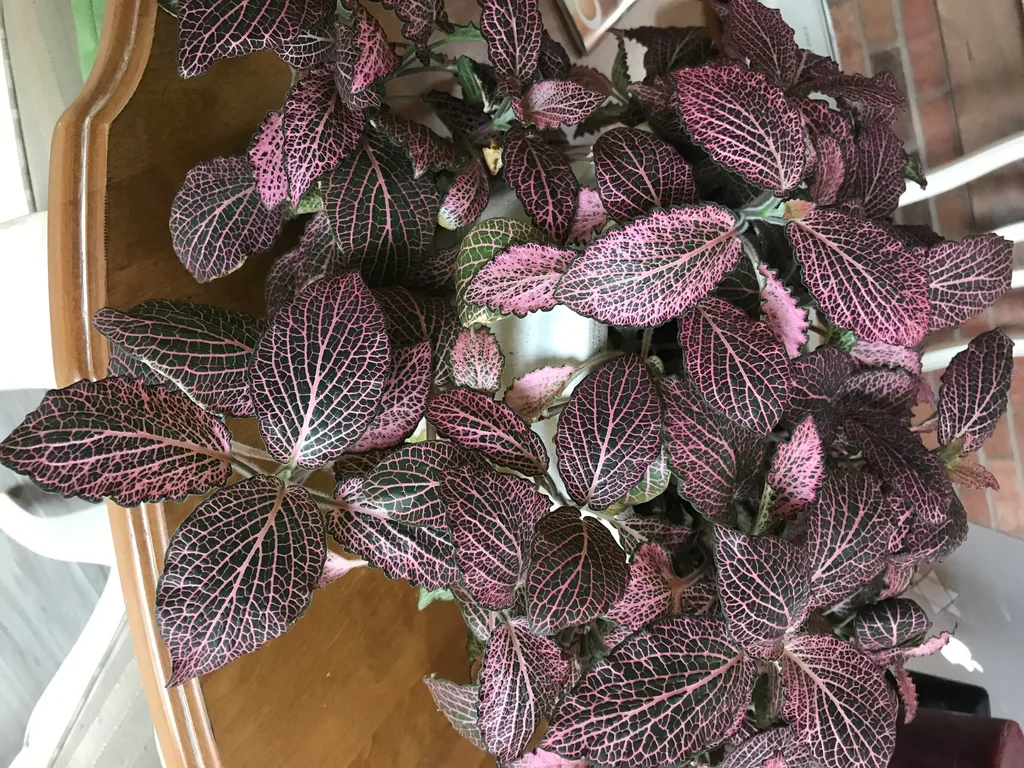
Fittonia albivenis Image: K. Andre · CC BY 2.0 For a managed humid planting: choose a compact plant, keep roots moist without waterlogging, and leave room to trim spreading stems.
Plant and care for nerve plant →Evidence[29]
- Light
- Bright light / Medium light
- Moisture around the roots
- Moist not waterlogged
- Planting method
- Rooted in substrate
Zebra Haworthia
Haworthiopsis attenuata
Succulent
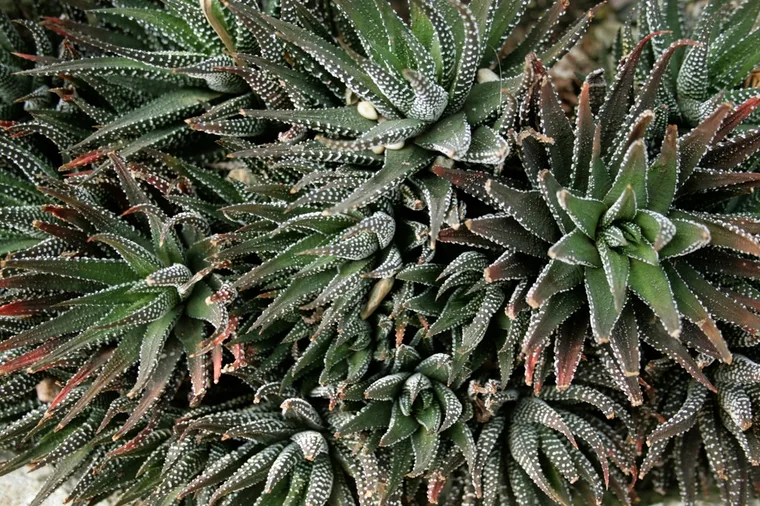
Haworthiopsis attenuata Image: Popperipopp · CC BY 3.0 Prefers bright indirect light; lower light is a tolerance. Let the draining root medium dry between waterings and leave room for offsets.
Compare light and drying succulent choices →Evidence[30]
- Light
- Bright indirect light
- Moisture around the roots
- Water after soil dries
Leucobryum glaucum
Leucobryum glaucum
Moss
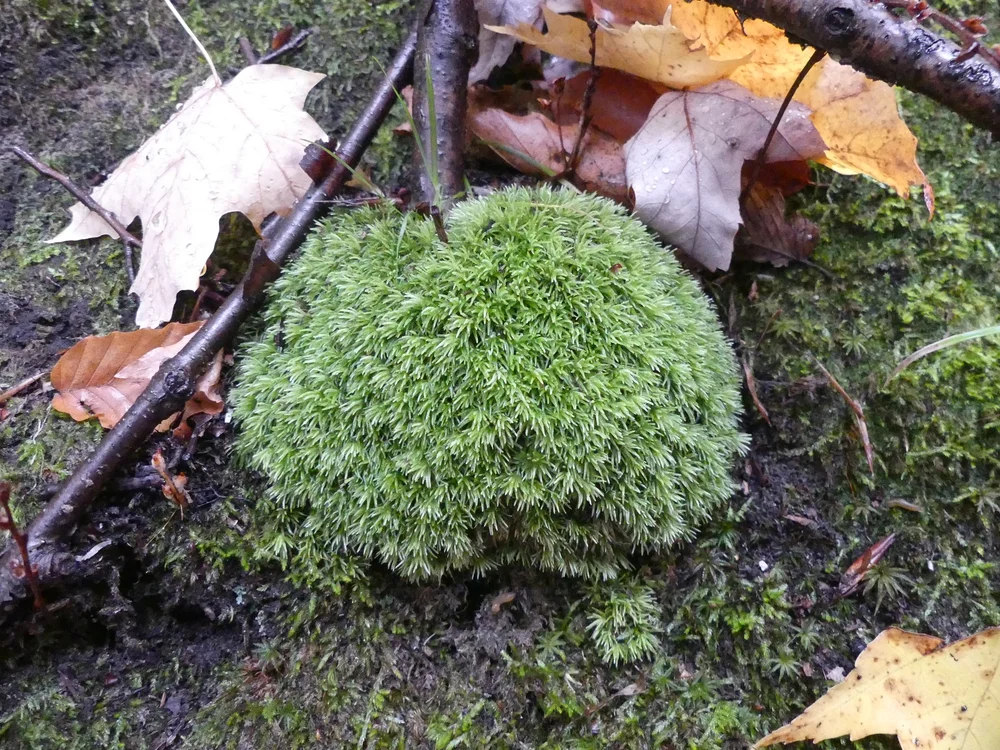
Leucobryum glaucum Image: Christian Grenier · CC0 1.0 Leucobryum juniperoideum
Leucobryum juniperoideum
Moss
A separate cushion-moss species. Older European identifications may refer to L. albidum after the 2023 revision. Confirm the supplied culture and its care; a pillow-moss label does not establish identity or warm sealed cultivation.
Distinguish cushion moss species →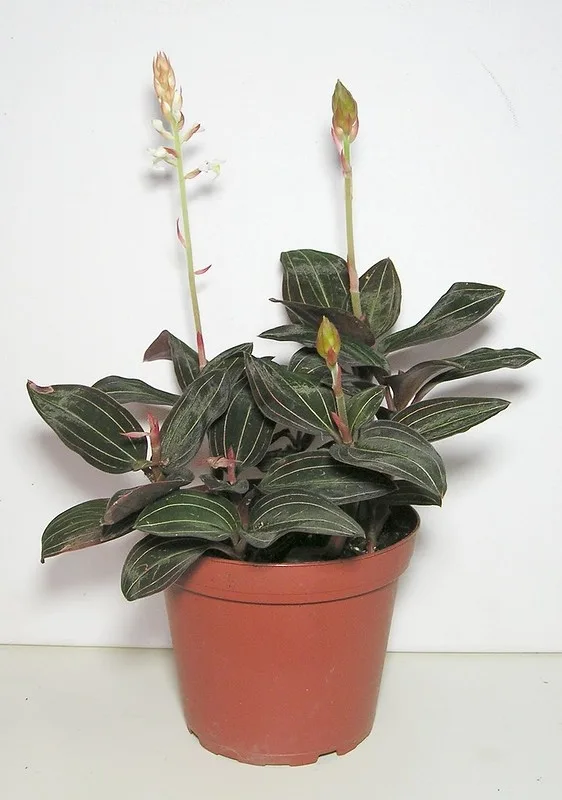
Ludisia discolor Image: Maja Dumat · CC BY 2.0 A terrestrial jewel orchid: use moist, draining medium in a wide, accessible root zone. It is not an orchid to copy onto an air-plant mount.
Compare removable pots and root care →Evidence[31]
- Light
- Intermediate light / Bright indirect light
- Moisture around the roots
- Moist
- Planting method
- Rooted in substrate
Swan’s-neck thyme moss
Mnium hornum
Moss
A named woodland moss reference for acid soil and other damp surfaces. Confirm the supplied patch and indoor conditions before using the planting method.
Compare named moss habitats and surfaces →Evidence[70]
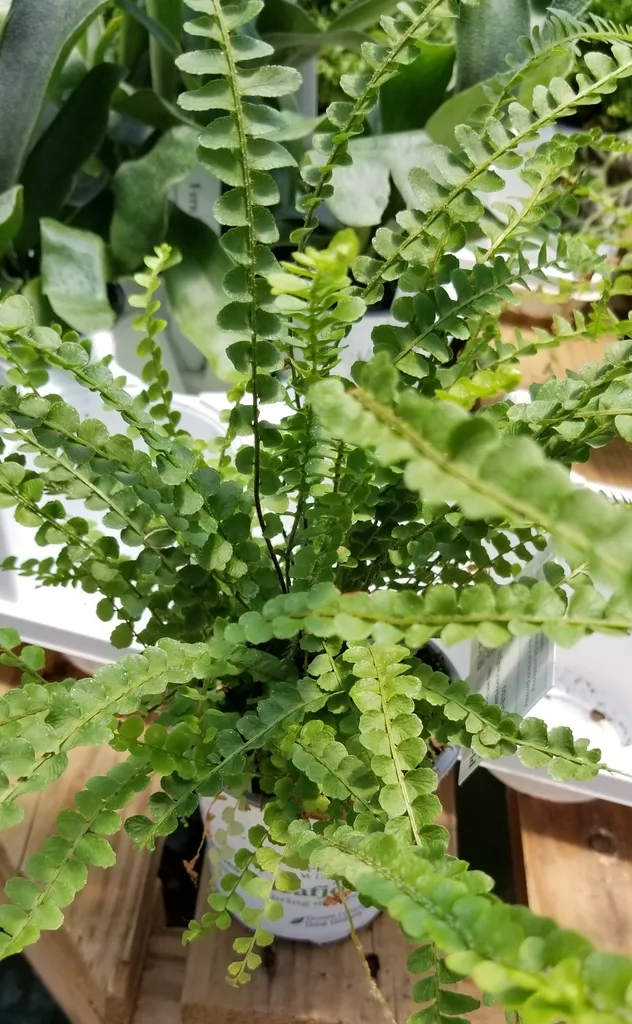
Nephrolepis cordifolia Living Lace® Cute as a Button™ Image: Cindy Christian · CC BY 4.0 Confirm the cultivated form and space it needs. The photo shows Living Lace® Cute as a Button™; the parent species and other forms are not all dwarf.
Check fern identity and growing room →Evidence[32]
- Light
- Partial shade / Shade
- Moisture around the roots
- Moist
- Planting method
- Rooted in substrate
Button Fern
Pellaea rotundifolia
Fern
Button fern, called Hemionitis rotundifolia by NC State. It is distinct from lemon button fern; use its draining-pot routine rather than assuming all ferns need saturated roots.
Compare button and lemon button ferns →Evidence[21]
- Light
- Indirect light
- Moisture around the roots
- regular water with good drainage
Emerald Ripple Peperomia
Peperomia caperata
Foliage
RHS lists cultivars for closed terrariums. Check the cultivated form and root drying against the species houseplant guidance before sharing a humid bed.
Compare humid foliage and its limits →Evidence[33]
- Light
- Medium light
- Moisture around the roots
- Water after soil dries
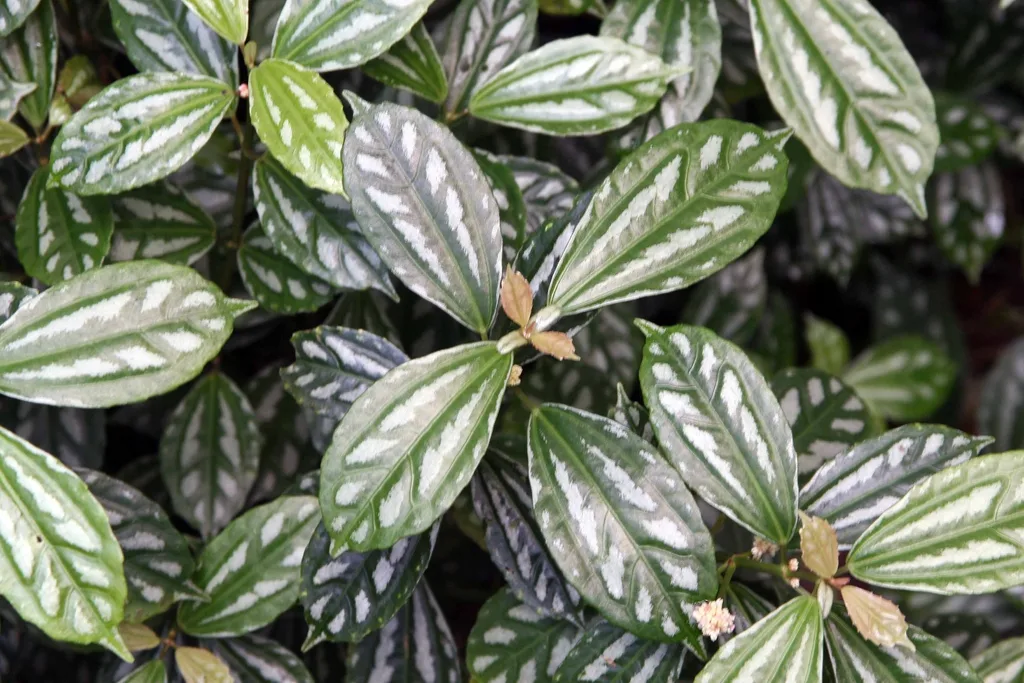
Pilea cadierei Image: David J.Stang · CC BY-SA 4.0 Upright foliage for a humid planting with gentle air movement. Leave space above the bed and access to pinch crowded tips.
Compare upright and spreading plants →Evidence[34]
- Light
- Bright indirect light
- Moisture around the roots
- Moist
- Planting method
- Rooted in substrate
Angeloweed
Pilea microphylla
Foliage
Fine stems form a spreading mat. Provide bright indirect light, moist draining roots and access to check its spread.
Compare mat-forming humid choices →Evidence[35]
- Light
- Bright indirect light
- Moisture around the roots
- Moist well drained
Huntsman Cup
Sarracenia purpurea
Carnivorous
A sunny wet-root pitcher plant with species and seasonal care to check. Confirm the subspecies and local winter plan rather than treating a low pitcher as a miniature jar plant.
Compare seasonal carnivore care →Evidence[37]
- Light
- Full sun
- Moisture around the roots
- Moist to wet
Claw Cactus
Schlumbergera truncata
Succulent
A forest epiphytic cactus with seasonal light and moist draining-root care. Do not borrow a drying desert-succulent routine from its cactus label.
Compare tempting care mismatches →Evidence[38]
- Light
- Partial shade
- Moisture around the roots
- Moist well drained
Schoenorchis fragrans
Schoenorchis fragrans
Orchid
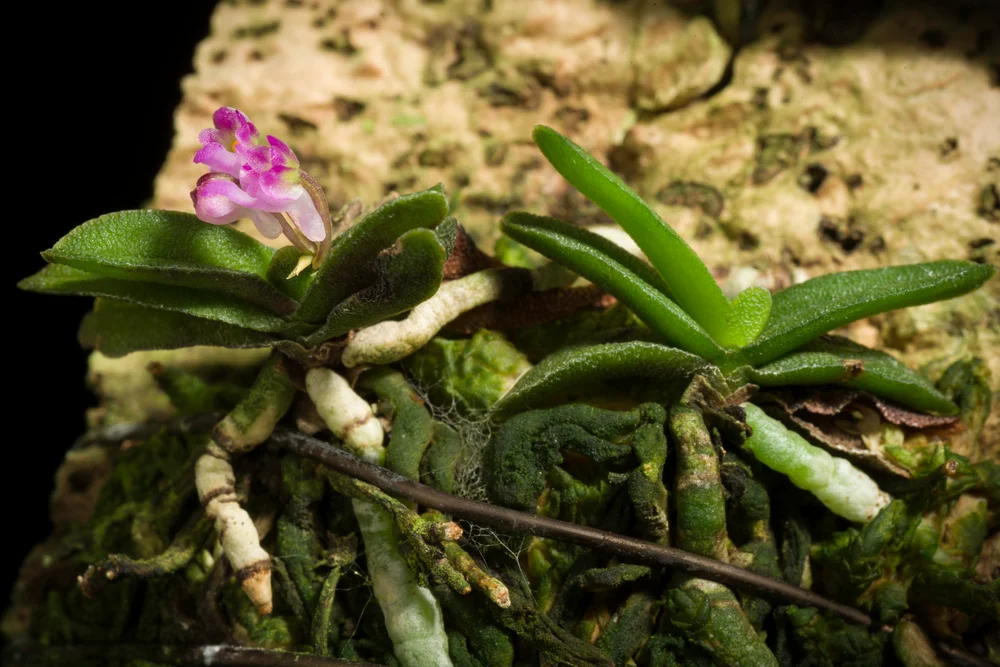
Schoenorchis fragrans Image: sunoochi · CC BY 2.0 Compare the removable cork-mount routine for this named miniature. Keep the roots accessible; published enclosure conditions are individual grower accounts.
Follow the complete mounted orchid routine →Evidence[9]
- Planting method
- Mounted
Burro's Tail
Sedum morganianum
Succulent
Trailing stems need a free edge and a safe removal route. Leaves detach easily; use a bright drying container rather than a narrow humid bottle.
Compare trailing and rosette succulents →Evidence[39]
- Moisture around the roots
- Water after soil dries
- Light
- high light with at least partial sun indoors
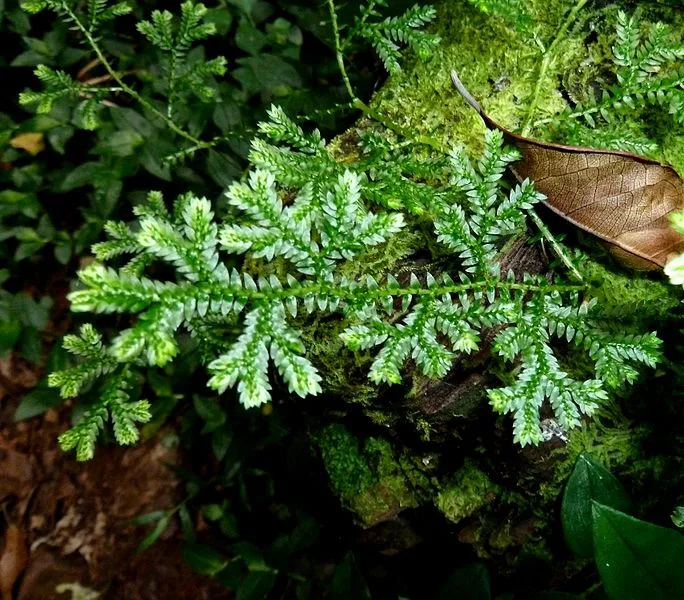
Selaginella kraussiana Image: JMK · CC BY-SA 3.0 Fine textured groundcover needs humid air and indirect light. Allow reachable trimming; moist roots still need drainage and must not sit waterlogged.
Compare fern and spikemoss choices →Evidence[40]
- Light
- Indirect light / Shade
- Moisture around the roots
- Moist to wet
- Planting method
- Rooted in substrate
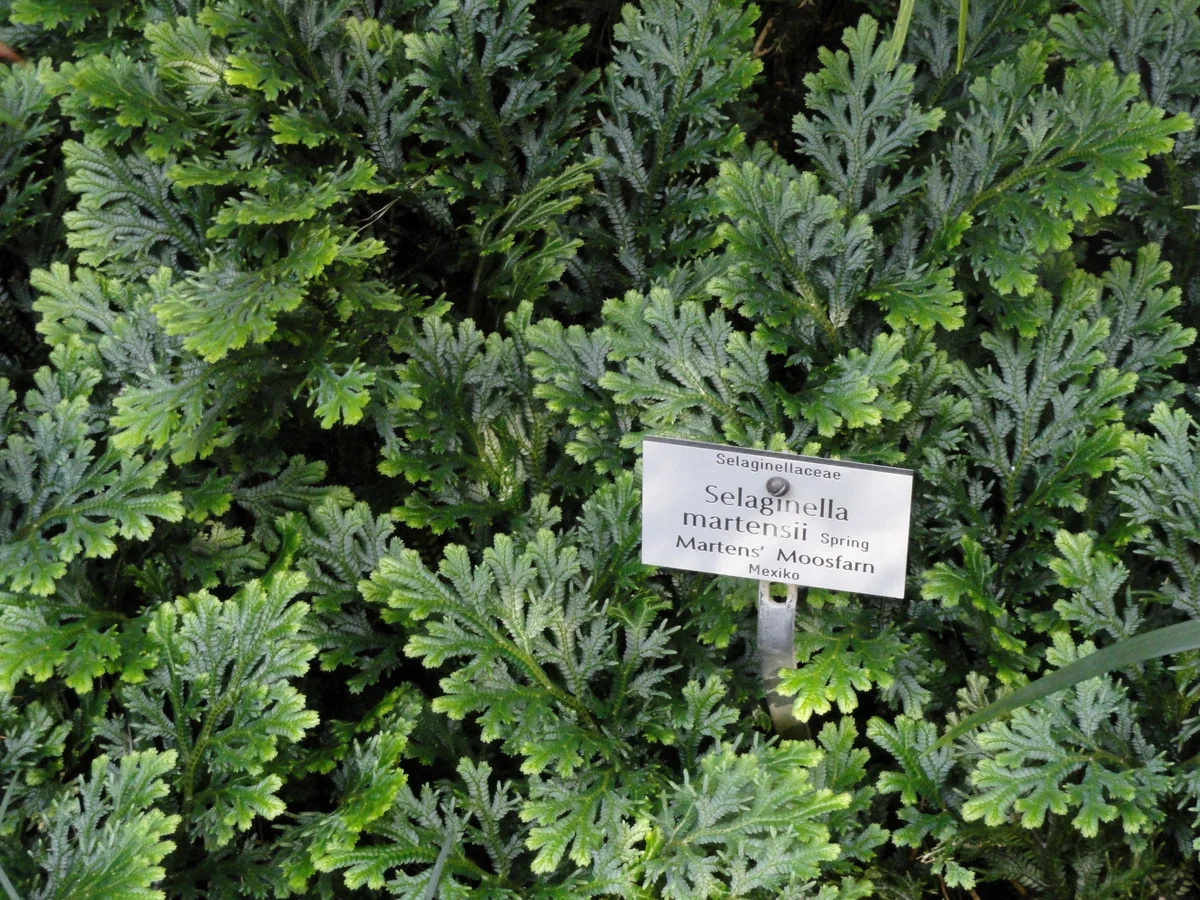
Selaginella martensii Image: Daderot · Public domain Verify the plant and its label before using “frosty fern” advice. This is a spikemoss, not a true fern; a small starter does not establish its final size.
Evidence[72]
- Light
- Partial shade
- Moisture around the roots
- Moist not waterlogged
- Planting method
- Rooted in substrate
Common Houseleek
Sempervivum tectorum
Succulent
The source describes sunny outdoor garden and container culture with sharp drainage. Cold hardiness does not establish a workable dim indoor bottle.
Check the sunny container comparison →Evidence[41]
- Light
- Full sun
- Moisture around the roots
- dry to medium moisture with sharp drainage
Outdoor garden and container culture with sharp drainage; afternoon shade may help in extreme heat.
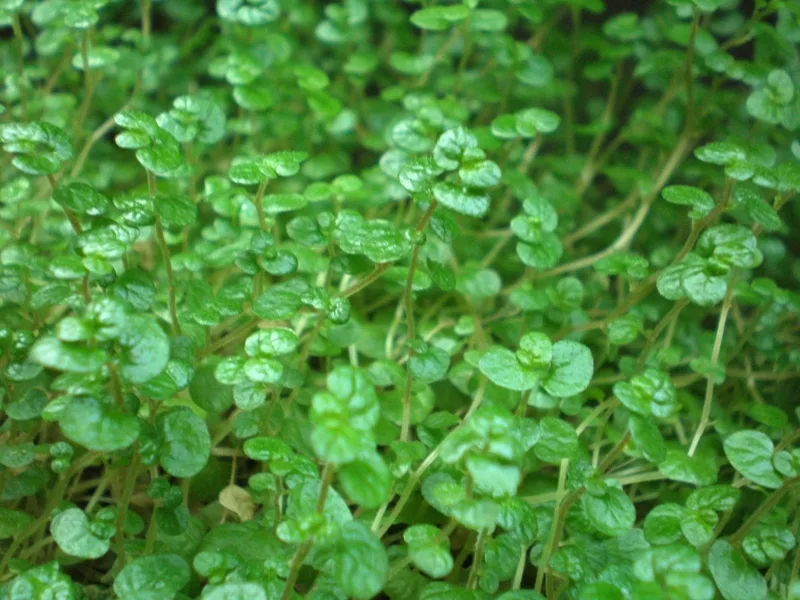
Soleirolia soleirolii Image: GFDL · CC BY-SA 3.0 A fast spreading mat that can crowd neighbors. In a narrow shared planting surface, choose one groundcover and retain trimming access.
Check the groundcover space conflict →Evidence[42]
- Light
- Bright indirect light
- Moisture around the roots
- Moist
- Planting method
- Rooted in substrate
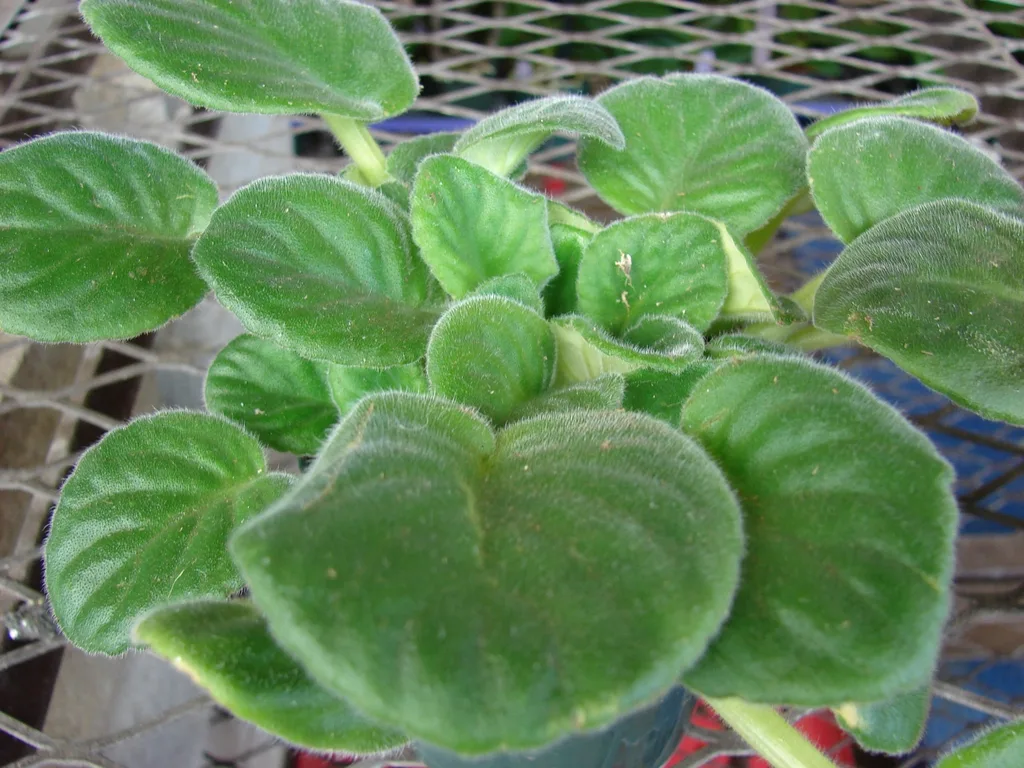
Streptocarpus ionanthus Image: Forest & Kim Starr · CC BY 3.0 Let the medium’s surface dry before watering. Keep water off leaves, drain the pot afterward, and avoid a constantly saturated shared bed.
Check African violet watering →Evidence[36]
- Light
- Bright filtered light
- Moisture around the roots
- Moist
- Planting method
- Rooted in substrate
Tillandsia caput-medusae
Tillandsia caput-medusae
Air plant
The swollen leaf base needs to remain visible and reachable. Compare open supports that release water rather than enclosing the base in wet decoration.
Compare the swollen-base form →Evidence[65]
Air Plant
Tillandsia ionantha
Air plant
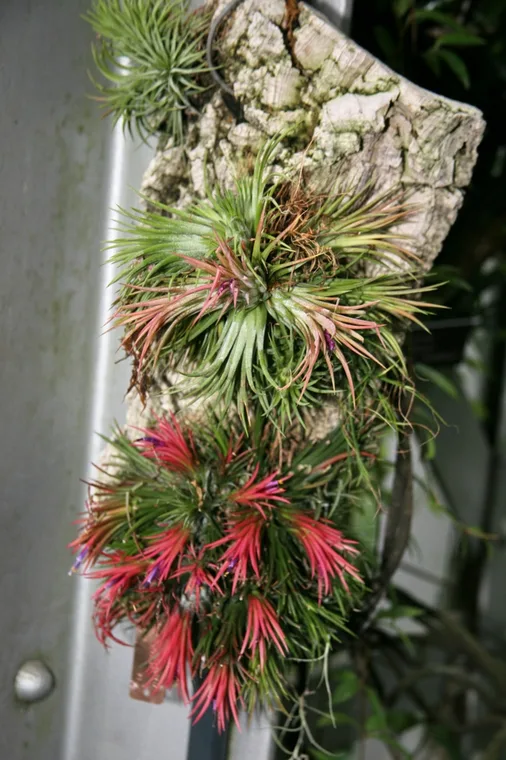
Tillandsia ionantha Image: Cliff · CC BY 2.0 A supported rosette that can grow into a clump. Keep the support removable for watering, draining and drying outside glass.
Compare rosette forms and their care →Evidence[43]
- Light
- Bright indirect light
- Planting method
- Epiphytic / Mounted
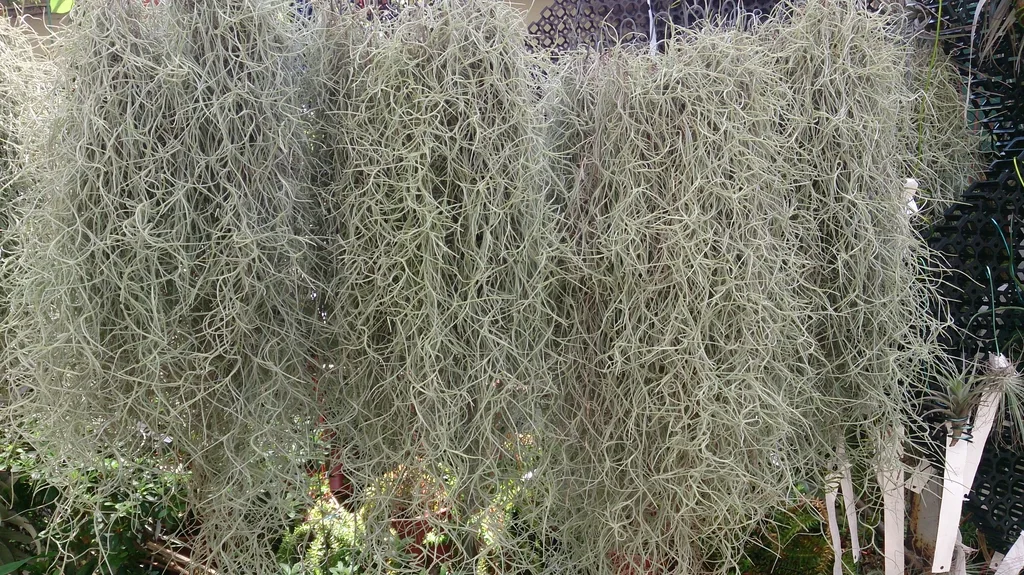
Tillandsia usneoides Image: Salicyna · CC BY-SA 3.0 Spanish moss is an air plant, not soil-surface moss. Use a reachable open support and let watered strands dry before returning them to glass.
Check support, watering, and drying →Evidence[44]
- Light
- Bright indoor light
- Planting method
- Epiphytic / Mounted
Air Plant
Tillandsia xerographica
Air plant
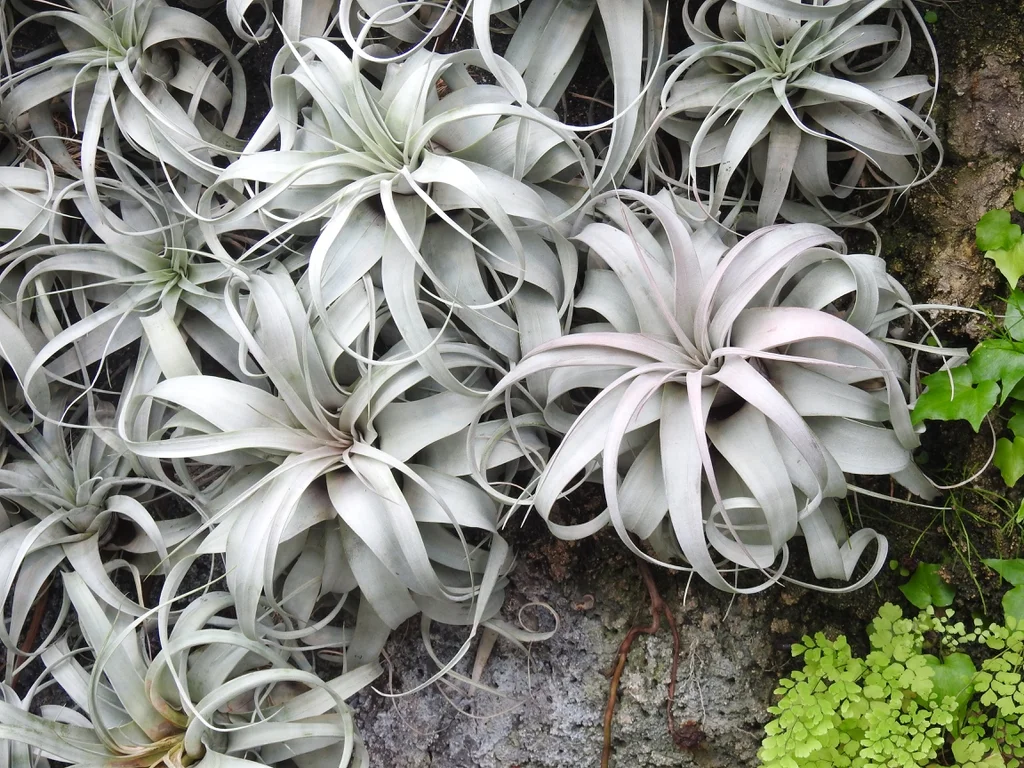
Tillandsia xerographica Image: Kathleen Moore · CC BY 2.0 Broad curling leaves and a future flower stem need space. Compare the published indoor light and watering conditions before choosing a glass display.
Check the broad rosette and care route →Evidence[45]
- Planting method
- Epiphytic
- Light
- bright light without full sunlight in indoor culture
Vanilla planifolia
Vanilla planifolia
Orchid
A climbing orchid that needs support and growing room. Its nursery pot size does not make it a miniature mounted-orchid choice.
Compare orchid roots and growth direction →Evidence[51]
Growth form: climbing (Vanilla planifolia)
Sources for this list
Sources and review
- Ludisia — American Orchid Society
- Leucobryum juniperoideum — current species concept and habitat
- Crassula sarmentosa - CT 9.jpg — Wikimedia Commons
- Ficus microcarpa - Stem & leaves.jpg — Wikimedia Commons
- Ficus thonningii 13zz.jpg — Wikimedia Commons
- Selaginella martensii - Botanischer Garten München-Nymphenburg - DSC08059.JPG — Wikimedia Commons
- 1 Aloe succotrina - Kirstenbosch gardens 5.jpg — Wikimedia Commons
- Ficus punctata 152387286.jpg — Wikimedia Commons
- Schoenorchis fragrans — Thomas Jacob’s mounted-enclosure cultivation account
- Ficus thonningii — FAO Ecocrop
- Dionaea muscipula — ICPS Information Guide
- Growing Drosera adelae and Sisters
- Ficus thonningii — Agroforestry Database 4.0
- Terrariums — MU Extension Guide G6520
- Frosty Ferns Warm Your Home Interior
- Adiantum raddianum — Delta maidenhair
- Aloe vera — NC State Plant Toolbox
- Asparagus densiflorus Sprengeri Group — NC State Plant Toolbox
- Asparagus setaceus — NC State Plant Toolbox
- Asplenium nidus — bird’s nest fern
- Chlorophytum comosum — NC State Plant Toolbox
- Crassula ovata — NC State Plant Toolbox
- Davallia fejeensis — rabbit’s foot fern
- Dionaea muscipula — NC State Plant Toolbox
- Episcia cupreata — NC State Plant Toolbox
- Exacum affine — NC State Plant Toolbox
- Ficus microcarpa 'Ginseng' — NC State Plant Toolbox
- Fittonia albivenis — NC State Plant Toolbox
- Haworthiopsis attenuata — NC State Plant Toolbox
- Ludisia discolor — NC State Plant Toolbox
- Nephrolepis cordifolia — NC State Plant Toolbox
- Peperomia caperata — root moisture, size and habit
- Pilea cadierei — NC State Plant Toolbox
- Pilea microphylla — terrarium use, moisture and spreading growth
- Streptocarpus ionanthus — NC State Plant Toolbox
- Sarracenia purpurea — NC State Plant Toolbox
- Schlumbergera truncata — NC State Plant Toolbox
- Sedum morganianum — NC State Plant Toolbox
- Selaginella kraussiana — NC State Plant Toolbox
- Sempervivum tectorum — NC State Plant Toolbox
- Soleirolia soleirolii — NC State Plant Toolbox
- Tillandsia ionantha — NC State Plant Toolbox
- Tillandsia usneoides — NC State Plant Toolbox
- Tillandsia xerographica — NC State Plant Toolbox
- Drosera adelae — medium, light, roots and growth
- Ficus microcarpa — Flora & Fauna Web
- Ficus punctata — Flora & Fauna Web
- Ludisia discolor — Flora & Fauna Web
- Selaginella martensii — Flora & Fauna Web
- Vanilla planifolia — climbing growth in a Singapore landscape profile
- Flora of New Zealand — Selaginella martensii Taxon Profile
- Davallia fejeensis — existing photograph provenance
- Tillandsia xerographica — existing photograph provenance
- Brachythecium rutabulum — existing photograph provenance
- Schoenorchis fragrans — existing photograph provenance
- Leucobryum glaucum — existing photograph provenance
- Tillandsia ionantha — existing photograph provenance
- Haworthiopsis attenuata — existing photograph provenance
- Adiantum raddianum — existing photograph provenance
- Crassula sarmentosa var. sarmentosa — NSW Flora Online
- Aloe succotrina Weston — Plants of the World Online
- Crassula sarmentosa Harv. — Plants of the World Online
- Ficus thonningii Blume — Plants of the World Online
- Air Plants — RHS Care Guide
- Asparagus setaceus — RHS Plant Profile
- Drosera capensis — RHS Plant Profile
- Ficus microcarpa 'Ginseng' — RHS Plant Profile
- Ludisia discolor — RHS Plant Profile
- Algae, lichens, liverworts and mosses
- Pilea cadierei — RHS Plant Profile
- Selaginella martensii — RHS Plant Profile
- Aloe succotrina — PlantZAfrica
- Crassula sarmentosa var. sarmentosa — PlantZAfrica
- Aloe succotrina — Flowering Plants of Africa 64
- Crassula sarmentosa Harv. var. sarmentosa — Red List of South African Plants
- Ficus microcarpa — UF/IFAS Center for Aquatic and Invasive Plants
- Pilea cadierei Aluminum Plant — UF/IFAS Extension
- WFO Plant List 2026-06
Scope and important limits
A useful fit when
- Making a first shortlist or checking a planting against documented needs.
- Humid displays, open succulent arrangements, and supported air plants.
Use another path when
- Guaranteed compatibility from matching tags.
- A permanently sealed, maintenance-free planting or a complete construction tutorial.
These checks apply horticultural sources to care and space decisions. They do not promise maintenance-free or permanently sealed results.
Start with the environment you can provide
Open describes the container, not a watering regime. Use the examples to identify the care decision, then inspect the full conditions in the list. Compare the full care conditions before choosing neighbors.
| Display direction | Planting approach | Check before choosing |
|---|---|---|
| Managed humid planting | Upright foliage, spreading groundcover, or independently potted plants | Indirect light, moist well-drained medium, and room to manage spreading growth. A removable lid retains moisture but does not prevent overwatering. |
| Open succulent arrangement | Species with a drying root-zone routine | Check the species’ light and drying requirements. For Aloe vera, NC State recommends a pot with drainage holes; an open glass vessel alone does not supply drainage. |
| Supported air-plant arrangement | A reachable, species-appropriate open support | Bright indoor light and humid conditions, with watering followed by drying. Keep the hanging plant accessible; do not treat it as a rooted groundcover. |
- Compare humid plant roles Choose low foliage, upright leaves, or a removable pot by care and space.
- Check a drying succulent display Use a real drainage outlet before choosing Aloe or jade.
- Compare rosette and hanging air plants Choose a reachable form and its watering and drying routine.
Which terrarium plants can you choose for lower light?
Start with the light reaching the leaves, not an outdoor shade label. Lower light is not darkness, and a plant that tolerates a dimmer position does not necessarily grow best there. If useful window light does not reach the planting, change the position or provide a growing light before buying.
| Plant or position | What the indoor evidence supports | Your choice and its limits |
|---|---|---|
| Peperomia caperata | NC State describes filtered medium light as ideal and low-light tolerance lasting several months. | Compare only with a plan to provide its preferred light and inspect the roots. This is houseplant evidence, not proof of indefinite sealed-jar growth; RHS closed-terrarium choices concern named cultivars. Keep a drying root routine separate from a continually moist bed. |
| Compact Fittonia albivenis | NC State describes bright to medium indoor light; RHS recommends bright indirect light. | Use a position that meets those conditions and verify a compact form. Outdoor partial shade and dappled sun fields do not justify a dark indoor shelf. Keep humid air, draining roots and access for spreading growth. |
| A shelf without useful window light | A low-light label cannot replace a usable light source. | Add a suitable growing light or choose another position. Check at the lowest leaves and behind taller foliage; choose the plants after that check rather than filling a dark container first. Evidence[3] |
- Check light at the leaves Assess the actual position before choosing a plant.
- Decide whether to add a growing light Improve a dim position and check coverage and heat.
- Compare closed-display growth and root care A light match does not settle moisture, cultivar identity or access.
Choose the question your shortlist still needs to answer
Use the plant browser to find names and recorded conditions. Continue with the comparison that resolves your remaining decision; each topic has its own candidate set.
- Several humid plants look promising
- Compare their planting roles and root arrangements.
Use the partly open humid comparison to distinguish shared beds, individually watered pots, supported growth, and the complete care and space conditions for each combination.
- The starter fits, but future growth may not
- Compare floor area, headroom and removal access.
Use the small-space comparison to check mats, runners, upright growth and cultivated forms against the finished planting surface and opening.
- You plan to retain humidity with a lid
- Check the candidates for an openable closed planting.
Compare the actual light, roots, growing room and management needed for that enclosure before transferring a partly open plan into it.
- Resolve living moss and material labels Separate an identified growing plant from trade shapes and processed decoration.
- Compare true ferns and fern-like names Check the named plant, its fronds and its root or rhizome arrangement.
- Choose an orchid root-care route Check terrestrial pots, airy orchid pots and removable mounts before using a mini label.
Check the plant against your actual display
For a first build, favor a plant whose needs you can meet and whose growth you can reach. A starter pot labeled mini is a starting size, not a promise of permanent size.
- Confirm the label and conditionAsk for the botanical identity, inspect the specimen, and reject visible pests or damaged growth. A photograph or shared common name cannot confirm a cultivar.
Evidence[10]
- Find a seller and check the specimen Compare regional catalogs, arrival forms, inspection, and shipping.
- Check access for your chosen plant’s care Verify watering, trimming, and removal before buying.
Use the list without turning a match into a recommendation
Browse all plants first, or choose a plant type. The type labels describe groups and growth forms; they do not certify suitability for a closed jar. A name search can return several interpretations—read the scientific name and scope beside each result.
Growing-condition filters search recorded light, root-moisture, and planting-method facts. Preferred, tolerated, and avoided conditions have different meanings. Selecting “Recorded as avoiding this condition” retrieves plants with a warning about that condition; it does not remove them from the list. A documented planting method records how a plant grows; it does not prove that your container is suitable.
Values within one fact group are alternatives; separate groups, plant type, and name narrow the result together. Open Sources for the original wording and its context. An outdoor or cultivar-specific claim is not automatically indoor or species-wide advice. A missing match may mean missing evidence, so it is not proof that the plant cannot work.
- Use Show all plants to recover the full list.
- Choosing display conditions shows the plants compared for that environment, including conflicts. Other filters narrow the result without judging a different layout.
- Link to these filters preserves your selection so you can return or share it. It does not confirm a new planting plan.
Check common shortcuts before committing
| Shortcut | What the evidence actually says | Your decision |
|---|---|---|
| “A succulent will stay tidy in a sealed jar.” | Aloe vera needs very well-drained medium and complete drying between waterings; it also grows and produces offsets. | Use an accessible, drying display. Do not choose it for a continuously moist shared planting. |
| “Spanish moss is moss for the soil surface.” | Tillandsia usneoides is an epiphyte whose mature plant has no roots. Indoor watering is followed by drying. | Plan a reachable support and its own care routine. Do not apply rooted moss care to it. |
| “Any orchid can use an air-plant mount.” | Ludisia discolor is terrestrial and needs moist, well-drained medium with air circulation. | Check the orchid species and planting method before choosing a mount or substrate. |
| “A Venus flytrap only needs a humid jar.” | Dionaea muscipula needs wet medium, suitable light, and rainwater or distilled water; NC State advises against fertilizer. | Verify these special requirements before including it. Humidity alone is not a complete care plan. |
A flytrap needs its own growing routine
A flytrap needs strong light, low-mineral water, low-nutrient medium, and a deliberate seasonal or dedicated indoor growing routine. A humid foliage jar does not settle these requirements. Compare the full carnivorous-care choices before adding it to a shared planting.
- Choose the flytrap light and seasonal routine Compare ordinary seasonal care with the documented indoor alternative.
- Compare humid foliage instead Choose a care routine without specialized flytrap lighting and medium.
Compare companions as a shared care plan
Match light and moisture requirements before choosing colors or textures. Then check where each member grows and whether pruning, watering, and removal remain possible. Similar tags are a useful shortlist, but they do not establish long-term compatibility.
Read the humid or drying succulent comparison for the environment you can provide. Check planting zones, required actions, conflicts, and the actual plants. A support above a planting bed is a separate care zone, not proof that every member can share the same substrate.
If a requirement conflicts, change the display or separate the plants. An alternative member or layout needs reassessment; a changed arrangement does not inherit the old conclusion.
Evidence[4]
- Compare humid-display roles and conditions Compare rooted foliage, independent pots, supported growth, and their required management.
- Read the prepared combination comparisons See shared conditions, member roles, necessary management, and alternatives.
Turn your shortlist into a specimen check
Your next step
Choose a comparison or check the background
Plan the work you can maintain
New to terrariums?
Choose the comparison for your display
- Compare jewel orchids and miniature orchidsChoose by terrestrial or epiphytic roots, temperature, flowering room, and access.
- Compare ferns and fern-like plantsChoose by botanical identity, roots, frond space, humidity, and reachable care.
- Choose and plant living mossRead sheet, cushion, and Sphagnum labels; match the surface and maintain a reachable patch.
- Compare carnivorous plant careChoose by water source, root zone, light, seasonal management, and growth.
- Choose an air plant and open supportCompare rosette and hanging forms, removal access, watering, and drying.
- Choose plants for a drying succulent displayCompare rosettes, woody and trailing growth, drainage, light, and shared care.
- Choose growth for a small spaceCompare floor area, headroom, spreading growth, cultivated forms, and maintenance access.
- Choose plants for an open humid displayCompare planting zones, moisture conflicts, and conditional humid combinations.
- Choose plants for a closed humid displayCompare openable-container candidates, airflow conflicts, and required management.
Explore more plant guides
Sources and review
- Peperomia caperata — indoor light and root care · NC State Extension
- Bottle gardens and terrariums — cultivar-scoped choices · Royal Horticultural Society
- Indoor Plant Care — light and growing positions · Purdue University Extension
- Terrariums — MU Extension G6520 · University of Missouri Extension
- Fittonia albivenis — NC State Plant Toolbox · NC State Extension
- Aloe vera — NC State Plant Toolbox · NC State Extension
- Tillandsia usneoides — NC State Plant Toolbox · NC State Extension
- Ludisia discolor — NC State Plant Toolbox · NC State Extension
- Dionaea muscipula — NC State Plant Toolbox · NC State Extension
- How to grow Fittonia — RHS · Royal Horticultural Society
- Growing Dionaea muscipula — ICPS · International Carnivorous Plant Society