Plants / Venus flytrap
Venus flytrap care: plan light, pure water, and the winter routine
Dionaea muscipula is a temperate bog plant; its traps are only one part of its growing requirements.
By Terrarium GuideSources & editorial method
Botanical identity: Dionaea muscipula
The short answer
A Venus flytrap needs strong light, low-mineral water, and an acidic nutrient-poor carnivorous-plant medium that stays moist. Plan an accessible dedicated pot and a seasonal routine before putting it in a display. A dim warm sealed terrarium does not meet those requirements.
For ordinary seasonal home culture, allow a cool winter rest. Continuous indoor growth is a different specialist routine requiring strong dedicated light and regular feeding; it is not a reason to skip winter planning in an ordinary window display.
Choose the light and seasonal routine before buying
| Routine | What must be available | Display consequence |
|---|---|---|
| Ordinary seasonal culture | Strong growing-season light and a cool winter resting position. | Keep the pot removable so it can follow the seasonal conditions. |
| Continuous indoor growth | Adequate dedicated artificial light and regular feeding throughout growth. | A specialist managed setup; a dim windowsill is not equivalent. |
| Dedicated accessible bog pot | Nutrient-poor medium and low-mineral water kept appropriate to season. | Can be managed independently of other display plants. |
| Warm dim sealed mixed bed | Conflicts with the supported routines. | Choose another arrangement rather than using humidity as the main criterion. |
Scope and important limits
A useful fit when
- Choosing, planting, and maintaining the named plant in the conditions described here.
Use another path when
- Transferring these conditions to an unidentified retail plant or assuming a permanent sealed display.
Published horticultural guidance and its application to display care; no Terrarium Guide growing trial is claimed.
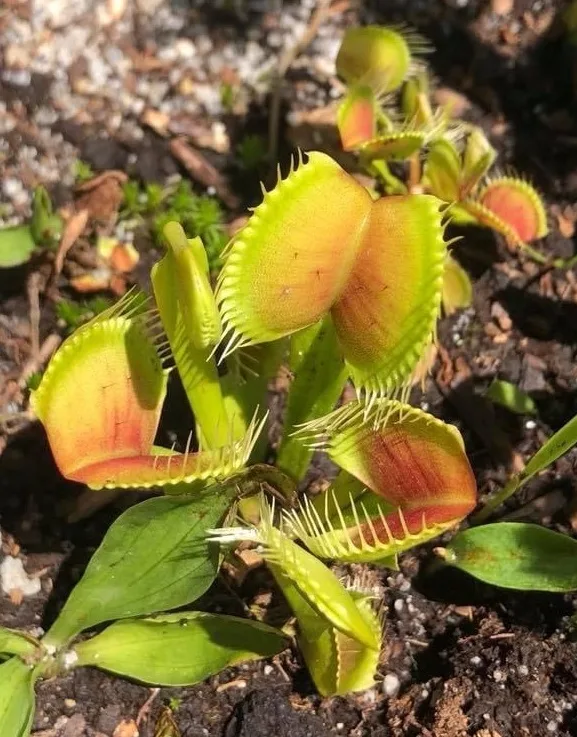
Leave room for the rosette, not just the traps
This profile covers Dionaea muscipula. Buy nursery-grown plants rather than wild-collected material. The plant is native to a temperate seasonal environment, not a permanently warm tropical forest.
The low rosette expands into a clump and can produce a taller flowering stalk. Published dimensions vary by what is measured; RHS describes mature rosettes up to about 30 cm across. Measure the actual plant and leave room to inspect the center, remove finished traps, and lift the pot without triggering or crushing healthy traps.
Prepare the water and winter location first
- Choose nursery-grown Dionaea muscipulaKeep the label and avoid undocumented wild-collected stock.
- Have suitable water availableUse rainwater or distilled water from a suitable clean supply. Ordinary hard or mineral-rich tap water and softened water are not substitutes.
- Choose a seasonal plan you can actually maintainIdentify the winter rest position or the dedicated indoor light system before buying. Do not expect a decorative lid to supply either.
- Inspect the crown and mediumA few finished black traps can occur, but widespread soft decay needs investigation. Avoid making a purchase decision from trap color alone.
- Check cultivated origin and seller details Keep the identity and specimen checks above; compare seller information, arrival forms and delivery before ordering.
Use a dedicated nutrient-poor root zone
Select the bright position and manage heat
Provide strong light appropriate to flytrap growth. An open top helps access but does not prevent hot glass from overheating the plant.
Prepare a suitable carnivorous-plant medium
Use a nutrient-poor acidic medium intended for flytraps, with no ordinary houseplant fertilizer. RHS describes sustainably farmed long-fiber sphagnum as one peat-free option; preserved decorative moss is not equivalent.
Keep the crown at the surface
Support the roots and rosette without burying traps or the growing center. A separate pot allows inspection, watering, and seasonal moves.
Use low-mineral water and inspect the level
Keep the medium moist, with shallow tray water during active growth where appropriate. Do not copy a display reservoir depth to every pot; reduce excess standing water during cool rest while preventing drying.
- Prepare the dedicated flytrap build Use the complete setup sequence while retaining this species’ water, medium and seasonal routine.
Light comes first; insects do not replace it
Check light at the rosette and the condition of new traps. Feeding cannot compensate for a weakly lit plant. Do not fertilize the medium with ordinary houseplant feed, and do not add meat, cheese, or other human food to the traps.
A flytrap catching small prey outdoors may need no hand-feeding. The continuous indoor-light routine depends on regular feeding when prey is absent. Feed healthy active traps with suitable small insects, or use the scoped rehydrated-food method below; food cannot compensate for dim light. Do not feed every trap or feed a resting plant as if it were in active growth.
Avoid repeatedly triggering traps for entertainment. Keep water suitable and medium moist, inspect the plant regularly, and remove dead material without closing every healthy trap during handling.
Feed an active indoor flytrap without just triggering an empty trap
This is the ICPS Dionaea method for a healthy, actively growing plant whose light and root routine are already in place. It is not a feeding recipe for other carnivores or a winter-resting plant.
Prepare a small portion away from the pot
Use a suitably small live insect, or plain freeze-dried bloodworms without additives. For dried food, soften a small amount with a little water in a separate dish and remove excess water. Read the package handling and allergy advice.
Place food that fits well inside one healthy trap
ICPS illustrates a portion about one-third of the trap size. Place it inside, gently touch the trigger hairs, and withdraw the tool as the trap closes. Do not overfill the trap or leave food protruding across its edges.
For dead food, stimulate the closed trap gently
Initial snapping is not full sealing. Very gently press the two outer sides together without crushing the leaf; the ICPS sequence repeats gentle pressure after 30–60 minutes. This replaces movement of live prey. Do not pry the trap open to inspect it.
Observe new growth and the fed trap
Let the trap digest undisturbed. A trap that simply reopens with untouched food did not complete the feeding sequence. Remove accessible old remains after natural reopening and reassess technique rather than forcing food into multiple traps. Stop handling soft or deteriorating traps and inspect the growing conditions.
Distinguish seasonal rest from soft decay
Shorter days and cooler conditions can produce smaller growth and dieback of older traps. For ordinary seasonal culture, the reviewed guidance gives roughly 35–50°F (2–10°C) for a cool rest, with at least ten weeks in its home-growing recommendations. This is not a command to freeze an unprotected small pot.
Keep the resting medium moist while reducing unnecessary standing water. Inspect the center and firm living tissue rather than declaring a plant dead because outer traps turn black. Soft deteriorating tissue, an unpleasant decaying root zone, or continuing decline needs inspection and identification, not an automatic dormancy label.
Dedicated continuous indoor culture is a separate option. The reviewed extension guidance discusses 15,000–25,000 lux for at least about 14 hours daily with regular feeding. Those stated conditions must remain with the exception; they do not describe a normal low-light terrarium. Keep one consistent routine rather than switching to force winter growth.
Remove finished tissue without disturbing healthy traps
Identify a fully dead leaf or trap
Keep partly functional green growth where it remains healthy. Inspect whether the rest of the plant is seasonally resting or actively declining.
Cut dead growth with clean tools
Work where the rosette is visible, avoiding healthy traps and the central growing point. Remove loose debris from the medium.
Decide whether a flower stalk fits the plant’s condition
Reviewed general guidance permits removing a stalk on a small or weak plant. A vigorous plant may flower; flowering is not proof that all growing conditions are ideal.
Repot or divide when there is a real need
Use appropriate carnivorous medium and suitable water, commonly timing routine repotting for renewed growth. Do not dismantle a healthy dormant plant merely to satisfy a pruning calendar.
Use the whole plant and season to interpret a black trap
| Observation | Check | Next action |
|---|---|---|
| One older trap blackens | New growth, prey size, handling, and season. | Remove fully dead tissue; do not treat one finished trap as whole-plant failure. |
| Most growth shrinks in cooler short days | Seasonal routine and firmness of the crown. | Maintain the planned cool moist rest and continue inspection. |
| Weak elongated growth indoors | Light at the rosette and the actual indoor routine. | Correct light rather than increasing food or fertilizer. |
| Soft crown in saturated medium | Roots, water quality, and decay. | Inspect promptly and seek identification if deterioration continues. |
- Inspect soft decay separately from seasonal rest Use the handling and escalation checks only when tissue deterioration warrants them; keep dormancy care here.
Compare conditions and companions
More detail when you need it
- Compare carnivorous growing systemsThe complete open-bog growing conditions and other carnivore choices stay here.
- Distinguish living and dried moss materialsDo not substitute decorative moss for a suitable carnivorous medium.
- Compare other recorded plantsChoose by conditions rather than the appeal of a trap.
Explore more in plants
Sources and review
- Dionaea muscipula — NC State Plant Toolbox · NC State Extension
- Terrariums — MU Extension Guide G6520 · University of Missouri Extension
- Dionaea muscipula — RHS Plant Profile · Royal Horticultural Society
- Venus Flytrap Dormancy · North Carolina Cooperative Extension, New Hanover County Center
- Dionaea muscipula — ICPS Information Guide · International Carnivorous Plants Society
- How to grow carnivorous plants — RHS Growing Guide · Royal Horticultural Society
- How to care for a Venus fly trap · Royal Horticultural Society
- Caring for Carnivores · Botanic Gardens of Sydney
- WFO Plant List 2026-06 · World Flora Online
- Growing Dionaea muscipula — indoor light, roots and feeding · International Carnivorous Plant Society
- Feeding Dried Blood Worms Step-by-Step — Dionaea method · International Carnivorous Plant Society