Care / Excess moisture and condensation
Terrarium too wet? Check condensation, roots, and collected water
Choose between leaving ordinary droplets alone, releasing excess moisture, removing collected water, and taking a declining plant out for inspection.
By Terrarium GuideSources & editorial method
The short answer
Some condensation is expected in a covered humid terrarium. Check the rooted medium and bottom of the vessel before changing anything. If the medium is wetter than the plants need or unwanted water is collecting, stop adding water, open the humid cover to let excess moisture escape, and remove reachable pooled water.
Wilting with wet medium, a soft plant base, or continuing decline needs root and crown inspection. Clearing the glass does not repair damaged roots. Keep a humid plant’s required root moisture, and use separate drainage or drying care for succulents, air plants, and named specialist trays.
What is wet, and is the plant changing?
Look through the sides and open for a closer check when needed. Compare the actual rooted medium with the identified plant’s needs; do not water or dismantle a bed just to change the glass.
- Droplets on glass; plants unchanged
- Check before intervening
- Check
- Is the root medium appropriately moist, without unwanted pooling or new tissue damage?
- Action
- If those conditions are suitable, keep observing. If heavy fog or runoff persists, adjust the humid cover and check the roots again.
- Stop or reassess
- Pooling, saturation or plant decline appears. Move to the relevant action below.
- Pooled water or medium wetter than the plants need
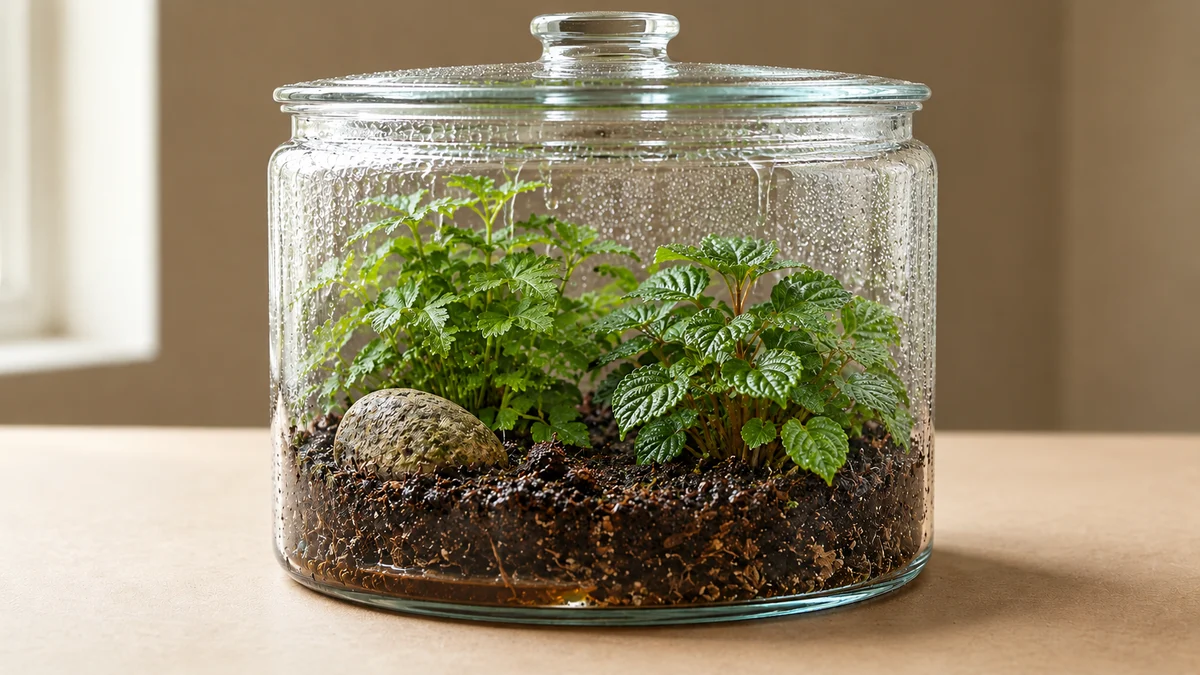
AI teaching illustration. Compare the wall droplets with the water pocket at the front base. Check your own rooted medium too; the image does not establish root health or a safe water level. - Stop additions and correct the water route
- Check
- Locate the pool, rooted layer and removal access. Is water touching a pot’s base or held in the root medium?
- Action
- Remove reachable unwanted water. Open a covered humid bed to release excess moisture, while checking that its plants retain suitable root moisture.
- Stop or reassess
- The pool cannot be reached safely, roots remain saturated, or damage develops. Lift out the affected planting rather than repeat a lid timer.
- Wilting or yellowing with wet roots; a soft base
- Inspect the plant now
- Check
- Examine the crown and accessible roots, preferably outside the glass. Look for softening and discoloration together; wilt alone can have several causes.
- Action
- Withhold additional water from the already wet root zone. Remove a badly affected plant or get plant-specific help if its condition is unclear.
- Stop or reassess
- Do not wait for fog to clear while a crown collapses or damage spreads.
Scope and important limits
A useful fit when
- Checking excess moisture in an accessible plant terrarium or open glass display.
- Correcting unwanted retained water and deciding when cover adjustment is insufficient.
Use another path when
- Animal enclosures, aquatic displays, or a universal humidity target.
- Identifying root pathogens from fog, leaf color, or an illustration.
This guide applies horticultural and condensation sources to the stated arrangements. It does not report a Terrarium Guide growing trial.
What condensation tells you—and what it cannot
| Observation | What it can mean | Next check or action |
|---|---|---|
| Fine droplets or haze inside a covered humid garden | Water vapor has condensed. Droplets may change with the glass temperature. | Check plants, medium and the base. Suitable conditions do not need correction merely to achieve clear glass. |
| Heavy internal droplets, trails or persistent fog | Enough water is condensing to obscure the view or run down the wall. | Open the humid cover, clear a reachable patch if needed, and inspect for excess root wetness and collected water. |
| Water on the outside | Room air can condense on cooler glass; the water need not have come from the planting. | Wipe the outside first to locate the moisture. Do not drain or water the roots on this evidence alone. |
| Clear glass | Visible condensation is absent at this moment. | Check the actual root medium before watering. Clear walls do not establish drought. |
| A visible pool below the medium or around a pot | Water is retained inside the vessel. | Check the roots and remove unwanted accumulation. A lower stone layer has no outlet through solid glass. |
- Use the root-medium check before the next watering Check actual roots below decoration and compare separate rootballs or pots.
Why fog changes without another watering
Condensation forms when water vapor becomes liquid on a sufficiently cool surface. In a covered terrarium, evaporation and plant water loss supply vapor that can condense on the glass. A cooler wall can therefore collect droplets even when you have not added water.
The room, window and lighting can change glass temperature. Compare the same location at different times and note recent changes. Neither morning fog nor all-day clarity is a universal target. Keep a humid foliage garden in suitable indirect light, away from direct sun or a heater; do not heat the jar to make the droplets disappear.
- Check the light and heat at the display Use the actual window path and fixture conditions rather than a drying position in sun.
Adjust an openable humid cover and reassess
Use this when a humid rooted garden has excessive condensation or retained moisture. Opening changes moisture loss; it does not drain a saturated bed.
Re-cover only after reassessment
When excess moisture has reduced and foliage is no longer persistently wet, replace or adjust the cover for the humid arrangement. Check again afterward. There is no universal number of lid-off hours: opening size, room conditions and plant needs differ.
Remove reachable unwanted water without disturbing roots
This is for an unintended pool, not an intentional specialist tray. If an inner pot can leave the display, use the simpler pot route below.
Stop when access would damage the planting
Do not probe blindly beneath a rooted carpet, pull up the separator, or tip a heavy planted vessel to chase hidden water. Absorbing wall droplets does not empty saturated root medium. If the roots stay too wet, take out the affected planting and correct the arrangement.
A draining pot, air plant, or managed tray needs its own route
Lift a removable root pot out of pooled runoff
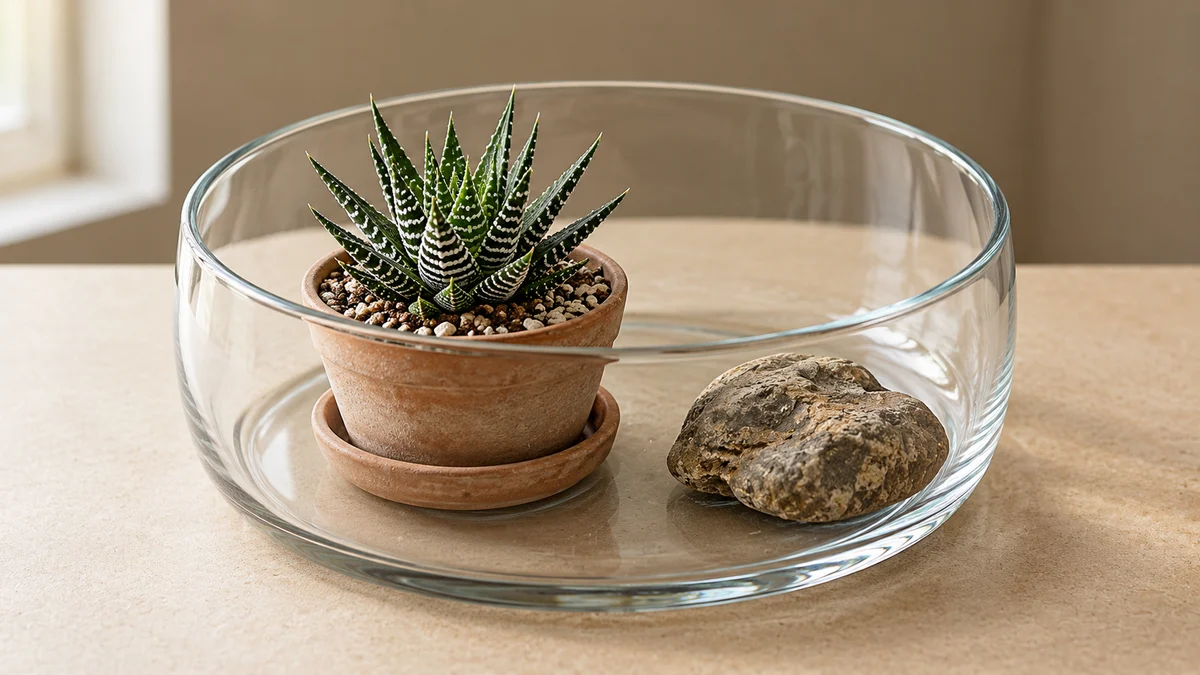
Remove the pot and saucer from the outer glass. Empty unwanted runoff, check that the pot’s real holes are open, and let excess water drain outside the display. Inspect a plant that is deteriorating instead of watering again.
For a drying succulent, restore its required drying interval and suitable light. An open top cannot compensate for roots left standing in water. If a drying-root plant is directly planted in solid-bottom glass that stays wet, change to an accessible draining arrangement.
Keep soil-free plants and intentional trays distinct
An epiphytic air plant with water retained in its base needs removal, drainage and appropriate drying in moving air before returning to an open support. Dry decorative sand does not establish that a wet crown is ready to go back.
A named plant maintained in a deliberate water tray follows its own water-quality, level and seasonal instructions. A flytrap’s managed tray is not ordinary unwanted runoff. Do not apply a foliage-bed or succulent drying rule to all carnivorous plants.
What to check after opening or removing water
| What changes | What to do next | When to escalate |
|---|---|---|
| Unwanted pool is gone; roots have suitable moisture; no new damage | Resume observation. Do not immediately replace the removed water. | Reassess if excess wetness or decline returns. |
| Glass clears, but the rootball remains too wet | Continue withholding extra water and correct drainage or access. | Remove the planting if wetness cannot be corrected in place. |
| Root medium becomes too dry for a humid plant | End the drying adjustment and use that plant’s watering method if needed. | Reassess a layout that repeatedly swings between saturation and damaging dryness. |
| A crown softens, roots deteriorate, or several plants decline | Inspect outside the display where possible; remove severely affected material. | Get plant-specific advice rather than waiting for a cosmetic improvement in the glass. |
Skip shortcuts that hide retained water
- Understand collection layers and real drainage Keep the full material comparison and charcoal limits with the layers guide.
When to take a plant out or rework the bed
Take a declining plant out for a root and crown check when wet-medium wilt continues or its base softens. Use the inspection method below; a foggy wall does not identify a pathogen.
Rework the bed when excess water is inaccessible, root medium stays unsuitable, or the opening prevents safe inspection and removal. Move viable plants to suitable separate care while changing the vessel, medium or planting arrangement. A few ordinary droplets do not require a rebuild.
Remove severely damaged plants. If the cause remains unclear or decline spreads, ask a nursery, local horticultural service or plant diagnostic clinic. Bring the plant identity, photos, root condition and water, cover and position history; ask for sampling instructions first.
- Inspect the supported rootball and crown Use tissue condition and progression, then choose separate care, removal or help.
- Remove or replace a plant carefully Use an accessible route without forcing the rootball through glass.
- Check visible mold or fuzzy damaged tissue Use location, tissue changes and cleanup rather than appearance alone.
- Reassemble a maintainable humid bed Correct the water and access problems before replanting.
Your next step
Correct the underlying conditions
Explore more in care
Sources and review
- How to Create and Care for a Terrarium · Iowa State University Extension and Outreach
- Terrariums and bottle gardens — condensation and cover adjustment · Royal Horticultural Society
- Plants and Youth: Designing and Building a Terrarium · University of Florida IFAS Extension
- Condensation and the Water Cycle · U.S. Geological Survey, Water Science School
- Watering Indoor Plants — need, wilting and unwanted runoff · University of Maryland Extension
- Diagnose Indoor Plant Problems — wet-root wilt and root inspection · University of Maryland Extension
- Container Drainage Options — outlets, coarse layers and double pots · University of Illinois Extension
- How to Create a Closed Terrarium — excess-water removal and declining plants · Penn State Extension, Allegheny County Master Gardener program
- Creating an Indoor Carnivorous Wetland Terrarium — baster for accessible excess water · Clemson Cooperative Extension, Home & Garden Information Center
- Terrariums — wet foliage, standing water and care · University of Missouri Extension
- Cacti and succulents · University of Minnesota Extension
- Air plants — drainage and drying outside a glass display · Royal Horticultural Society
- Growing Dionaea muscipula — scoped tray and seasonal care · International Carnivorous Plant Society