Plants / Ludisia discolor
Ludisia discolor: plant a jewel orchid with room for stems and flowers
Grow this terrestrial orchid in a moist, aerated root zone, with the spreading stems and flower spikes accessible.
By Terrarium GuideSources & editorial method
Botanical identity: Ludisia discolor
The short answer
Ludisia discolor is a terrestrial jewel orchid: give it a moist, well-drained root zone, bright indirect light, warmth, and good air circulation. A wide shallow removable pot makes its spreading stems easier to inspect and water independently.
Plan space beside the foliage and above it for flowering stems. Humid air does not justify saturated medium or permanently wet, crowded leaves. Choose the display by access and root conditions rather than treating every jewel orchid as interchangeable.
Choose how the orchid’s roots will be managed
| Arrangement | Decision | Required check |
|---|---|---|
| Wide shallow drained pot | A practical starting point for creeping stems. | Keep the medium moist and let surplus water leave the pot. |
| Separate root zone inside a humid display | Useful where neighboring plants need different watering. | Shared light, temperature, airflow, and access still have to match. |
| Saturated shared bed | Change the root management. | Terrestrial does not mean bog-grown; inspect and correct waterlogging. |
| Narrow sealed bottle | Avoid committing a young plant by foliage size alone. | Future stems, flower spikes, and circulation need usable space. |
Scope and important limits
A useful fit when
- Choosing, planting, and maintaining the named plant in the conditions described here.
Use another path when
- Transferring these conditions to an unidentified retail plant or assuming a permanent sealed display.
Published horticultural guidance and its application to display care; no Terrarium Guide growing trial is claimed.
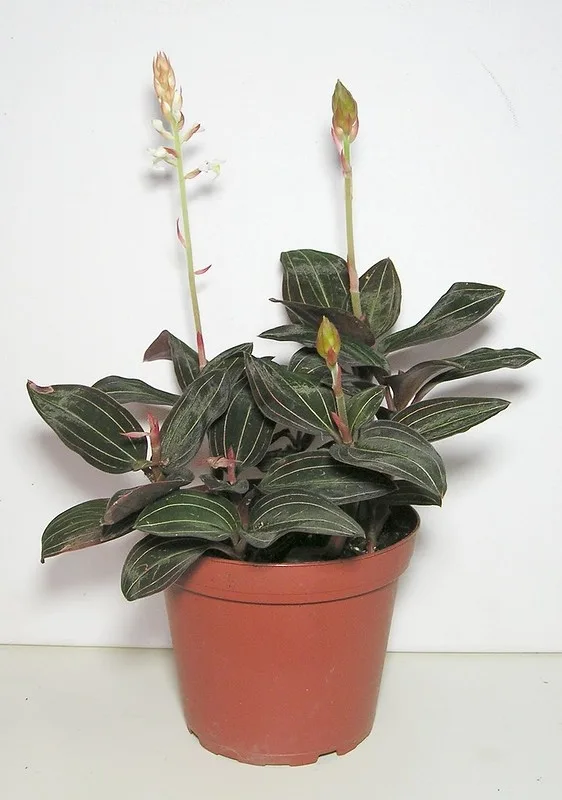
A jewel orchid with creeping stems, not an air plant
This profile is for Ludisia discolor. The dark veined foliage explains the jewel-orchid name, but Macodes and other jewel orchids are different plants. Do not use their root or temperature preferences as synonyms for Ludisia care.
Creeping stems and rhizomes spread sideways while shoot tips and flower spikes rise. Ordinary sources give broad size ranges because plant age and the part measured differ. Inspect the actual stem route and reserve room above the leafy plant rather than using the nursery height as the final clearance.
Inspect where the stem meets the medium
- Confirm Ludisia discolorKeep any cultivated-form label and ask whether a purchase is a rooted plant or an unrooted cutting.
- Check stems, roots, and the pot outletAvoid soft stem bases, waterlogged medium, and a pot that cannot drain. Look beneath foliage for hidden debris and pests.
- Allow flowering and removal spaceA low leafy plant can send a taller spike. Test the route for lifting its shallow pot past hardscape.
- Compare nursery plants and arrival forms Keep the identity and specimen checks above; compare seller information, arrival forms and delivery before ordering.
Support creeping growth without burying the leaves
Prepare a bright indirect position
Keep glass out of hot direct sun and leave air space around the foliage.
Use a wide shallow drained root zone
For a straightforward pot option, RHS lists peat-free houseplant compost; it also describes medium-to-coarse bark with a small amount of sustainably sourced Sphagnum. AOS instead specifies a rich terrestrial mix retaining moisture. Choose one coherent root routine: keep a healthy existing rootball intact, use a pot with an outlet, and leave an edge of medium visible for inspection rather than burying it under moss. Do not combine these options into a compulsory universal ratio.
Set the existing rootball at its current level
Dampen the replacement medium before backfilling, keep it loose, and set the existing rootball at its original level. Support creeping stems without burying leaves or upright growing tips. Do not strip healthy roots to force the plant into a decorative gap.
Water the medium after checking it
Water a drying pot outside the glass, let surplus leave the outlet, and empty the outer container. Check the original rootball as well as the surrounding new mix before watering again: the two can dry differently. Keep an inspection edge and adjust watering as the humid display slows drying.
- Compare the root-medium route Keep Ludisia’s terrestrial planting instructions here; use the materials guide to distinguish specialist media.
Moist medium, warm air, and gentle circulation
Keep the medium moist without waterlogging. Check beneath the surface near the existing rootball before adding water. A humid enclosure can reduce drying, so a routine copied from an ordinary room pot may be too wet.
RHS and orchid sources describe drying and watering in their respective potting contexts. Preserve the distinction between a drying surface and a completely dry rootball; use the actual medium and roots to make the decision. Condensation cannot substitute for that check.
Keep a warm, bright indirect position with good circulation. If a leaf or stem stays against wet glass, change the placement or spacing. Do not close off the air simply because the plant is associated with humid conditions.
Keep creeping stems reachable and remove finished spikes
Trace the spreading stem
Check whether it is shading a neighbor or crossing into another root zone. Support the plant before lifting the pot.
Remove a flower stalk after flowering finishes
Cut back the spent flower stem with a clean tool, avoiding healthy leaves and the growing stem. Removing a finished spike is different from cutting the whole plant down.
Repot when the rooted spread outgrows the pot
Choose a wider shallow container and moist aerated medium. Do not fold healthy stems into a cramped bottle merely to retain the original vessel.
Keep propagation separate from the display
Stem cuttings are a documented method. Use healthy material in a separate rooting setup and observe actual establishment before treating it as a rooted replacement; no fixed rooting time is promised here.
Inspect stems and roots before reacting to the leaf
| Observation | Check | Action |
|---|---|---|
| Limp leaves with a dry rootball | Moisture within the rootball and exposure to heat. | Re-moisten appropriately and correct the position. |
| Soft stem base in wet medium | Waterlogging and buried or decaying material. | Lift and inspect promptly; remove dead tissue and restore drainage. Seek identification for continuing decay. |
| Foliage pressed against glass | Spread, airflow, and the pot’s removal route. | Move or repot before tissue becomes inaccessible. |
| A spent flower spike | Whether flowers have finished and the vegetative stem is healthy. | Remove the finished stalk; do not treat ordinary post-flowering change as whole-plant failure. |
- Inspect a soft stem base and wet roots Follow the supported rootball check when local care adjustment is insufficient.
Compare conditions and companions
More detail when you need it
- Compare orchid roots and temperature needsKeep Ludisia distinct from mounted and cool-growing orchids.
- Read the partly open display conditions for Ludisia in its own potThe full scene retains its specific requirements.
- Compare another flowering removable-pot optionIts crown and leaf-wetting management are different.
Explore more in plants
Sources and review
- Ludisia discolor — NC State Plant Toolbox · NC State Extension
- Ludisia discolor — RHS Plant Profile · Royal Horticultural Society
- Ludisia — American Orchid Society · American Orchid Society
- Ludisia discolor — Flora & Fauna Web · National Parks Board, Singapore
- Jewel Orchids — American Orchid Society Q&A · American Orchid Society
- WFO Plant List 2026-06 · World Flora Online
- How to Create and Care for a Terrarium · Iowa State University Extension and Outreach