Plants / Ferns and fern-like plants
Fern terrariums: choose the roots, fronds, and care you can manage
Compare true ferns with Frosty fern, spikemoss, and asparagus plants before a small nursery pot becomes a crowded display.
By Terrarium GuideSources & editorial method
The short answer
For a reachable humid planting, compare an identified maidenhair fern when you can keep its roots consistently moist, or the compact fern in the RHS N. duffii / N. cordifolia ‘Duffii’ horticultural entry when its fronds fit. Choose by actual growing room and care: a broad bird’s nest fern, an exposed-rhizome rabbit’s foot fern, and a button fern with lower humidity needs are different decisions.
Keep the container openable, provide the named plant’s light and root moisture, and leave room for inspection and removal. Frosty fern and spikemoss are Selaginella; asparagus fern is a flowering plant. Their fern-like appearance does not establish the same care or suitability for a permanently sealed jar.
Which true fern matches your growing space?
| Plant and identity check | Light and water direction | Growing room and your decision |
|---|---|---|
| Delta maidenhair · Adiantum raddianum | Filtered light with humidity and consistently moist roots. NC State warns against root drying, full sun, and excessive shade. | Its species profile describes creeping rhizomes and 1–2 ft. height and width in ordinary culture. Compare when you can inspect moisture and allow spreading fronds; fine leaflets do not mean a permanently tiny plant. |
| Lemon button · RHS N. duffii entry, listing N. cordifolia ‘Duffii’ | Bright filtered light, moist draining compost, moderate to high humidity and ventilation; RHS explicitly describes terrarium use. | Choose for an upright frond clump when the 10–50 cm source size band and actual specimen fit. Keep runners and crown reachable; a compact fern still needs more headroom than a groundcover. |
| Bird’s nest fern · Asplenium nidus | Bright filtered light or light shade; humid air and moist, porous medium. | A broad rosette of undivided fronds needs lateral room and an accessible center. NC State lists ordinary species dimensions of 3–5 ft. high and 2–3 ft. wide: choose a suitable larger display or a verified compact form, not an unnamed juvenile for a narrow bottle. |
| Rabbit’s foot fern · Davallia fejeensis | Good indirect light; moist medium with some surface drying. NC State specifies letting the top ½ in. dry between waterings. | Fuzzy rhizomes grow over the surface and pot edge. Keep them above the soil and leave lateral space; a permanently wet buried-rhizome bed is a different environment. |
| Button fern · Pellaea rotundifolia (NC State: Hemionitis rotundifolia) | Indirect indoor light and regular water in a draining mix; NC State says it does not require the humid air of many other ferns. | Compare for a reachable draining pot when you do not need a very humid enclosure. It is distinct from lemon button fern; rounded leaflets do not settle the identity or justify saturated roots. |
Evidence[4][2][5][6][3][7][17]
- Check the enclosure and root zone Humidity, soil moisture, and a lid are separate requirements.
Scope and important limits
A useful fit when
- Choosing a named indoor fern or distinguishing a fern-like retail plant.
- Comparing rooted pots, exposed rhizomes, growing room, moisture checks, and reachable maintenance.
Use another path when
- Treating every fern as a miniature tropical plant or every humid plant as a sealed-bottle candidate.
- Using a parent-species dimension as a fixed cultivar limit, or a small retail pot as an adult measurement.
These comparisons apply source guidance to the actual display decision. They do not create a shared planting assessment or establish long-term sealed performance. Named plant and cultivated-form limits stay with each comparison.
Look at the growing structure before choosing the container
These true ferns need different checks even when both are sold in small pots. Use their visible structure with the comparison above; the photographs do not establish adult size in glass.
- Maidenhair · a spreading canopy
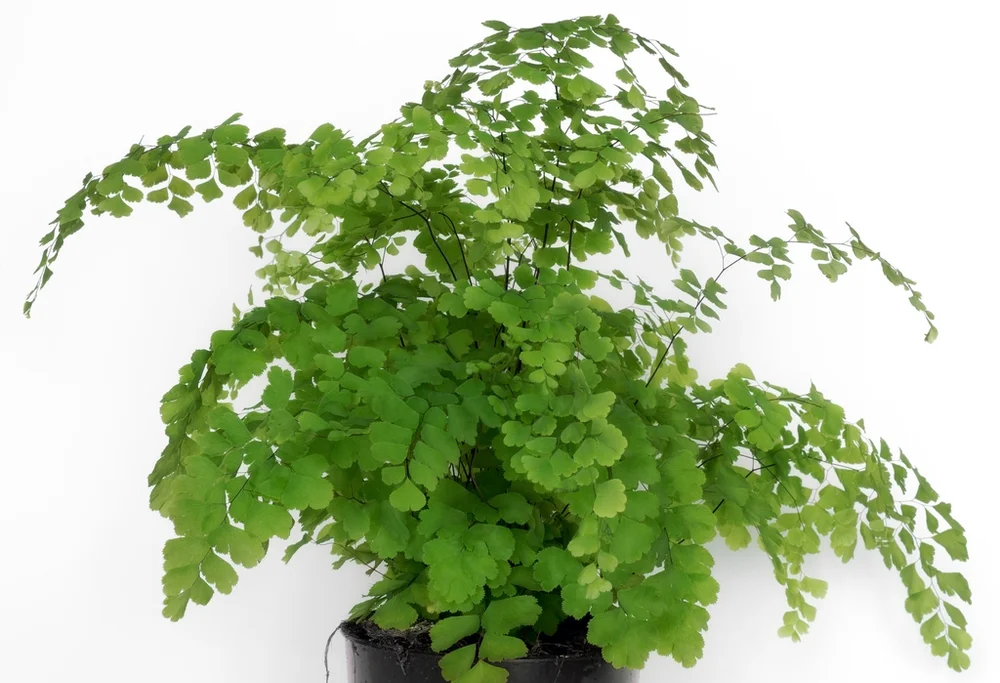
Follow the arching dark stems beyond the pot. Small maidenhair leaflets still form a spreading canopy; compare the whole frond span with your opening and growing room. Image: André Karwath · CC BY-SA 2.5 - Allow room around the whole frond, not just each small leaflet.
- Check
- Adiantum raddianum has arching fronds and creeping rhizomes. NC State’s ordinary-culture dimensions are 1–2 ft. high and wide.
- Action
- Choose only when you can check its consistently moist rootball and leave lateral clearance. Use the frond span and care opening to assess the actual specimen.
- Stop or reassess
- Fine leaflets do not establish a permanently miniature plant.
Evidence[4]
- Rabbit’s foot · a surface rhizome
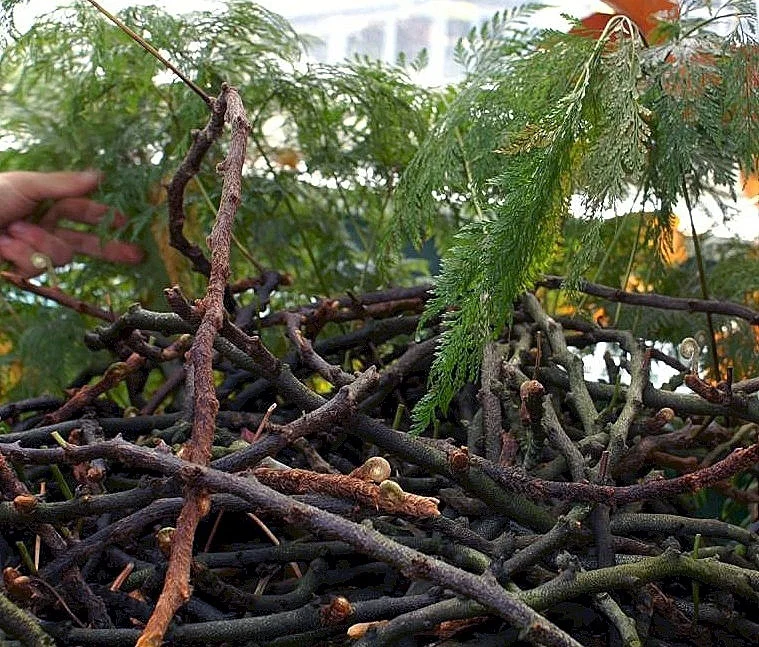
The brown branching structures beneath the fronds are exposed rhizomes. Leave their growing surface clear and room beside the pot; this large specimen does not set a miniature display’s dimensions. Image: David J. Stang · CC BY-SA 4.0 - Keep the creeping rhizome exposed and give it a route over the surface.
- Check
- Davallia fejeensis forms fronds along fuzzy rhizomes. They can extend beyond a pot edge; NC State advises some surface drying between watering.
- Action
- Choose an accessible draining pot or suitable support when you can maintain that routine. Keep rhizomes above the medium rather than burying them under decorative moss.
- Stop or reassess
- A continuously wet buried root zone is not the same growing arrangement.
Check the cultivated form behind lemon button fern
UConn describes its lemon button entry at about 12 inches tall. That named-entry description and larger parent-species reports have different scope; they are not values to average into a bottle-size promise.
Plant records
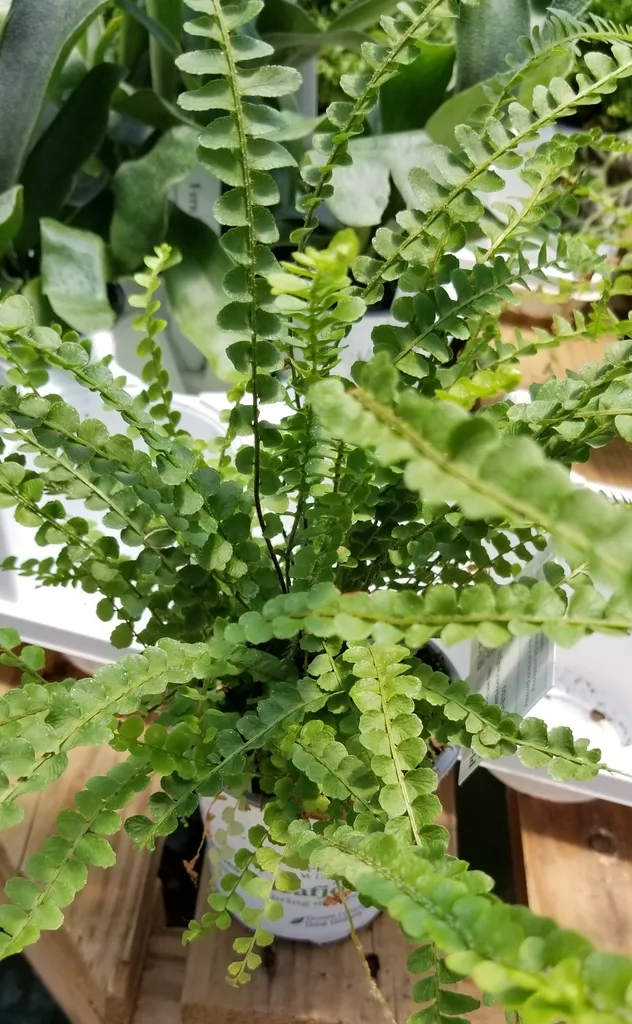
Identity record
Nephrolepis cordifolia
The source labels this photograph Living Lace® Cute as a Button™. Use it to recognize that pictured form, then verify the plant you are buying.
The photograph does not identify Duffii or establish a mature size for every lemon button fern.
Read the plant profileMake the purchase decision
Request the species and cultivated-form label, current frond span, expected growth, and propagation origin. Test whether the whole rootball and fronds can pass through the opening. Leave a removal route before runners or new fronds crowd adjacent plants.
- Choose the compact lemon button form Separate the RHS horticultural choice, parent-species growth, and the photographed retail form.
- Measure usable space and removal Check the planted surface and the opening with the actual specimen.
Evidence[3]
A fern name can describe a different kind of plant
| Plant or source-specific group | What matters in the display | Choose only with this management |
|---|---|---|
| Krauss’s spikemoss · Selaginella kraussiana | A low creeping vascular plant, distinct from true moss and true ferns. Humid air and indirect light accompany rapid surface spread. | Use moist, draining medium and a reachable trimming edge. Do not let a mat cover a fern crown. |
| Frosty fern · Selaginella martensii | A different Selaginella. Missouri’s Frosty fern form grows upward as well as outward and needs high humidity. | For that form, Missouri gives about 65–70°F, at least 70% RH, and moist draining medium. Keep roots above collected water and verify the actual botanical label. |
| Asparagus fern · Asparagus setaceus | A flowering plant with fine fern-like foliage and twining or scrambling stems. | Use suitable bright filtered light, moist draining roots, support, and accessible growth control in a larger display. Do not choose it merely because its starter foliage looks delicate. |
| NC State’s Asparagus densiflorus Sprengeri Group | The source describes an arching, spreading plant with substantial root and canopy growth, distinct from climbing A. setaceus. | Compare the source-identified group and its actual size. Retail Sprengeri naming overlaps other taxonomic usage; an unverified trade label cannot inherit these facts or a fern routine. |
Give fern-like plants their own care route
Use the identity comparison above before choosing a planting method. Selaginella’s creeping edge and Asparagus setaceus’s climbing canopy call for different space and management; neither becomes a true fern because of a trade name.
- Plant and contain the Selaginella mat Follow its shallow-root, moisture and spreading-edge guidance.
- Plan climbing Asparagus setaceus Use the support, root care and stem-control guide for this named plant.
- Check the Frosty fern form Retain its own humidity, temperature and growth conditions.
Choose the enclosure after the plant’s requirements
- You want ferns in a closed terrarium
- Use an openable humid container and an identified plant that fits.
- Check
- Check moisture at a maidenhair rootball and clearance around fronds separately. A lid retains moisture but cannot establish the right root condition, leaf temperature or room for new growth.
- Action
- Use an openable humid display where the named fern fits; keep glass out of direct sun and open it when excess moisture needs to escape.
- Stop or reassess
- Do not infer permanent sealed success from a general houseplant or terrarium-use statement.
- One plant needs a different watering interval
- Choose independent roots only when shared air and light also work.
- Check
- Compare maidenhair’s consistently moist roots with rabbit’s foot surface drying, and check each plant’s humidity needs.
- Action
- Use removable draining pots if their above-ground conditions overlap. Drain outside the display and empty collected water.
- Stop or reassess
- A separate pot cannot fix incompatible air, light, temperature, or unreachable growth.
- The shop plant is small but its form grows broadly
- Choose space and maintenance deliberately.
- Check
- Measure frond span, rosette width, rhizome direction, rootball, and the opening. Ask which form the expected size describes.
- Action
- Test the full frond span and rootball through the opening. Choose a larger accessible vessel or a verified compact form if the fern would become trapped.
- Stop or reassess
- Repeatedly cutting frond tips is not evidence that any fern can stay in a narrow bottle.
- Prepare the complete display after choosing the fern Use the assembly route without transferring one fern’s requirements to every form.
Place the plant so you can keep caring for it
Match the medium and growing level
Use an aerated mix that retains the moisture the named plant needs. Set a rooted crown at its existing growing level without covering it. Keep Davallia’s furry creeping rhizome above the soil surface; leave it room to extend rather than burying it beneath decorative moss.
Water the roots and inspect drainage
Water the medium carefully, let a removable pot drain, and empty collected water. For the shared terrestrial bed, stop before water pools around roots. Inspect actual moisture before the next watering; misting the glass cannot establish that the roots received water.
Maintain access as growth changes
Remove dead fronds and fallen debris with clean tools. Keep a visible crown, inspection area, and reachable mat edge. Move an outgrown plant to suitable space; divide it only when that named plant and your handling method support division. Do not impose a universal trimming or watering calendar.
- Inspect the actual fern before purchase Use the arrival and health checks alongside the frond, root and identity checks above.
Read changes before adding water or fertilizer
- Brown dots or lines appear beneath mature fronds
- Check for normal spore structures first.
- Check
- True ferns form spore clusters called sori, often brown or dark when mature. Their arrangement depends on the fern; bird’s nest fern has lines on the underside.
- Action
- Compare the pattern with the identified plant and look for separate signs of damage or moving pests. Leave normal sori in place.
- Stop or reassess
- Do not treat every dark mark as a pest or diagnose a disease from color alone.
- Fronds crisp or leaflets drop
- Check moisture, heat, light, and air together.
- Check
- Inspect the rootball and room conditions before watering. Drying is especially consequential for maidenhair; a wet rootball calls for a different check.
- Action
- Correct a dry root zone according to the species, move overheated glass out of sun, and remove dead growth. Watch new growth rather than expecting dead fronds to become green.
- Stop or reassess
- Pause added water when the medium is already wet; inspect drainage and decaying roots instead.
- Frosty tips change color
- Check the cultivated form and feeding history.
- Check
- For Missouri’s S. martensii Frosty fern form, white tips can be lost with excess nitrogen. It is not a true-fern spore pattern.
- Action
- Review recent feeding and the actual moisture and humidity before adding more fertilizer. Keep roots above standing water and avoid watering the foliage unnecessarily.
- Stop or reassess
- Do not use fading white tips alone as proof of nutrient deficiency.
Evidence[10]
Other fern labels still need a specific decision
Boston fern, brake fern, and staghorn fern add different frond sizes and planting methods. RHS’s indoor examples include Boston and brake ferns that grow beyond a tiny starter, while UConn describes staghorn ferns on removable supports that drain after watering. Compare the named species or cultivated form before adding one to this plan.
Hardy outdoor ferns and unidentified miniature-fern assortments do not inherit tropical indoor culture. Confirm the plant’s temperature and seasonal guidance, its growth direction, and whether the seller’s size refers to a juvenile or a mature form. Choose nursery-propagated plants and keep surplus plants out of natural areas.
Your next step
Use your plant shortlist
More detail when you need it
- Selaginella kraussiana: planting and careIdentify Selaginella kraussiana, plant its shallow roots, keep moist soil and humid air, trim spreading stems, and distinguish drying from wet-root decline.
- Frosty fern: planting and careIdentify and care for the Selaginella martensii form sold as Frosty fern. Plan humidity, temperature, growing room, root drainage, division, and white-tip checks.
- Lemon button fern: planting and careCheck the identity and cultivated form of lemon button fern. Plan moist roots, ventilation, frond clearance, runner control, division, and a removable pot.
- Asparagus fern: planting and careChoose and care for Asparagus setaceus with indirect light, drained roots, humidity and air movement. Plan climbing space, stem removal, and root inspection.
- Asparagus densiflorus: planting and careIdentify the Asparagus densiflorus Sprengeri Group scope, choose an accessible display, water seasonally, control arching stems, and inspect roots and cladodes.
- Check a closed humid plantingRead the specific enclosure conditions and required management.
- Compare an existing humid combinationRead its actual members and complete conditions before changing the planting.
- Look up recorded plant identitiesSeparate names and documented conditions without generating a new compatibility verdict.
Explore more in plants
Sources and review
- WFO Plant List — pinned 2026-06 classification · World Flora Online
- Nephrolepis cordifolia — species and cultivated forms · NC State Extension
- Ferns: Indoor Growing · University of Connecticut Home Garden Education Center
- Adiantum raddianum — Delta maidenhair · NC State Extension
- Asplenium nidus — bird’s nest fern · NC State Extension
- Davallia fejeensis — rabbit’s foot fern · NC State Extension
- Tender ferns — houseplants · Royal Horticultural Society
- Selaginella kraussiana — spikemoss · NC State Extension
- Frosty Ferns Warm Your Home Interior · University of Missouri
- Asparagus setaceus — climbing asparagus · NC State Extension
- Asparagus setaceus — growing and support · Royal Horticultural Society
- Asparagus densiflorus Sprengeri Group — source-specific group · NC State Extension
- Growing Ferns — potting, watering and grooming · University of Georgia Extension
- Growing Ferns from Spores — sori and plant development · Iowa State University Extension and Outreach
- How to Create and Care for a Terrarium · Iowa State University Extension and Outreach
- Nephrolepis duffii — RHS horticultural profile (including the listed Duffii synonyms) · Royal Horticultural Society