Plants / Ficus microcarpa
Ficus microcarpa in a display: a young tree needs a growth plan
Identify the parent species and decide how the growing crown and roots will leave the display before planting.
By Terrarium GuideSources & editorial method
Botanical identity: Ficus microcarpa
The short answer
Choose a young Ficus microcarpa only for a bright, larger open glass landscape in which a tree is the focal structure and later removal is part of the plan. Keep it in a draining removable pot behind or beside lower planting, with space for the crown to expand. For a small mixed bottle, choose a lower structural plant instead.
Do not use the size or pruning assumptions of a trained Ginseng bonsai for an untrained species plant. Keep its root zone moist but well-drained and plan a larger growing position before the crown or roots lose access.
When a young tree adds value to the scene
A juvenile fig can supply a visible trunk and a raised canopy in a larger open landscape. Make it the main structure, with an exposed route for lifting its pot; do not hide it as a small filler among groundcover. The removable pot is a care zone, not an excuse to plant a tree permanently in a narrow neck.
As the canopy develops, check light reaching the lower planting and stop roots or neighboring mats from tying the pot into the shared bed. If you cannot keep the tree removable without dismantling the scene, use it as an ordinary potted tree and redesign the terrarium.
For upright leaves without a tree trunk, compare Pilea cadierei in the humid display guide. It needs its own moisture, circulation, headroom and pinching plan, but it avoids making tree training the central job. A small bonsai is a different maintained structure, not a naturally dwarf version of any young fig.
- Compare the smaller humid-plant alternative Check its own environment, growth and planting method before substituting.
Scope and important limits
A useful fit when
- Choosing, planting, and maintaining the named plant in the conditions described here.
Use another path when
- Transferring these conditions to an unidentified retail plant or assuming a permanent sealed display.
Published horticultural guidance and its application to display care; no Terrarium Guide growing trial is claimed.
Choose the long-term growing plan first
| Plant or intention | Decision | What to do |
|---|---|---|
| Untrained young F. microcarpa | Treat it as a developing tree. | Use a removable pot and reserve a future larger position. |
| A trained Ginseng bonsai | A different management task. | Follow the form-specific page and inspect the individual roots and canopy. |
| Large bright accessible display | Possible only with an explicit growth and removal plan. | Measure the actual plant and keep its rootball and crown reachable. |
| Small permanent low-light sealed planting | Change the plant or the intended display. | A nursery size does not establish a dwarf growth limit. |
A small pot does not change the parent species
This guide covers the tree species Ficus microcarpa. This parent species is distinct from the source-named Ginseng bonsai form, which is discussed on its own page. Ask for the botanical identity and any training or cultivated-form information when buying a young fig.
Landscape sources describe a large spreading crown and aerial roots. The NC State record includes species descriptions up to about 40 ft (12 m) outdoors; that measurement is neither a predicted indoor height nor a bonsai dimension. It establishes why an untrained juvenile requires a growth plan rather than an assumption of permanent miniature size.
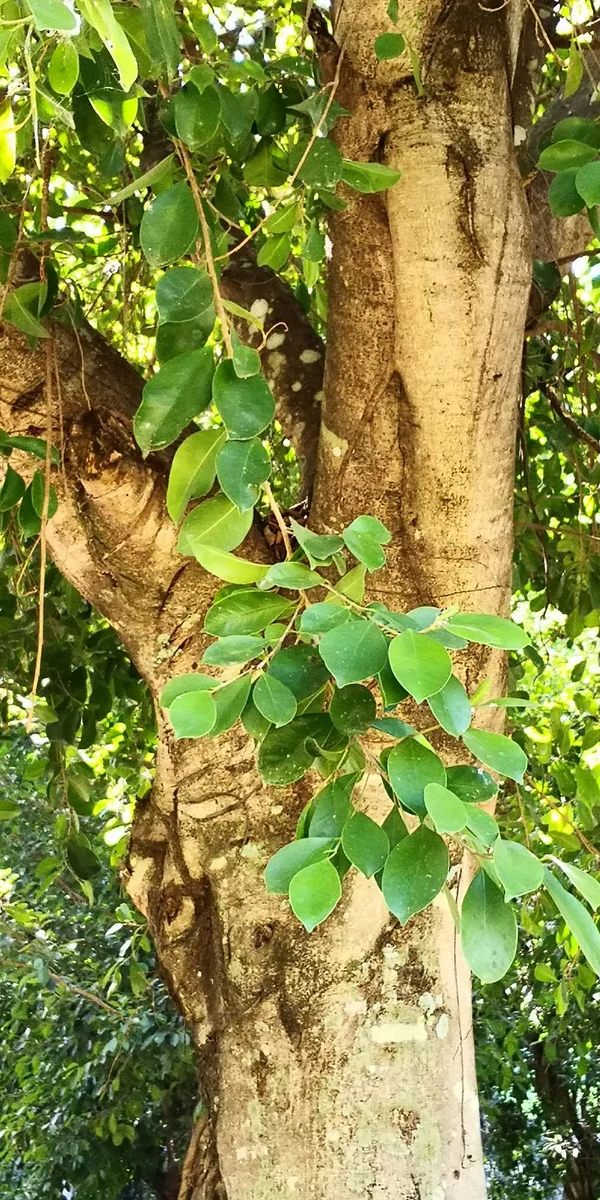
The source photograph shows the parent species, not the exposed bulbous root form associated with retail Ginseng plants. It cannot establish which form a seller’s unlabeled fig represents.
Resolve identity, actual size, and the next container
- Ask whether the plant is an untrained species plant or a trained formDo not infer a bonsai identity merely from a small pot or a thickened young stem.
- Measure the rootball and crown togetherCheck the opening, usable height, canopy width, and a route to lift the rootball without dismantling other plants.
- Name the next growing positionIf the tree outgrows the arrangement, decide where it will be repotted. An unknown future home makes a permanent small-display plan incomplete.
- Compare named nursery stock and delivery Keep the identity and specimen checks above; compare seller information, arrival forms and delivery before ordering.
Keep the young tree removable from the start
Choose a bright position with safe glass exposure
The species sources describe sun to semi-shade in their growing settings. Do not move an unacclimated nursery plant into hot sun behind glass simply to match an outdoor light category.
Use a drained container root zone
Prepare moisture-retentive but well-drained medium. A pot with an outlet makes water removal and later repotting more practical than a hidden shared bed.
Retain the existing rootball level
Support the plant while placing it. Keep the stem base inspectable and do not bury it to reduce its apparent height.
Recheck access as growth develops
Inspect both new shoots and the rootball. Move the plant to its next container before the crown or roots prevent safe lifting and ordinary care.
- Test removal of the entire young tree Check the rootball and crown before the planting becomes inaccessible.
Keep species guidance in its original context
Maintain moist, well-drained roots and check the medium before watering. Moderate watering in a landscape profile does not specify a volume or interval for a small indoor pot. Empty collected water rather than letting a hidden reservoir surround the rootball.
NC State describes warm year-round culture above 68°F (20°C) and high humidity associated with aerial-root development. The 70–100% humidity discussion is a parent-species preference in that context, not a minimum survival threshold or an instruction to seal a wet jar.
Choose the position by light reaching the crown, warmth, root management, and access together. Increasing humidity cannot compensate for insufficient light, and cutting shoots cannot create root space in a container that can no longer be lifted.
Use changes in access as a reason to act
| Observation | Check | Action |
|---|---|---|
| Crown reaches the lid or covers a neighbor | Actual shoot route and remaining light below it. | Move to the planned larger position before branches become trapped. |
| Roots fill the pot or escape into surrounding soil | Whether the pot still drains and can be lifted. | Repot outside the display; avoid tearing escaping roots through other plants. |
| Leaves decline with wet medium | Standing water, roots, and light at the crown. | Inspect before watering again; seek identification if deterioration continues after conditions are corrected. |
| The desired outline requires ongoing bonsai training | Whether this is now a managed bonsai task. | Use the separate trained-form guidance and a suitable work setup rather than improvising severe cuts in a bottle. |
- Check the history of continuing leaf decline Keep the tree and bonsai decisions here; use broader symptom checks if the cause remains unclear.
Keep the tree and bonsai decisions separate
Compare conditions and companions
More detail when you need it
Explore more in plants
Sources and review
- Ficus microcarpa — Flora & Fauna Web · Singapore National Parks Board
- Ficus microcarpa 'Ginseng' — NC State Plant Toolbox · NC State Extension
- Ficus microcarpa — UF/IFAS Center for Aquatic and Invasive Plants · University of Florida IFAS
- WFO Plant List 2026-06 · World Flora Online
- How to Create and Care for a Terrarium · Iowa State University Extension and Outreach
- Ficus microcarpa - Stem & leaves.jpg — Wikimedia Commons · Wikimedia Commons
- Pilea cadierei — NC State Plant Toolbox · NC State Extension