
Plants / Small spaces
Small terrarium plants: choose growth you can keep within reach
Compare low foliage, spreading mats, upright clumps, and cultivated forms by the space they will use—not the size of the starter pot.
By Terrarium GuideSources & editorial method
The short answer
Choose a small terrarium plant by the space that will run out first. Compare a verifiable compact Fittonia for low foliage, Selaginella kraussiana or baby’s tears for a maintained mat, and Pilea cadierei when you have upright headroom. Episcia adds runner control; a lemon button fern or miniature African violet requires a verified cultivated form. Low height and small leaves do not guarantee a manageable footprint.
Choose the environment first, then check the actual rootball, canopy, growing direction, and a route for trimming or removal. A low plant can fill the entire floor, a young fern can develop long fronds, and a small succulent still needs its own light and drying routine.
Choose by the space that will run out first
| Choice | Published growth and space pressure | Choose it only when |
|---|---|---|
| Compact nerve plant · Fittonia albivenis | NC State: 3–8 in. high, 6–18 in. wide for the species. Creeping stems use floor area; its explicit terrarium advice concerns dwarf plants. | You can verify a compact form, keep humid air and moist draining roots, and reach shoots to pinch them. Evidence[18] |
| Krauss’s spikemoss · Selaginella kraussiana | NC State: 2–4 in. high, 12–18 in. wide. Low height comes with rapid mat expansion. | You want a maintained groundcover with humid air, indirect light, moist draining medium, and reachable edges. Evidence[28] |
| Baby’s tears · Soleirolia soleirolii | NC State: 3–6 in. high. Its 3–6 ft. spread is a garden-context report, not a jar prediction; the source explicitly warns of terrarium crowding. | You can control the mat and remove stray stems. A single maintained groundcover is a simpler space decision than an inaccessible mixed bed. Evidence[19] |
| Aluminum plant · Pilea cadierei | NC State: 6–12 in. high and 6–9 in. wide. Upright clumping growth uses lid clearance. | You have headroom, moist draining roots, indirect light, and access to pinch tips and thin crowded foliage. Evidence[25] |
| Flame violet · Episcia cupreata | NC State: 8–12 in. high, 1–2 ft. wide. Runners form new rosettes; a slow growth label does not mean a fixed footprint. | Your humid, ventilated layout has room for runners and a way to remove escaping growth while keeping leaves dry. Evidence[29] |
| Lemon button fern · Nephrolepis cordifolia forms | The parent-species profile includes large fronds and runner/tuber expansion. A small retail pot does not identify a compact cultivated form. | You verify the form and its expected dimensions, then leave moist draining roots, frond clearance, and removal access. Evidence[30] |
| Miniature African violet · Streptocarpus ionanthus cultivars | Cultivars include miniature, standard, and trailing types. Rosette width and additional crowns determine the footprint. | You verify the cultivar and use a reachable, independently watered draining pot in an open humid display; keep the crown and leaves dry. Evidence[15] |
Evidence[18][28][19][25][29][30][15]
- Measure your container and test access Check the usable planting surface, headroom, and removal route before buying.
Scope and important limits
A useful fit when
- Choosing plants for a small, accessible humid container.
- Checking whether a small retail plant will remain manageable, including open-display alternatives.
Use another path when
- A fixed number of plants per jar volume.
- A promise that every named species or cultivated form stays small without care.
Published dimensions describe the stated horticultural context, not measured long-term growth inside your container. Use the actual rootball, canopy and maintenance opening to make your space decision.
Measure usable space before choosing the specimen
Measure the planting surface, not the outside glass
Allow for substrate depth, stones, wood, and the inward curve of the vessel. Measure usable width at the rootball and foliage positions. Compare it with the actual specimen and its documented growth; jar volume alone cannot tell you how many plants fit.
Check headroom along the growing direction
Measure from the finished substrate surface to the lid or neck. For a rosette, include leaves extending sideways; for a fern, allow arching fronds; for Ludisia, consider upright shoots and flower spikes as well as creeping stems. Do not treat today’s leaf tips as a permanent maximum.
Test trimming and removal in the empty vessel
Pass your planting and trimming tools through the opening and reach the intended plant position. Check that the rootball or removable pot can come back out. Choose fewer members, a wider opening, or another specimen if future growth would block the route. Decide how you will remove cut material before planting.
Which space will run out first?
Use the dimensions above to narrow the specimen, then make the space check that matches its growth. General watering and light requirements stay with the environment and plant guides.
- The floor is the limiting space
- Choose a reachable footprint before choosing a carpet effect.
- Check
- Compare the actual rootball and canopy with the usable surface. Compact Fittonia and low Selaginella still extend sideways; baby’s tears can crowd companions.
- Action
- Keep an accessible edge around the chosen plant. If two spreading plants would share an unreachable boundary, simplify the planting before buying.
- The lid or neck is the limiting space
- Check the growing direction from the finished substrate level.
- Check
- Pilea uses upright headroom; fern fronds also arch sideways. The neck can restrict removal even when the leaves fit inside the belly of the vessel.
- Action
- Test the whole specimen through the opening and leave a reachable route for future growth. Choose another specimen or vessel when that route cannot be maintained.
- Check Fittonia’s space and access See how footprint, headroom and the tool route work together.
- Keep an upright Pilea within reach Use the plant-specific pinching and renewal guidance.
Choose the growth-control task you can reach
These two examples distinguish a dense mat from runners that create new rosettes. They are alternatives to compare, not a proposed shared planting.
Plant records
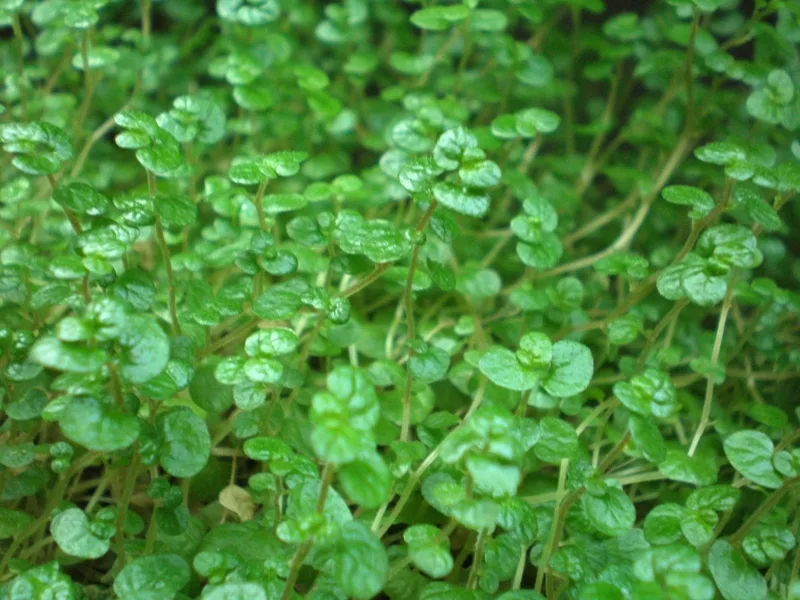
Identity record
Soleirolia soleirolii
Baby’s tears spreads as a dense mat. Inspect the edge where it meets the next crown or open working space.
Accept regular edge control and removal of cut fragments, or choose one maintained groundcover instead of a crowded mixed bed.
Read the plant profile- Contain and renew baby’s tears Follow the object-specific mat management steps.
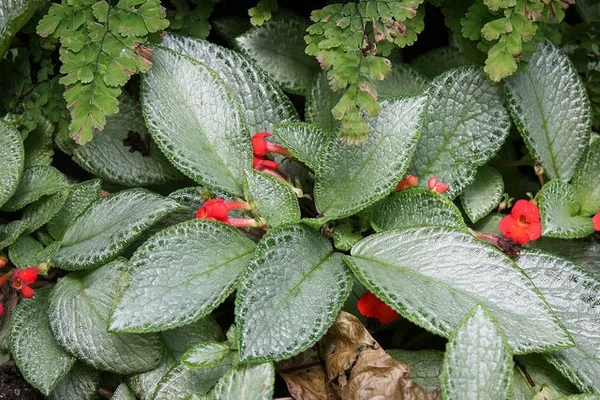
Identity record
Episcia cupreata
Episcia sends runners to new rosettes. Leave the runner path visible instead of filling the gap with another plant.
Remove escaping runners before they close the care route; its source’s slow growth category does not promise a fixed footprint.
Read the plant profile- Check the compact shared-bed conflict The full Fittonia–baby’s tears layout analysis explains why shared care does not resolve crowding.
Verify the cultivated form before paying for “mini”
Ask which mature form the seller’s label describes. The lemon button profile separates Duffii from other cultivated forms; the example below shows why a rosette label also needs checking.
Plant records
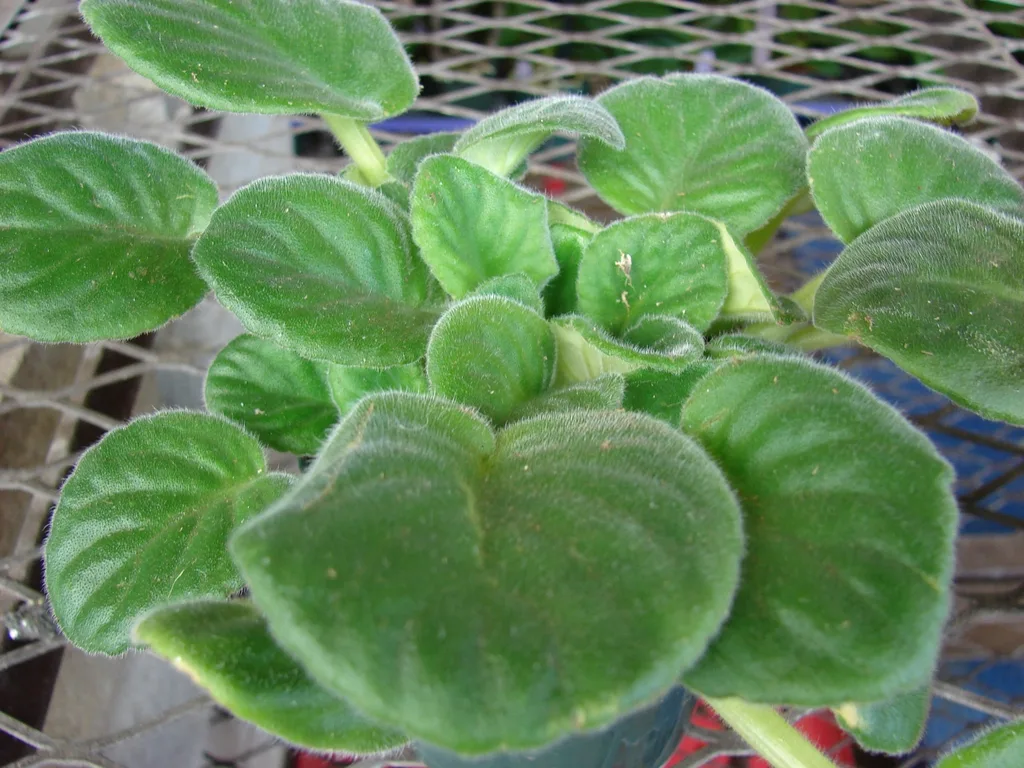
Identity record
Streptocarpus ionanthus
For an open humid display, verify a miniature African-violet cultivar and measure the actual rosette, pot and opening together.
Standard, trailing and additional-crown forms use different space. Keep the independently watered pot removable; a miniature label cannot replace the exit test.
Read the plant profile- Check the lemon button form before buying Keep the pictured retail form, the RHS Duffii entry and parent-species growth separate.
When a small starter is the wrong space plan
| Plant or form | Space or care issue | Useful next decision |
|---|---|---|
| Frosty fern · Selaginella martensii | Spreading stems have upward-turning branches; Missouri Extension reports 10–12 in. height for its S. martensii Frosty Fern form. It is not the same low mat as S. kraussiana. | Verify the botanical name and leave room for upward and lateral growth. |
| Jewel orchid · Ludisia discolor | Creeping stems, upright leaf shoots, and flower spikes need different clearances; a tiny starter does not settle all three. | Use an accessible wide pot in an appropriate humid layout and check the space at flowering. |
| Spider plant · Chlorophytum comosum | Arching leaves and plantlet stems use lateral and downward space. | Choose an open display with room beside the crown and access to remove unwanted stems. |
| Asparagus setaceus / A. densiflorus forms | Climbing stems or a broad arching canopy outgrow the fern-like appearance of a young plant. | Choose a larger accessible display or a plant with a lower maintenance burden. |
| Ficus microcarpa / Ginseng bonsai | Tree growth and aerial roots need control. Ginseng is a trained form maintained through pruning, not a naturally miniature species. | Accept ongoing training and removal access in a suitable display, or choose lower foliage. |
| Persian violet · Exacum affine | A rounded flowering crown needs room; short-lived display and replacement may be part of the plan. | Choose it for a reachable flowering display when you accept replacement, not a permanent miniature bed. |
| Aloe vera / jade plant · Crassula ovata | Aloe produces offsets; jade forms a branching shrub crown. Neither a small starter nor slow growth makes a moist closed bed suitable. | Use a bright open container with an actual drainage outlet and a drying root routine; plan for a larger crown. |
| Venus flytrap · Dionaea muscipula | A compact rosette still has specialized light, water, medium, and seasonal or indoor-cultivation requirements. | Choose a dedicated carnivorous-plant routine rather than a general humid foliage mix. |
| Spanish moss · Tillandsia usneoides | Hanging branching strands need a ventilated support and removal for separate watering and drying. | Use an open reachable support with hanging clearance, not a rooted moss carpet. |
Evidence[4][12][7][14][6][11][2][10][5][8][9][1][13]
- Compare larger and seasonal display choices Check the support, growing room, and care needed by climbing, tree-form, and seasonal flowering plants.
- Check a drying succulent container See the Aloe–jade drainage and layout requirements.
- Check specialized plant care before mixing Review the flytrap and other environment mismatches.
Respond before growth blocks the next maintenance visit
- A mat reaches the next plant
- Restore the edge while it is still reachable.
- Check
- Look for stems crossing the intended boundary or burying a neighboring crown.
- Action
- Trim or remove the spreading growth and collect cut pieces. If the same area cannot support both plants, keep one groundcover or change the layout.
- Stop or reassess
- If the edge is inaccessible, remove or relocate a member instead of adding another layer of growth.
- Shoots or fronds crowd the lid
- Recheck the growing form and clearance.
- Check
- Inspect the space around the canopy and test the removal route before roots and leaves become trapped.
- Action
- Pinch reachable Pilea shoots where appropriate. Move an outgrown fern or a specimen whose required space you cannot maintain to a suitable larger container.
- Stop or reassess
- Do not treat repeated cutting as proof that every plant can remain indefinitely in a narrow bottle.
- The planting looks full before it has grown
- Reduce the initial planting.
- Check
- Check whether each crown, rootball, and trimming edge has usable space, including the removal opening.
- Action
- Start with fewer members or one maintained specimen. Keep open growing room instead of filling every visible gap; reassess any changed combination.
- Stop or reassess
- Do not use stones as proof of independent watering zones or similar moisture labels as proof of compatibility.
- Move or replace an outgrown plant carefully Use the removal sequence after the space check; keep the candidate comparison here.
Take a space check to the seller
Your next step
- Ask for the actual sale dimensionsConfirm the plant, pot, roots and order contents before buying.
- Check a closed humid plantingApply opening access, leaf checks, and the closed-container care conditions.
- Check an open humid plantingMatch planting roles, individual root care, air movement, and full combination conditions.
Use your plant shortlist
More detail when you need it
- Baby’s tears: planting and careGrow Soleirolia soleirolii with moist roots and humid air. Choose a reachable layout, divide and contain the mat, and check crowding, drying, and regrowth.
- Spider plant: planting and careChoose an accessible spider plant display, plant a rooted plantlet, manage runners, water without saturation, and check brown tips before changing treatment.
- Ficus microcarpa: planting and careUnderstand Ficus microcarpa as a tree, distinguish it from Ginseng bonsai, and plan light, root drainage, growing space, transplanting, and removal.
- Ginseng ficus: planting and careChoose and maintain a Ginseng ficus display by the actual bonsai form. Plan bright light, drained roots, pruning access, repotting, and an exit from glass.
- Persian violet: planting and careChoose Exacum affine for a reachable flowering display. Keep moist drained roots, remove spent flowers, assess post-flowering growth, and plan replacement.
- Maintain aluminum plant’s upright clumpKeep usable headroom and renew an outgrown or tired plant.
- Choose an orchid by roots and flowering roomCompare terrestrial jewel orchids, mounted miniatures, temperature needs, and mini labels.
- Choose a fern by roots and growing directionCompare named ferns, cultivated forms, exposed rhizomes, and fern-like trade labels.
- Compare a living moss patch or cushionCheck botanical identity, the growing surface, and mound space instead of relying on a sheet or pillow label.
- Look up the plant and its conditionsBrowse verified identities and source-backed needs before selecting the specimen.
Explore more in plants
Sources and review
- Dionaea muscipula — ICPS Information Guide · International Carnivorous Plants Society
- Exploring Ficus: More than the Houseplant in the Corner · University of Illinois Extension
- How to Create and Care for a Terrarium · Iowa State University Extension and Outreach
- Frosty Ferns Warm Your Home Interior · University of Missouri
- Aloe vera — NC State Plant Toolbox · NC State Extension
- Asparagus densiflorus Sprengeri Group — NC State Plant Toolbox · NC State Extension
- Chlorophytum comosum — NC State Plant Toolbox · NC State Extension
- Crassula ovata — NC State Plant Toolbox · NC State Extension
- Dionaea muscipula — NC State Plant Toolbox · NC State Extension
- Exacum affine — NC State Plant Toolbox · NC State Extension
- Ficus microcarpa 'Ginseng' — NC State Plant Toolbox · NC State Extension
- Ludisia discolor — NC State Plant Toolbox · NC State Extension
- Tillandsia usneoides — NC State Plant Toolbox · NC State Extension
- Asparagus setaceus — RHS Plant Profile · Royal Horticultural Society
- Streptocarpus ionanthus — NC State Plant Toolbox · NC State Extension
- Plant of the Week: Episcia cupreata: Flame Violet · University of Arkansas System Division of Agriculture Cooperative Extension Service
- Terrariums — MU Extension Guide G6520 · University of Missouri Extension
- Fittonia albivenis — NC State Plant Toolbox · NC State Extension
- Soleirolia soleirolii — NC State Plant Toolbox · NC State Extension
- Episcia cupreata — RHS Plant Profile · Royal Horticultural Society
- Episcia cupreata 'Cleopatra' — Flora & Fauna Web · National Parks Board, Singapore
- Cultural Guidelines for Commercial Production of African Violets — UF/IFAS Extension · University of Florida IFAS Extension
- Streptocarpus ionanthus (AV) — RHS Plant Profile · Royal Horticultural Society
- African Violets — Missouri Botanical Garden Fact Sheet · Missouri Botanical Garden
- Pilea cadierei — NC State Plant Toolbox · NC State Extension
- Streptocarpus ionanthus — Flora & Fauna Web · National Parks Board, Singapore
- WFO Plant List 2026-06 · World Flora Online
- Selaginella kraussiana — NC State Plant Toolbox · NC State Extension
- Episcia cupreata — NC State Plant Toolbox · NC State Extension
- Nephrolepis cordifolia — NC State Plant Toolbox · NC State Extension