Plants / Asparagus fern
Asparagus fern in glass: plan for climbing stems and tuberous roots
Asparagus setaceus looks delicate, but its shoots, rootball, and handling needs determine the display.
By Terrarium GuideSources & editorial method
Botanical identity: Asparagus setaceus
The short answer
The asparagus fern covered here is Asparagus setaceus, a climbing flowering plant rather than a true fern. Choose an accessible, ventilated humid display with bright indirect light, moist well-drained roots, and room for shoots to scramble or climb.
A small feathery nursery plant is not a permanent miniature. Its tuberous roots and fast shoots need inspection, pruning, and eventual repotting or removal. Use an ordinary removable pot if a terrarium cannot provide that access.
Choose the growth route before choosing the vessel
| Display | Decision | What you must allow |
|---|---|---|
| A tall accessible ventilated display | Possible when you can reach the entire plant. | Climbing shoots, a growing rootball, and removal of old stems. |
| A removable pot in an open display | Simplifies root care and seasonal watering. | Real drainage and enough canopy room outside the pot. |
| A narrow sealed bottle | A poor choice for this growth pattern. | Shoots and roots can exceed the space while wet foliage becomes difficult to inspect. |
| A small plant beside delicate groundcover | Do not judge by initial texture alone. | Prevent wrapping, shading, and hidden root congestion. |
Scope and important limits
A useful fit when
- Choosing, planting, and maintaining the named plant in the conditions described here.
Use another path when
- Transferring these conditions to an unidentified retail plant or assuming a permanent sealed display.
Published horticultural guidance and its application to display care; no Terrarium Guide growing trial is claimed.
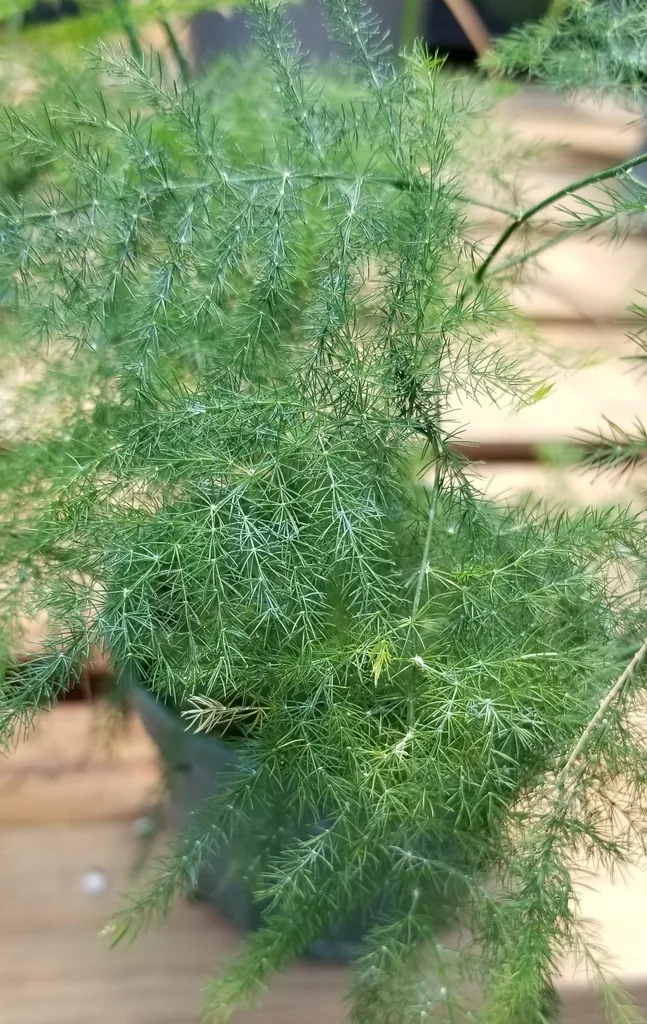
Feathery sprays belong to a scrambling Asparagus
Asparagus setaceus is also sold as plumosa or lace fern. The fine green leaf-like branches are cladodes; the plant is not a true fern. Asparagus densiflorus and its source-named Sprengeri forms use overlapping sales names but have a separate profile here.
Ordinary houseplant descriptions give about 2–3 ft (61–91 cm), while habitat growth can climb much farther. The horizontal footprint depends on how shoots are supported. Plan an accessible route for the stems, not merely a circle of soil around a young rootball.
Inspect the roots and protect your hands
- Confirm Asparagus setaceusAsk for the scientific label instead of treating every feathery Asparagus as the same plant.
- Check the rootball before fitting the canopyA small spray can sit above a congested tuberous root system. Measure the pot opening and removal route.
- Use gloves around mature stemsThe source warns about spines and irritating sap. Keep berries and loose material away from children and pets; do not treat ornamental Asparagus as an edible crop.
Evidence[1]
- Compare named plants and arrival forms Keep the identity and specimen checks above; compare seller information, arrival forms and delivery before ordering.
Start in a root zone you can lift and inspect
Position the plant in bright indirect light
Avoid intense direct sun on the foliage and hot glass. Test where future shoots could attach or wrap.
Use moist but well-drained potting medium
Choose a pot with an outlet if independent watering is practical. Keep it out of standing water in an outer vessel.
Keep the original planting level
Support the rootball rather than lowering the plant by its fragile sprays. Leave the stem bases visible and tools able to reach them.
Preserve room for air and removal
Keep wet sprays away from crowded glass and neighboring foliage. Recheck the removal route after positioning any support or hardscape.
- Test the whole removal route Check the rootball and supported climbing growth before committing to the vessel.
Water for actual growth and keep wet sprays from stagnating
Provide bright indirect light, humid air, and gentle circulation. The reviewed houseplant range of 55–70°F (13–21°C) is a growing recommendation, not a sealed-container survival test. Keep the plant away from frost and abrupt cold exposure.
Water regularly during active spring-to-autumn growth, checking that the medium remains moist rather than saturated. Reduce water as winter growth and drying slow. A yellow spray can result from different stresses, so inspect light, root moisture, and drainage before changing the watering routine.
Avoid persistent wet foliage in still air. If a canopy becomes too dense to inspect, remove selected growth or move the plant; raising humidity by continually soaking the sprays does not correct root or light problems.
Trace a stem to its base before removing it
Separate the unwanted shoot from its neighbors
Wear gloves and gently unwind or free a scrambling stem before pulling. Check where it emerges from the plant.
Remove an old or unwanted stem at its base
For a complete stem removal, cut back to the base with clean tools rather than leaving a shortened bare cane. Pinching growing tips can help shape healthy growth.
Inspect tuberous roots outside the display
If the plant is pot-bound or water cannot move through the rootball properly, lift it for repotting or division. Cutting the canopy alone does not create new root space.
Return only a manageable plant
Division is a documented propagation method. Retain healthy rooted growth in fresh drained medium; move it to an ordinary pot when the glass no longer permits safe care.
A yellow spray is a prompt to inspect, not a diagnosis
| Observation | Check | Action |
|---|---|---|
| Yellow needles that drop | Light at the sprays, dry roots, and saturated poorly drained roots. | Correct the observed cause. Yellowed tissue does not turn green again; assess subsequent healthy growth. |
| Brown tips in dry air | Humidity and root moisture separately. | Improve the position or humidity without leaving the rootball wet. |
| Spots on persistently wet sprays | Crowding and circulation, then visible pests or lesions. | Remove dead material and improve access; isolate spreading unexplained damage for identification. |
| Shoots wrap around another plant | Stem route and available maintenance access. | Free and prune the shoot; separate plants if the pattern keeps recurring. |
Evidence[1]
- Trace the pattern of yellowing or damage Compare the affected growth, roots and recent changes before choosing another treatment.
Compare conditions and companions
Explore more in plants
Sources and review
- Asparagus setaceus — NC State Plant Toolbox · NC State Extension
- Asparagus setaceus — RHS Plant Profile · Royal Horticultural Society
- Asparagus setaceus — Missouri Botanical Garden Plant Finder · Missouri Botanical Garden
- Asparagus setaceus — UF/IFAS Center for Aquatic and Invasive Plants · University of Florida IFAS Extension, Center for Aquatic and Invasive Plants
- WFO Plant List 2026-06 · World Flora Online
- How to Create and Care for a Terrarium · Iowa State University Extension and Outreach