
Plants / Lemon button fern
Lemon button fern: verify the form before choosing a small terrarium
Choose a compact fern for a reachable humid scene, while keeping the Duffii horticultural description separate from larger species plants and other retail forms.
By Terrarium GuideSources & editorial method
Botanical identity: Nephrolepis cordifolia
The short answer
An identified lemon button fern matching the RHS Nephrolepis duffii horticultural entry is a useful compact fern to compare for an openable humid terrarium. RHS lists N. cordifolia ‘Duffii’ among its synonyms, describes terrarium and bottle-garden use, and gives a broad 10–50 cm height and spread range. Choose it for a small upright frond clump with room to unfold, rather than a flat carpet.
Provide bright filtered light, moist but well-drained medium, moderate to high humidity, and good ventilation. Measure the actual plant against the usable headroom; the size band does not promise a fit in a tiny jar. An unlabeled N. cordifolia or a plant sold only as mini does not acquire those compact dimensions.
Resolve the label before planning the footprint
| What you have | What it establishes | Next decision |
|---|---|---|
| Nephrolepis cordifolia with no form label | A species identity with potentially substantial growth. | Plan for its fronds and runners; do not assume a miniature. |
| RHS N. duffii horticultural entry, also listing N. cordifolia ‘Duffii’ | A compact garden plant described for terrariums, with 10–50 cm height and spread bands. | Use a traceable form for an upright frond accent. Leave headroom and removal access; do not assign its dimensions to other labels. |
| Only a lemon button or mini tag | A common sales name. | Request botanical identification before committing to a narrow bottle. |
| The photograph on this page | A source-labeled Living Lace Cute as a Button plant. | Use it to inspect that photographed form; do not relabel it ‘Duffii’. |
Scope and important limits
A useful fit when
- Choosing, planting, and maintaining the named plant in the conditions described here.
Use another path when
- Transferring these conditions to an unidentified retail plant or assuming a permanent sealed display.
Published horticultural guidance and its application to display care; no Terrarium Guide growing trial is claimed.
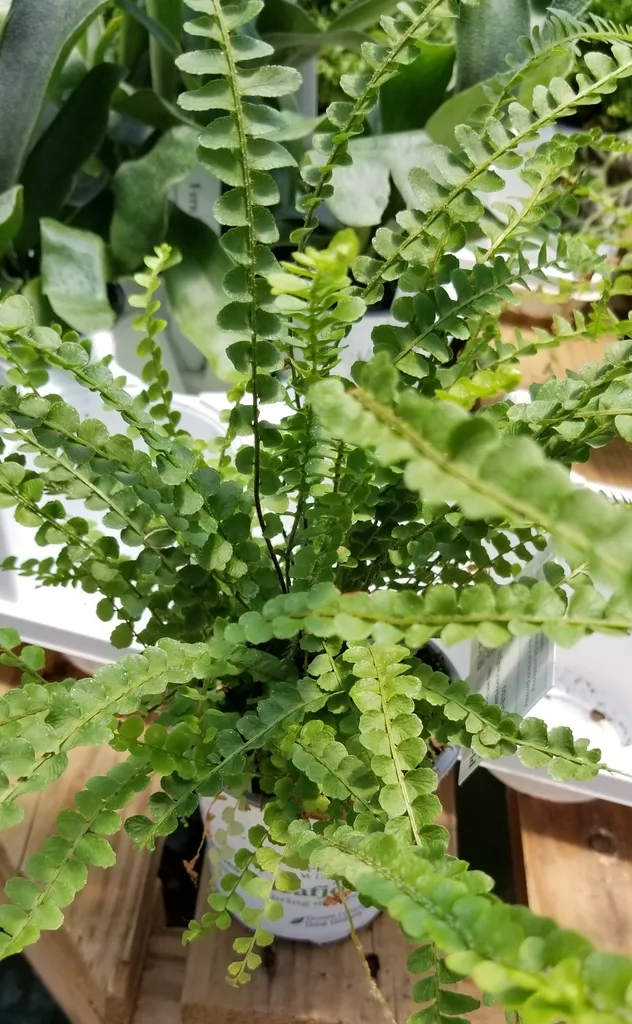
Reserve room above the crown and beside the runners
For the compact RHS horticultural entry, allow for a frond clump that can occupy 10–50 cm in both directions. That is a broad garden-reference range, not a measured size in glass. Position it behind lower foliage with an open arc for unfolding fronds; keep the crown visible and prevent neighboring mats from covering it.
For N. cordifolia without a verified compact form, NC State describes cultivated fronds up to about 3 ft (91 cm), larger ones in native habitat, and spread by runners and tubers. Those parent-species descriptions explain why an unnamed young plant is a poor shortcut for the compact choice; they are not the eventual dimensions assigned to Duffii.
Names also differ between references: RHS retains N. duffii as a horticultural entry and lists Duffii synonyms, while Kew treats the botanical name N. duffii under N. hirsutula. Keep the supplier’s full label with the plant and apply each source only to its described object. This comparison does not resolve every retail label into one taxon.
Check the form and root space together
- Keep the botanical and cultivated-form labelsAsk the seller to distinguish species information from claims about a particular compact selection.
- Inspect the crown and rootsLook for new fronds, soft decay, crowding, and runners escaping the nursery pot. Avoid breaking emerging fronds during inspection.
- Plan responsible containmentThe species is invasive in some regions. Check local guidance before outdoor planting and contain discarded runners and divisions.
- Check the named form with a seller Keep the identity and specimen checks above; compare seller information, arrival forms and delivery before ordering.
Keep the crown accessible in a drained root zone
Choose the light and opening
Use bright indirect light indoors. Choose a vessel that permits both canopy growth and removal of the rooted plant.
Prepare the root zone
For the RHS compact entry, peat-free multipurpose potting compost is a documented option. Moisten it evenly before placement so dry pockets are not hidden under the rootball; keep it loose rather than packing it into a solid plug. Use a removable draining pot if you need to empty surplus water independently.
Keep the crown at its existing level
Support the rootball and backfill without burying the growing crown. Leave the starting edges visible so runner expansion can be noticed.
Check moisture and drainage
Water only after inspecting the rootball and let a removable pot drain outside glass. Do not leave the pot immersed in collected water.
- Prepare the humid display around the fern Keep the documented form, frond clearance and removal route with the full assembly steps.
Moist roots and ventilation work together
Keep the root zone moist while preserving drainage. Established species plants can tolerate some drier conditions, but tolerance is not a reason to repeatedly dry a small indoor rootball completely. Check the moisture where the roots sit and adjust to the actual light and drying.
RHS pairs its terrarium recommendation with good ventilation and warns that overly wet fronds can rot. Leave air space around the clump, keep fronds off wet glass, and open the vessel to remove excess moisture when needed. If wet, crowded foliage persists, thin the layout or use a more open container rather than adding more mist.
Inspect runners before the fern occupies the next plant’s soil
Lift the pot to inspect its edges
Follow runners and note where new growth enters shared medium. Check root congestion rather than judging only the remaining frond space.
Remove unwanted or damaged fronds
Use clean tools at the frond base without injuring new growth. Pruning a leaf does not remove an expanding underground runner.
Divide when the rootball outgrows the position
The species can be propagated by division. Work outside the display, retaining healthy rooted growth, and repot in moist, well-drained medium.
Move it if repeated trimming cannot preserve access
Choose a wider ventilated container or an ordinary pot rather than cutting every new frond to force the fern under a lid.
Distinguish frond damage from a space problem
| Observation | Check first | Action |
|---|---|---|
| Brown crisp frond margins | Dry rootball, hot direct sun, and room dryness. | Correct the actual exposure or moisture problem and remove dead growth. |
| Yellowing with wet roots | Drainage and accumulated water beneath the pot. | Lift and inspect; stop adding water to saturated medium. |
| Fronds are continually bent by glass | Usable headroom and the form’s documented growth. | Move or divide the plant; a dwarf label cannot solve a physical obstruction. |
| New plants appear at the rim | Runners leaving the assigned root zone. | Contain or separate them and preserve access around neighbors. |
- Inspect wet-root decline outside the display Use the handling sequence when drainage and root condition need closer examination.
Compare conditions and companions
Explore more in plants
Sources and review
- Nephrolepis cordifolia — NC State Plant Toolbox · NC State Extension
- Nephrolepis cordifolia — RHS Plant Profile · Royal Horticultural Society
- Ferns: Indoor Growing · University of Connecticut Home Garden Education Center
- Terrariums — MU Extension Guide G6520 · University of Missouri Extension
- WFO Plant List 2026-06 · World Flora Online
- How to Create and Care for a Terrarium · Iowa State University Extension and Outreach
- Nephrolepis duffii — RHS horticultural profile (including the listed Duffii synonyms) · Royal Horticultural Society
- Nephrolepis duffii — POWO taxonomic name treatment · Royal Botanic Gardens, Kew