Plants / Aloe vera
Aloe vera in glass: use open air, real drainage, and room for offsets
A rosette of thick leaves needs a drying root zone, not the watering routine of a humid terrarium.
By Terrarium GuideSources & editorial method
Botanical identity: Aloe vera
The short answer
Aloe vera belongs in a bright open display with very freely draining succulent medium and a real water outlet. Let the root zone dry thoroughly between waterings. A closed humid terrarium or an undrained glass bowl is a poor match for that care.
Use a removable drained pot if you want an outer glass vessel, and empty surplus water after watering. Allow for outward-pointing leaves, offsets, and a taller flowering stem on a mature plant. Healthy leaves should not be repeatedly cut down to force a rosette into a tiny space.
Check where excess water actually leaves
| Container | Decision | Action |
|---|---|---|
| Open pot with drainage holes | Matches the drying-root care routine. | Use succulent medium and let surplus drain away. |
| Drained pot inside decorative glass | Useful when the plant can be removed. | Water outside glass, drain, and empty collected water. |
| Open bowl with stones but no outlet | An open top does not remove excess root water. | Use a drained inner pot or a different container. |
| Closed humid mixed bed | Choose another display. | Moist-root groundcovers and a thoroughly drying Aloe root zone require different care. |
Scope and important limits
A useful fit when
- Choosing, planting, and maintaining the named plant in the conditions described here.
Use another path when
- Transferring these conditions to an unidentified retail plant or assuming a permanent sealed display.
Published horticultural guidance and its application to display care; no Terrarium Guide growing trial is claimed.
Plan for the whole rosette and its flowering clearance
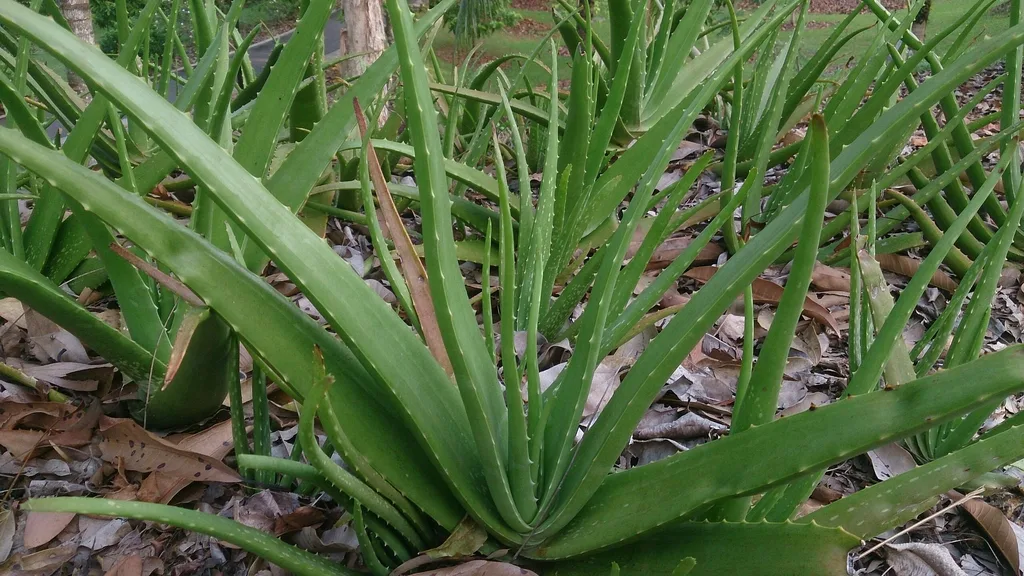
This page covers Aloe vera. Historical names and overlapping common labels do not make Aloe succotrina the same object. Keep the scientific name with a purchase and do not identify a cultivar from the source photograph alone.
Ordinary vegetative profiles often describe a plant around 1–2 ft (30–61 cm), with larger reports and a tall flowering raceme on mature plants. For planning, the reviewed envelope extends toward 1 m when flowering is considered. That is a clearance check, not a prediction that every indoor Aloe will flower or reach that height.
The rosette expands sideways and produces offsets. Leave a route around toothed leaf margins for lifting the pot; a nursery rootball fitting through the opening does not establish that the crown will remain manageable.
Choose a firm plant and a workable pot
- Confirm Aloe veraKeep a named-form label if supplied, and distinguish ordinary juveniles from a documented compact selection.
- Inspect leaves and the baseChoose firm growth without extensive soft decay or visible pests. Inspect the medium and outlet rather than accepting a top dressing as proof of drainage.
- Check the removal routeAllow the rosette to pass through without snapping leaves. Do not use ornamental leaves as food or medicine; this is a growing guide.
- Compare named Aloe purchases and root forms Keep the identity and specimen checks above; compare seller information, arrival forms and delivery before ordering.
Plant the rosette in a drained, drying root zone
Choose bright light and an open position
Acclimate a nursery plant gradually to stronger light. Avoid a heat trap behind glass even where the species tolerates sun.
Prepare succulent medium and an outlet
Use very well-drained medium in a pot with holes. Do not treat gravel at the bottom of sealed glass as equivalent drainage.
Set the rootball at its existing level
Support the plant at the rootball, keep the crown clear, and avoid piling damp medium against healthy leaf bases.
Keep water removable
Inspect root and medium condition before watering. When watering is due, do it outside an outer glass vessel, let surplus leave, and return only a drained pot.
- Build the complete draining succulent display Use the vessel and assembly steps while retaining Aloe’s drying and light instructions here.
Wait for actual drying, not a calendar
Check the root zone, pot weight, and drying through the medium before watering again. The instruction is thorough drying between waterings, not tiny daily sips or a fixed weekly dose. Reduce watering as winter light and growth slow.
Ordinary indoor humidity and good ventilation are appropriate; misting to raise humidity is unnecessary. Protect from frost and use the reviewed indoor range of roughly 55–80°F (13–27°C) as cultivation guidance, not a common temperature optimum for a mixed planting.
Give the leaves strong enough light to maintain a healthy form, while acclimating changes. Fertilizer cannot correct a dark position or saturated roots. Check those conditions before adding feed.
Reduce crowding by separating offsets, not shearing the rosette
Inspect the clump outside the display
Identify the parent crown, offsets, and any dead outer leaves. Support brittle foliage while removing the pot.
Remove only dead or badly damaged leaves when needed
Use a clean tool near the leaf base while protecting healthy tissue. Routine cutting of healthy leaf tips is not a way to make a permanently small Aloe.
Separate a rooted offset when the clump is crowded
Expose the connection carefully and retain the offset’s roots where present. Replant in its own drained succulent medium rather than pushing pups into a wet shared bed.
Observe establishment before returning to routine care
Manage a newly separated plant according to its roots and drying. Move the parent if its healthy rosette still exceeds the display.
Thick leaves can hide both excess water and drying
| Observation | Distinguishing check | Action |
|---|---|---|
| Soft discolored base with wet medium | Drainage and root firmness. | Lift and inspect promptly; stop watering saturated roots and seek identification for continuing decay. |
| Thin or wrinkled leaves | Actual root-zone dryness and root health. | Water an established dry-rooted plant appropriately; do not assume every soft leaf means thirst. |
| Stretched weak growth | Light at the rosette. | Improve light gradually; do not compensate with more water or fertilizer. |
| Offsets close the available space | Rooted pups and the parent’s own width. | Separate suitable offsets or move the clump. |
- Inspect a soft base instead of watering again Check actual roots and viable tissue when wet-medium decline continues.
Aloe’s role in the open Aloe–jade plan
Plan summary · read the complete conditions
Aloe vera and jade in an open succulent display
Aloe vera and jade can share an open, bright display when water has a real drainage outlet and the soil dries between waterings. Check both plants and growing space first; an open top or a stone layer does not drain a glass bowl.
Layout: An open succulent display with enough room for both actual plants, their canopies, and flowering stems.
- Aloe vera — Basal rosette focal point
- Crassula ovata
Check every member before sharing a root zone
Compare conditions and companions
More detail when you need it
Explore more in plants
Sources and review
- Aloe vera — NC State Plant Toolbox · NC State Extension
- Care tips for light-loving houseplants at the RHS Urban Show · Royal Horticultural Society
- Aloe | RHS Plant Guide · Royal Horticultural Society
- Aloe, a Hardy Houseplant · Penn State Extension
- Aloe, Barbados Aloe, Kitchen Aloe | Texas Tech Plant Database · Texas Tech University Plant Resources
- Aloe Vera — Gardening Solutions · University of Florida IFAS Extension
- Aloe Vera · University of Arizona Cooperative Extension
- Aloe vera | Barbados aloe · Royal Horticultural Society
- Grooming Indoor Plants · University of Maryland Extension
- WFO Plant List 2026-06 · World Flora Online
- Crassula ovata — NC State Plant Toolbox · NC State Extension
- Jade Plant, Crassula ovata · University of Wisconsin–Madison Division of Extension
- Care tips for light-loving houseplants · Royal Horticultural Society
- What is the problem with my indoor jade plant? · Missouri Botanical Garden
- How to Create and Care for a Terrarium · Iowa State University Extension and Outreach