Plants / Open and partly open displays
Open terrarium plants: choose the growing conditions first
Separate a humid planting bed, a drying succulent display, and a supported air plant before choosing members.
By Terrarium GuideSources & editorial method
The short answer
First choose a humid planting, a drying succulent display, or an open air-plant support. For the humid branch, compare upright foliage, spreading groundcover, a terrestrial orchid in a wide pot, and a separately watered rosette. Use indirect light, suitable root moisture, growing room, and reachable maintenance to choose.
Opening the top does not make a moist planting bed suitable for succulents, or make an enclosed mounting point suitable for an air plant. Separate root watering, support, and drying where the species requires it; an individual pot still shares the display’s air and light.
Which kind of open display can you maintain?
| Display direction | Planting and water | Light, air, and your next check |
|---|---|---|
| Humid rooted or independently potted planting | Moist, freely draining substrate; no standing water. | Indirect light, humid air without stagnant crowded foliage, and access for inspection. Read the humid comparisons below. |
| Drying succulent display | Freely draining root zone that dries thoroughly between watering. | Provide the brighter conditions the plant needs. Opening a moist woodland bed does not turn it into succulent care. |
| Supported air-plant display | No shared soil bed; reachable support and a separate watering/drying routine. | Verify air movement and light at the mount. A partly open vessel is insufficient if the actual mounting point stays enclosed. |
- Compare humid planting roles Choose by growth, watering access, and the space you can maintain.
- Check Aloe and jade container drainage Choose a container with a real outlet before a drying succulent plan.
- Compare rosette and hanging air plants Choose the species, support, watering access and drying routine together.
Scope and important limits
A useful fit when
- Choosing a humid open or partly open planting and checking its members.
- Distinguishing rooted humid planting from succulent and supported air-plant care.
Use another path when
- Treating every open vessel as the same environment.
- Transferring partly open assessments to a dry room, a sealed vessel, or an unmeasured layout.
The detailed comparisons apply to a humid, partly open planting. A wide-open bowl in dry room air needs a new moisture and air check; it does not inherit these conclusions.
Check lower light at the leaves, not at the opening
- Compare plants for lower indoor light Read the actual source scope and limits before buying.
- Check the light reaching each planting zone Inspect the lowest leaves and shaded areas, then choose a light route.
Choose the role you have room to maintain
For a small first planting, compare compact rooted foliage before a tree or climbing focal plant. Photos identify appearance; this table explains growth and care. Published sizes describe horticultural context, not measured growth inside your jar.
| Role and plant | Space and maintenance | Choose another route when |
|---|---|---|
| Low foliage · compact Fittonia | Spreads sideways; keep room to pinch shoots and inspect the soil. NC State reports 3–8 in. high and 6–18 in. wide for the species. | The bed dries quickly, or the opening cannot reach spreading shoots. |
| Upright foliage · Pilea cadierei | Reserve headroom and side space; pinch tips and keep air moving. NC State reports a clump up to about 12 in. tall. | Tall foliage crowds the lid or stays stagnant and wet. |
| Running groundcover · Episcia cupreata | Allow space for runners and remove escaping growth. Keep water off leaves and provide warm air with circulation. | Runners cannot be trimmed, or the room is dry enough to brown the leaves. |
| Terrestrial orchid · Ludisia discolor | Use a wide, draining, removable pot; leave lateral room for creeping growth. Keep the medium moist, not saturated. | You want an orchid mounted like an air plant, or cannot remove its root zone. |
| Flowering rosette · African violet | Use an individually watered pot. Let the surface dry before watering, then drain it. NC State recommends 60–80°F (about 16–27°C) in indoor culture. | Leaves stay wet or the roots must share constantly saturated soil. |
| Cascading leaves · spider plant | Leave lateral and downward space for leaves and plantlet stems; remove stems that cannot fit. | You only have a narrow opening or little room beside the crown. |
| Climbing/arching foliage · asparagus plants | Expect support or a broad canopy and removal access. A. setaceus is a climber; Sprengeri Group is an arching plant, not a compact fern. | You need a low-maintenance plant for a small bottle. |
| Tree or seasonal flower · Ficus / Exacum | Ficus needs ongoing space control and eventual removal; Exacum may need replacing after flowering. | You want a small, permanent planting without replacement. |
Evidence[16][18][13][17][19][11][34][9][24][14]
- Compare low and upright foliage Read each plant’s required care.
- Compare plants in removable pots Separate watering without ignoring shared air and light.
- Check fern and spikemoss alternatives Verify identity and expansion before choosing.
Check the humid planting before picking a plant
- Check air movement and drying at plant levelKeep foliage uncrowded and allow gentle air movement without drying drafts. In a wide-open bowl, check whether the medium dries fast or foliage browns before choosing humidity-sensitive plants. If you cannot maintain their conditions, use a more enclosed, accessible display or another plant.
Upright foliage and spreading groundcover
Compare aluminum plant’s upright foliage with flame violet’s runners and nerve plant’s low spreading growth. Their individual conditional assessments do not establish a new three-plant combination.
Candidates for these conditions
Conditional fit
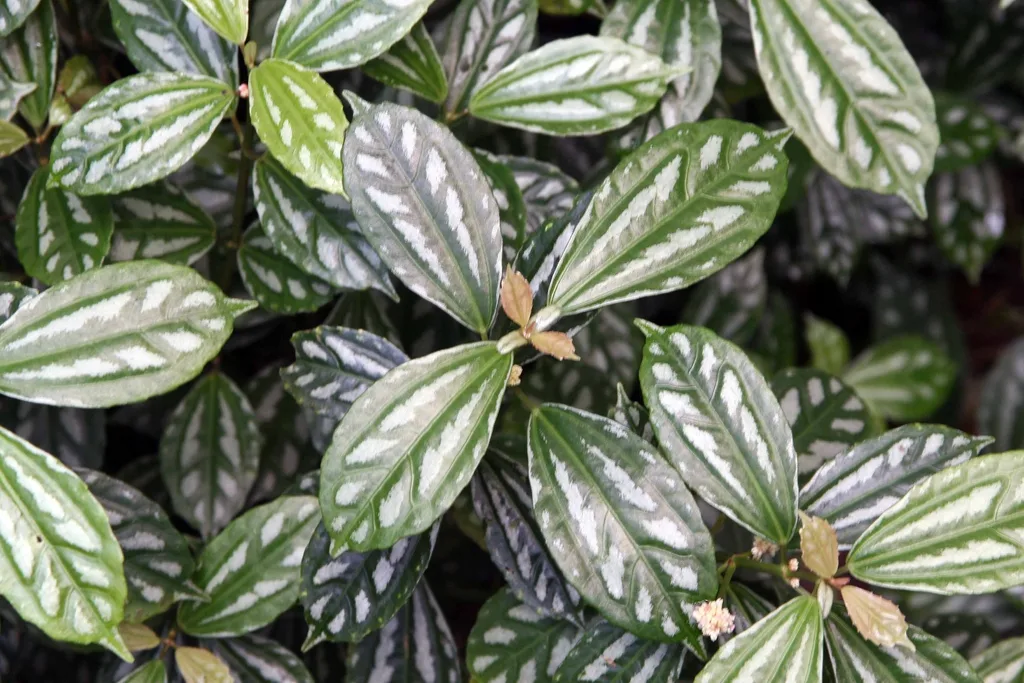
Pilea cadierei
A conditional choice in bright indirect light and moist drained soil. High humidity with stagnant air increases powdery-mildew risk; maintain airflow and control expansion.
Read the plant profileAluminum plant: upright foliage with circulation checks
Partly open humid conditions, checked at the actual planting position. The specimen, space, temperature and accepted maintenance determine whether this choice fits.
Required care and access
- Maintain bright indirect light and avoid strong sun.
- Keep the root zone moist and well drained, without standing water.
- Provide gentle air movement even in humid conditions.
- Trim tips to suit actual space and check crowding.
Conditional fit
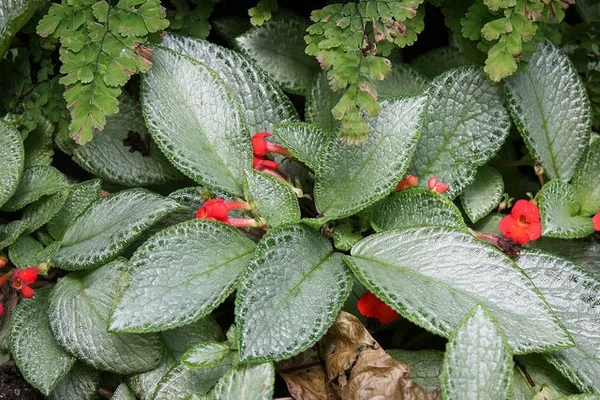
Episcia cupreata
A conditional humid groundcover with bright indirect light, a moist drained root zone, adequate air movement, and control of spreading runners.
Read the plant profileFlame violet: spreading growth with reachable runners
Partly open humid conditions, checked at the actual planting position. The specimen, space, temperature and accepted maintenance determine whether this choice fits.
Required care and access
- Provide bright indirect light and avoid direct sun.
- Keep the root zone moist and drained; avoid standing water and wet leaves.
- Allow room for creeping growth and trim escaping runners where reachable.
- Confirm warm conditions and indirect air movement.
Conditional fit
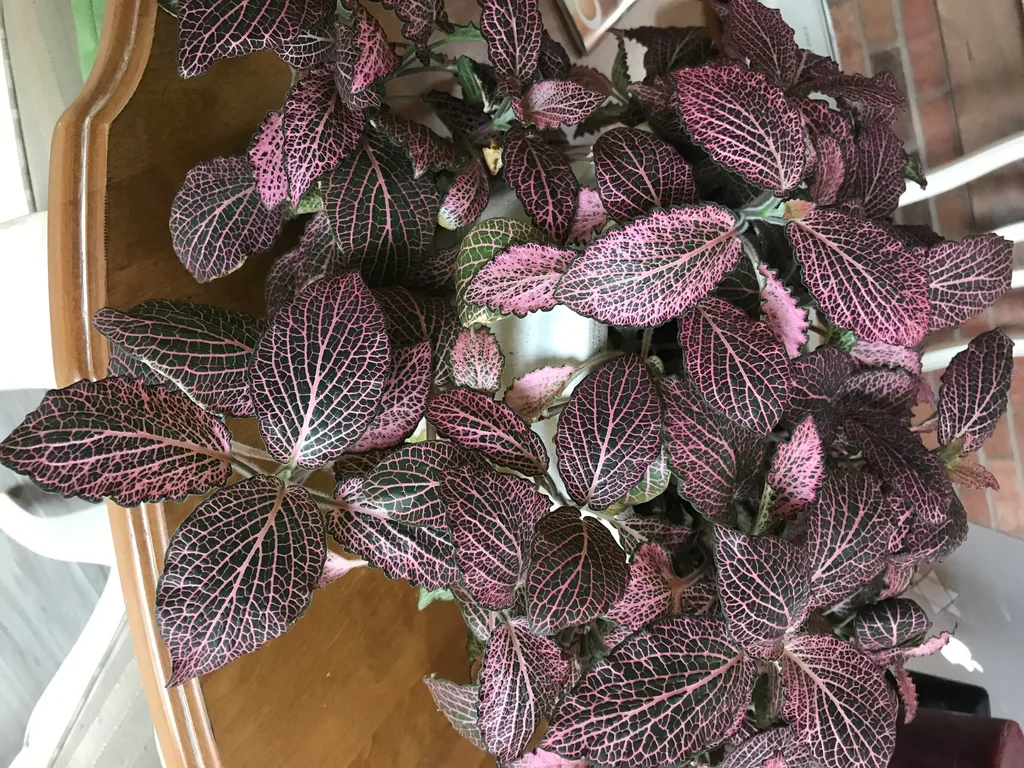
Nerve Plant
Fittonia albivenis
A low-growing candidate when the actual plant fits its allotted space. The source’s direct terrarium recommendation is limited to dwarf forms; retail starter size does not establish future size.
Source conditions and growth facts
- Light
- Bright to medium indirect light; avoid direct sun.
- Root moisture
- Moist, aerated substrate without waterlogging.
Rooted planting in a partly open humid display
Partly open humid display: verify actual light, moisture, airflow, space, and access. Rooted plants and removable mounts use separate planting zones.
Low groundcover sized to the actual layout; the explicit source recommendation applies to dwarf forms.
- Planting zone
- Shared moist, freely draining substrate.
- Check at the plant position
- Canopy light; Floor area and headroom; Root-zone drainage and watering method
Required care and access
- Measure the current canopy, usable floor area, headroom, and pruning access. If following the source’s explicit terrarium use, choose a verifiable dwarf form.
- Maintain bright indirect or filtered light and a moist, freely draining root zone. Avoid direct sun and standing water.
- Control spreading growth where it can be reached. If inspection and pruning are inaccessible, choose another plant for that space.
Wide pots, sensitive leaves, and cascading growth
Compare jewel orchid, African violet, and spider plant with individually watered roots. Removable pots are a useful management choice in this display; they still share its air and light.
Candidates for these conditions
Conditional fit
Ludisia discolor
A conditional terrestrial orchid with indirect light, a shallow moist but drained root zone, warm humid air, and good circulation. Keep the planting accessible and free of standing water.
Read the plant profileJewel orchid: a shallow terrestrial root zone
Partly open humid conditions, checked at the actual planting position. The specimen, space, temperature and accepted maintenance determine whether this choice fits.
Terrestrial orchid managed in a wide, shallow removable pot
- Planting zone
- An independently watered, removable, freely draining root zone.
- Check at the plant position
- Light at the canopy; Humidity at the plant; Actual day and night temperatures; Specimen size, floor area and headroom; Removal access and independent watering
Required care and access
- Use a wide, shallow, well-drained individual pot or shallow root zone.
- Keep the medium moist without waterlogging and provide good air circulation.
- Use warm indoor conditions, away from cold drafts; the cited source gives no numeric temperature target. Do not turn warm into a fixed terrarium survival threshold.
- Leave lateral space suited to the actual specimen.
- Compare terrestrial and epiphytic orchid choices Keep Ludisia’s root method separate from mounted miniatures and cool-growing orchids.
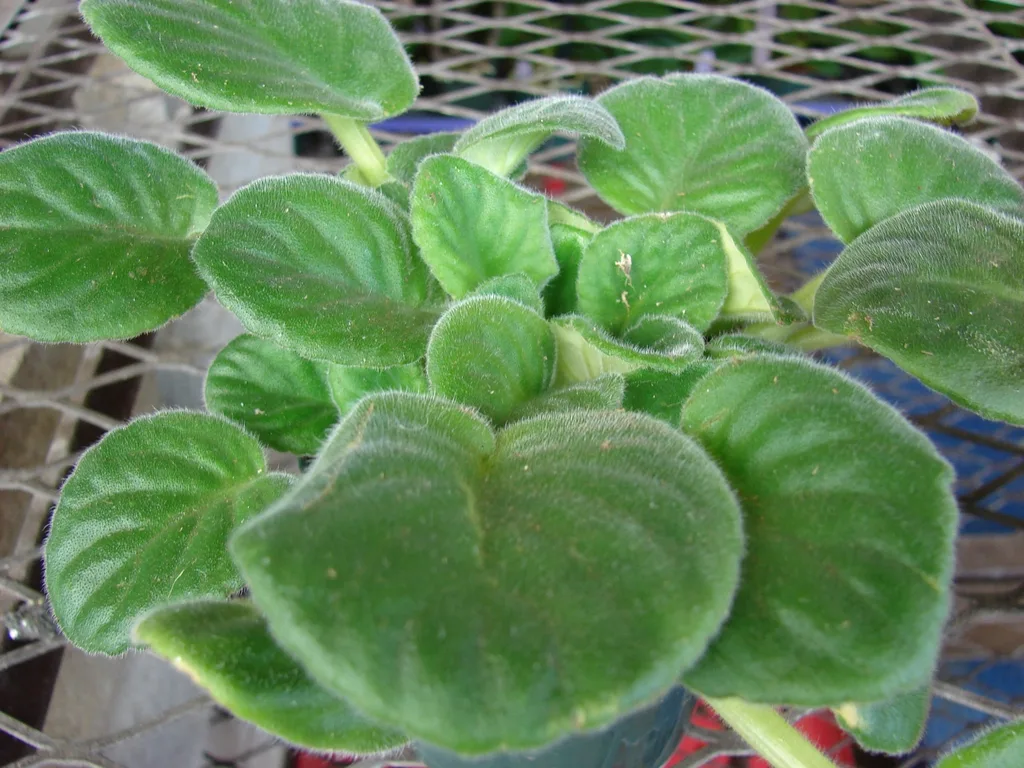
Conditional fit
Streptocarpus ionanthus
A conditional choice in humid air with indirect air movement, when leaves can stay dry and the plant can be watered from below or removed for pot care.
Read the plant profileAfrican violet: a separately watered rosette
Partly open humid conditions, checked at the actual planting position. The specimen, space, temperature and accepted maintenance determine whether this choice fits.
leaf-sensitive rosette in an individually watered removable pot
- Planting zone
- An independently watered, removable, freely draining root zone.
- Check at the plant position
- Light at the canopy; Humidity at the plant; Removal access and independent watering
Required care and access
- Use a removable individual pot or a planting zone that can be watered from below.
- Let the medium’s surface dry before watering. Direct water onto the medium without wetting leaves, or remove the pot for bottom watering; let excess water drain before returning it. Keep roots moist without waterlogging.
- Provide bright filtered light and gentle indirect airflow.
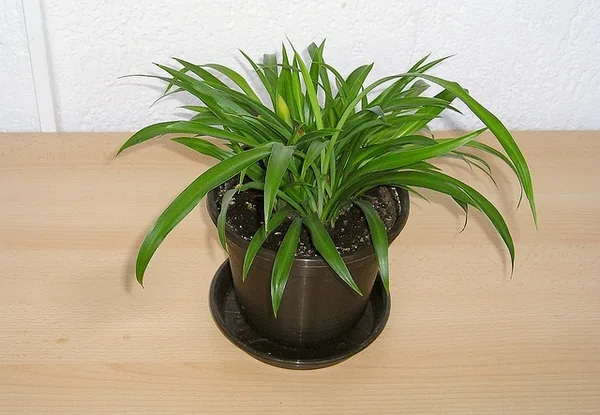
Conditional fit
Chlorophytum comosum
A conditional cascading plant for a wider, ventilated container with moist but unsaturated roots. Allow room for leaves and stolons, and use water low in chlorine and fluoride.
Read the plant profileSpider plant: cascading leaves with an independent root zone
Partly open humid conditions, checked at the actual planting position. The specimen, space, temperature and accepted maintenance determine whether this choice fits.
cascading foliage plant with stolons; allocate vertical and lateral space
- Planting zone
- An independently watered, removable, freely draining root zone.
- Check at the plant position
- Light at the canopy; Humidity at the plant; Specimen size, floor area and headroom; Removal access and independent watering; Required water quality
Required care and access
- Use an independent draining root zone; avoid prolonged waterlogging.
- Reserve space for arching leaves and stolons; remove stolons that exceed the layout.
- Prefer water low in chlorine and fluoride.
Check fern and spikemoss identity before choosing
For this humid planting, compare Nephrolepis frond clearance with Selaginella kraussiana’s spreading mat. Keep moist draining roots and reachable growth control; the cultivated fern form and the spikemoss identity must be checked separately. Neither this care direction nor the word fern establishes suitability for every retail plant.
- Compare true ferns by root care and growing room Choose among moist-root, broad-rosette, exposed-rhizome, and less-humid-air options.
- Distinguish Frosty fern, spikemoss, and asparagus Keep their identities and growth requirements separate.
Choices that need support, more space, or seasonal replacement
These are conditional choices for suitable actual layouts, not default plants for a small bottle. Check climbing support, arching canopies, tree-form identity, or acceptance of a seasonal flowering display before considering them.
Candidates for these conditions
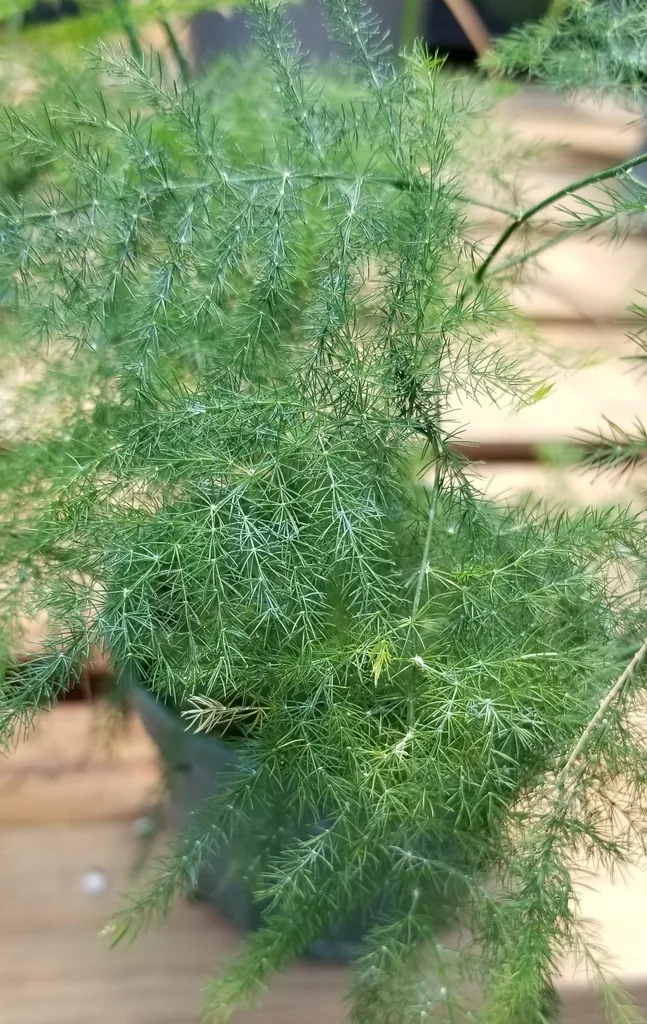
Conditional fit
Asparagus setaceus
A conditional supported climbing focal plant, rather than low groundcover. The position must provide the sourced light, temperature, and moist drained root conditions, with room for climbing growth, roots, and maintenance access.
Read the plant profileAsparagus setaceus: a supported climbing focal plant
Partly open humid conditions, checked at the actual planting position. The specimen, space, temperature and accepted maintenance determine whether this choice fits.
A supported, reachable climbing focal plant.
- Planting zone
- Moist drained soil; share only where members’ needs overlap.
- Check at the plant position
- Light at the canopy; Actual day and night temperatures; Specimen size, floor area and headroom; Drainage and root-zone watering; Support and tool clearance; Air movement at the plant
Required care and access
- Provide open support and measure usable headroom. Plan from the actual specimen and ordinary horticultural growth context, not a fixed size inside glass.
- Provide bright indirect or filtered light, moist drained roots, and gentle airflow. Compare measured temperatures with the source’s 13–21°C indoor preference.
- Keep foliage from remaining wet in poor circulation. Pinch or prune reachable escaping stems, check tuberous-root space regularly, and remove the plant if maintenance is impossible.
Conditions that conflict
- Fast twining growth, support needs, and variable root space conflict with unsupported, low, or inaccessible layouts.
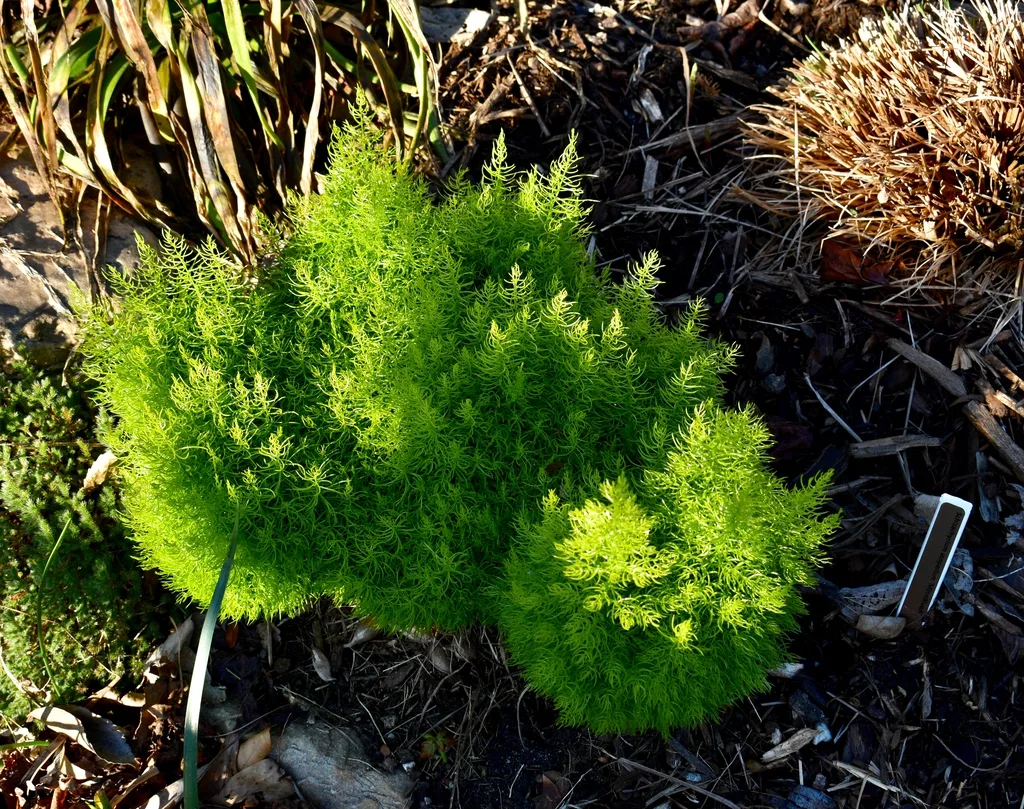
Conditional fit
Asparagus densiflorus
Sprengeri Group only: it can serve as an arching or trailing focal plant where the actual specimen fits the measured floor area and headspace. Its 91–122 cm reported horticultural width does not establish the size it will reach in a terrarium or apply to every A. densiflorus selection.
Read the plant profileSprengeri Group: arching growth needs a spacious role
Partly open humid conditions, checked at the actual planting position. The specimen, space, temperature and accepted maintenance determine whether this choice fits.
Sprengeri Group arching/trailing accent or spacious groundcover, not an assumed compact groundcover
- Planting zone
- Moist drained soil; share only where members’ needs overlap.
- Check at the plant position
- Light at the canopy; Specimen size, floor area and headroom; Drainage and root-zone watering; Support and tool clearance; Air movement at the plant
Required care and access
- Confirm that the selected plant is within the Sprengeri Group scope of the cited size and care facts; measure the actual specimen and its allocated space.
- Use a shaded or filtered-light position, free-draining substrate, and regular moisture during active spring–autumn growth; reduce watering in winter and do not keep the soil wet.
- Treat the reported mature width as planning context only. If the actual plant expands beyond its role, pinch tips or cut stems to soil level only where the tools can reach; otherwise remove it before crowding neighbors.
Conditions that conflict
- In a compact footprint, the source-reported broad arching habit may overlap neighboring plants; that is a space-and-role conflict, not a species-wide exclusion.
Conditional fit
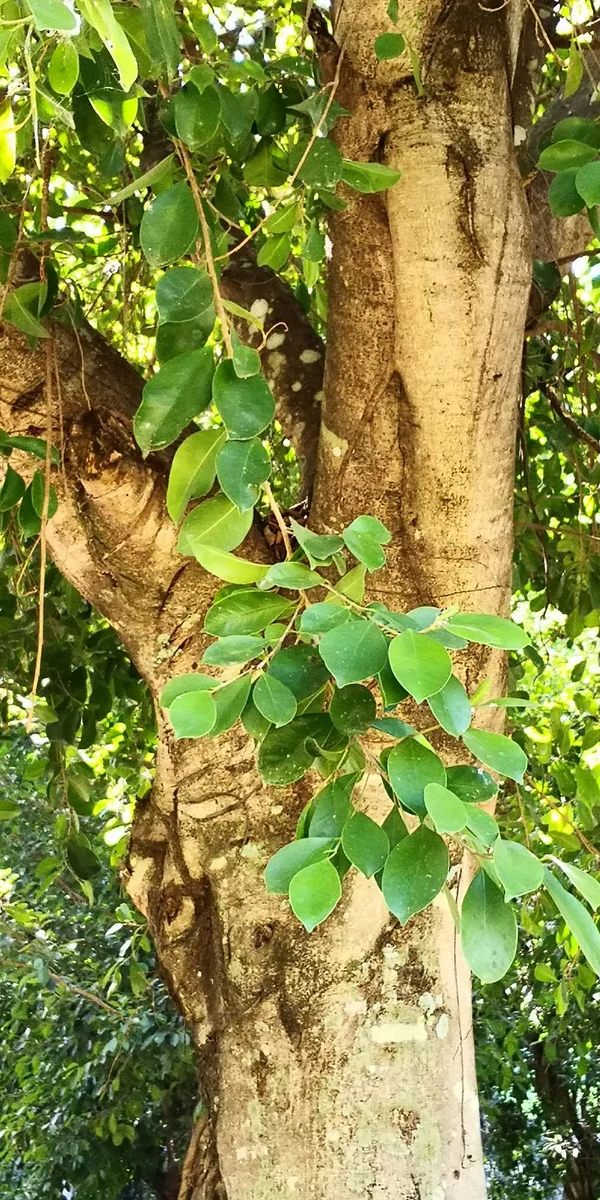
Ficus microcarpa
A conditional tree-form specimen after checking actual canopy, headroom, and management goals. Outdoor mature crowns describe the parent species in landscape conditions, not size inside glass. Remove an outgrown specimen; do not assume it naturally retains a bonsai form.
Read the plant profileFicus microcarpa: a measured tree-form specimen
Partly open humid conditions, checked at the actual planting position. The specimen, space, temperature and accepted maintenance determine whether this choice fits.
A parent-species tree focal point checked against the actual specimen; it does not inherit Ginseng bonsai dimensions.
- Planting zone
- Moist drained soil; share only where members’ needs overlap.
- Check at the plant position
- Light at the canopy; Actual day and night temperatures; Specimen size, floor area and headroom; Drainage and root-zone watering; Air movement at the plant
Required care and access
- Before planting, measure canopy, height, floor area, and headroom; use only if the actual layout fits.
- Choose bright filtered light or partial shade. Retain the parent-species advice for temperatures above 20°C year-round as horticultural background, not a measured terrarium or bonsai optimum.
- Keep roots moist and drained. If aerial-root appearance is a goal, compare measured humidity with the parent-species preference; that preference is not a survival minimum.
- Remove or replace the plant before it exceeds the allotted space. This record does not establish pruning to a fixed size indefinitely inside glass.
- Ensure gentle indirect airflow at the actual canopy position. Humidity preference does not replace ventilation.
Conditions that conflict
- The parent species can form a large outdoor crown. Insufficient actual space excludes the specimen from that layout; source dimensions do not predict the same growth inside glass.
Conditional fit
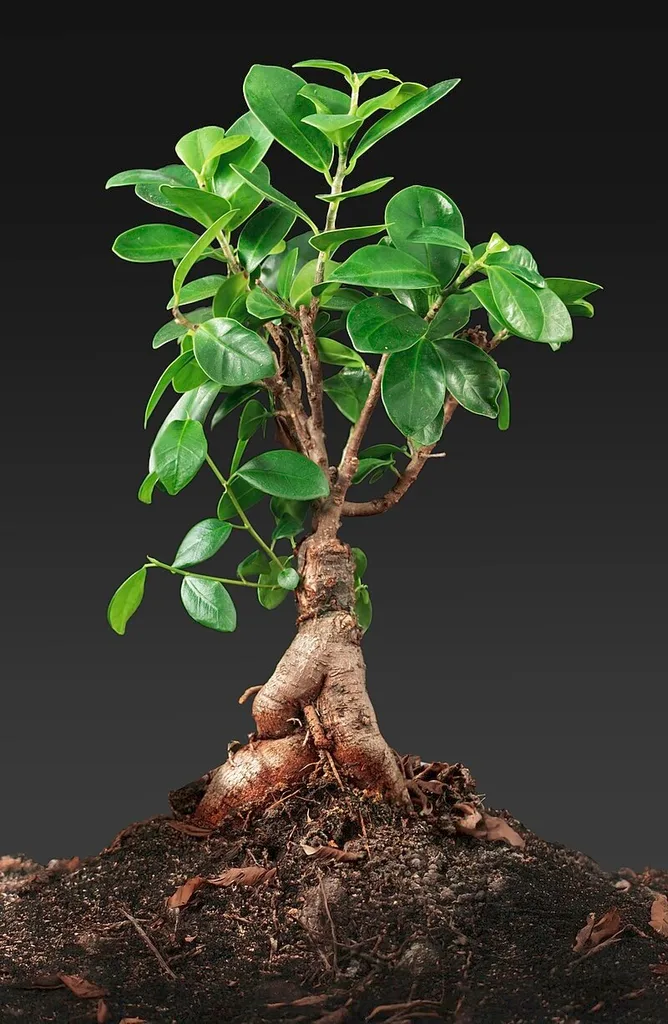
Ginseng Ficus
Ficus microcarpa ‘Ginseng’
A conditional choice only after verifying the bonsai horticultural form, actual space, and maintenance access. The advice for above 20°C year-round comes from parent-species indoor culture; it is not a measured optimum for this form, and a retail label establishes neither a fixed cultivar nor a dwarf limit.
Read the plant profileGinseng ficus: verify the horticultural form and tool access
Partly open humid conditions, checked at the actual planting position. The specimen, space, temperature and accepted maintenance determine whether this choice fits.
An identity-verified Ficus microcarpa Ginseng bonsai horticultural form; do not inherit the dimensions of the untrained parent.
- Planting zone
- Moist drained soil; share only where members’ needs overlap.
- Check at the plant position
- Light at the canopy; Actual day and night temperatures; Specimen size, floor area and headroom; Drainage and root-zone watering; Support and tool clearance; Air movement at the plant
Required care and access
- Verify the actual plant is the sourced Ficus microcarpa Ginseng bonsai horticultural form. A retail label alone does not establish a fixed cultivar or dwarf limit.
- Compare measured day and night temperatures with the parent-species reference for above 20°C year-round, retaining that parent context; this is not a measured cultivar optimum.
- Keep moisture available in a well-drained root zone without standing water.
- Measure actual canopy, root base, and container space; retain reachable pruning access. Prune, remove, or replace a crowded specimen.
- Verify open, gentle airflow at the actual position and retain tool access. The parent humidity preference is a goal only when aerial-root appearance is wanted.
Conditional fit
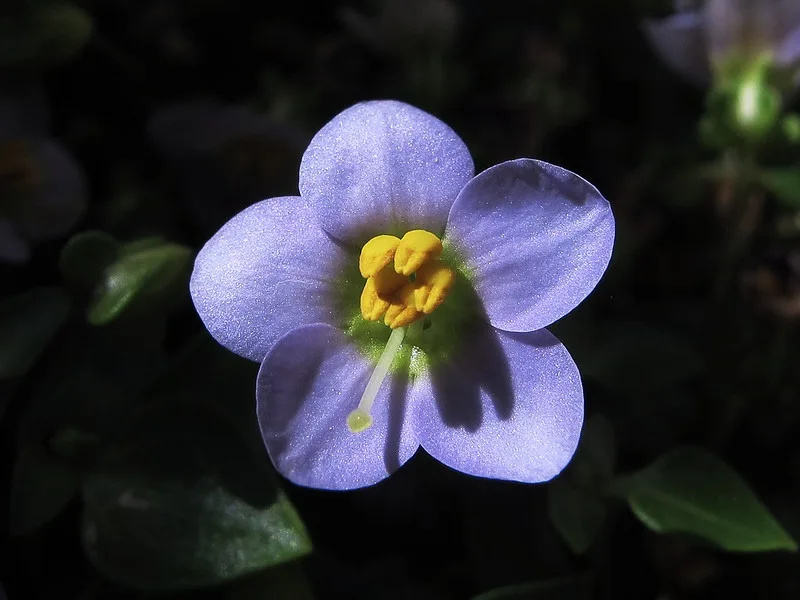
Exacum affine
A conditional seasonal flowering accent, rather than a permanent foliage promise. Sources describe a short-lived perennial often grown as an annual and difficult to maintain after flowering. Use only if cutting back and possible removal or replacement are acceptable.
Read the plant profilePersian violet: a seasonal flowering accent
Partly open humid conditions, checked at the actual planting position. The specimen, space, temperature and accepted maintenance determine whether this choice fits.
A seasonal flowering focal plant, rather than permanent groundcover or a background requiring no replacement.
- Planting zone
- Moist drained soil; share only where members’ needs overlap.
- Check at the plant position
- Light at the canopy; Actual day and night temperatures; Specimen size, floor area and headroom; Drainage and root-zone watering; Acceptance of seasonal replacement
Required care and access
- Compare actual height and canopy with allotted space. Use indirect light or partial shade and moist drained roots.
- Remove spent flowers and cut back after flowering as sourced. Accept removal or replacement if the plant declines; do not assume long-term repeat flowering inside glass.
- Compare measured day and night temperatures with the source’s 16–21°C warm-night horticultural context. This outdoor night-temperature guidance is not a measured terrarium optimum.
Conditions that conflict
- Its short life and difficulty after flowering conflict with a permanent display that cannot accept seasonal replacement; the scenario itself does not require permanent members.
A separate open support for Spanish moss
This rootless epiphyte has its own care zone. A humid soil bed and a ventilated removable mount are different planting tasks.
Candidates for these conditions
Conditional fit
Spanish Moss
Tillandsia usneoides
A conditional choice only on a separate open hanging point near the opening, with adequate verified air exchange and easy removal for drying. Keep it out of the shared soil and continuously closed space.
Read the plant profileSeparate open mount beside the opening
Partly open humid display: verify actual light, moisture, airflow, space, and access. Rooted plants and removable mounts use separate planting zones.
An independently hanging epiphyte, outside the shared moist substrate.
- Planting zone
- Independent removable mount; no rooted substrate.
- Check at the plant position
- Airflow at the open mount; Light at the plant; Drying conditions after watering; Humidity at the open mount
Required care and access
- Mount on open support near the opening, outside the shared root zone. Verify airflow, light, and a removal route at the mount.
- Check humidity at the mount against the species guidance. The sources give no universal relative-humidity threshold.
- Let the strands dry in open air after routine watering. A continuously open hanging display has no source-prescribed fixed hourly timer.
- Penn State’s general air-plant guide advises at least four hours of drying outside glass before return. Check that the strands have actually dried; damp, dense clumps need longer. This is not a species-specific safety timer or a rule for permanently open supports.
Conditions that conflict
- The shared substrate bed is unsuitable. A mount without open ventilation or removal for drying conflicts with this scenario.
Evidence[21][28][30][41][53][55]
- Use the separate watering and drying routine Compare rosette and strand care, release retained water, and check before returning to glass.
A drying root zone does not belong in this shared moist bed
Plants that conflict with these conditions
Conflicts with this scenario
Aloe vera
Aloe vera conflicts with the persistently moist woodland setup. Its documented indoor culture needs bright light, rapid drainage, and thorough drying between waterings.
Read the plant profileConflict with the shared humid planting
Partly open humid display: verify actual light, moisture, airflow, space, and access. Rooted plants and removable mounts use separate planting zones.
Conditions that conflict
- Keeping the shared root zone moist conflicts with thorough drying after watering.
- The filtered-light, persistently humid setting does not match the recorded indoor succulent conditions.
Compare a humid pair and a compact-bed conflict
The first plan pairs low and upright foliage. The second applies when two expanding groundcovers have no separately reachable growing room. RHS lists baby’s tears as a possible Fittonia companion, while NC State warns about crowding: shared care can work, but space and trimming access still decide this layout.
Use only with these conditions
Fittonia and Pilea in a partly open humid display
Fittonia and Pilea can share indirect light and moist, drained soil in a partly open humid display. Use them together only when their actual footprints, gentle airflow, and reachable pruning or removal routes fit the layout.
Layout: A partly open humid display with shared soil, measured around the two actual plants.
- Fittonia albivenis — Low leaf texture and ground coverShared soil kept moist and drained
- Pilea cadierei — Upright leaf focal pointShared soil kept moist and drained
Compare these plants in your actual display. Measure the container, plant size, light, airflow, and indoor conditions, and decide whether the layout is seasonal or intended for longer use.
- Shared planting zones
- Shared soil kept moist and drained
- Roles in this layout
- Low ground cover with an upright leaf focal point
Shared conditions
- Bright indirect light; shared soil that stays moist but drains; gentle airflow even when the air is humid.
Required care and access
- Measure the actual Fittonia, allocate floor space, and leave a tool route. For the terrarium use described by NC State, choose an identifiable dwarf form.
- Keep the shared soil moist and drained, and avoid pouring water over the leaves.
- Prune or remove plants that outgrow their allocated space. Count pruning as an option only when tools can reach the plant.
Conflicts to check
- Both plants spread sideways. Their actual canopies may overlap or shade a neighbor on limited floor space; shared use depends on the allocated footprints and tool access.
Check in your actual display
- Light reaching the canopy
- Humidity around the plants
- Actual day and night temperatures
- Usable floor area, specimen size, and headroom
- Soil drainage and how you will water
- Support and tool clearance
- Airflow at the plants
Conflict in this layout
Fittonia and baby’s tears on a compact shared bed
Choose one groundcover when Fittonia and Soleirolia must spread across the same narrow surface without room to keep their growth separate or reach each plant for trimming. Their moisture needs can overlap, but this cramped layout cannot manage the competition. A larger, independently reachable layout needs its own check.
Layout: A narrow, single-level shared surface without separately reachable growing space for both expanding groundcovers.
- Fittonia albivenis — Spreading ground coverShared soil kept moist and drained
- Soleirolia soleirolii — Fast mat-forming ground coverShared soil kept moist and drained
Compare these plants in your actual display. Measure the container, plant size, light, airflow, and indoor conditions, and decide whether the layout is seasonal or intended for longer use.
- Shared planting zones
- Shared soil kept moist and drained
- Roles in this layout
- Spreading ground cover
- Fast mat-forming ground cover
Shared conditions
- Both prefer moist, draining soil and indirect light. Those shared needs do not remove competition for a compact planting surface.
Conflicts to check
- Fittonia spreads along the surface, while Soleirolia forms a rapidly expanding dense mat. On this compact shared bed they compete for floor space and may shade a neighbor. This is a layout conflict, not permanent incompatibility between the species.
Check in your actual display
- Light reaching the canopy
- Humidity around the plants
- Actual day and night temperatures
- Usable floor area, specimen size, and headroom
- Soil drainage and how you will water
- Support and tool clearance
- Airflow at the plants
Change the plan, then reassess
Each option changes the planting plan. Check its plants, growing space, and care before using it.
- Change the members
- Fittonia albivenis — Single ground-cover plant Soil kept moist and drained
Keep Fittonia alone to remove competition with a second spreading ground cover on the compact bed. Check the actual plant against the available space.
- Change the members
- Soleirolia soleirolii — Single mat-forming ground cover Soil kept moist and drained
Keep Soleirolia alone to remove competition with a second spreading ground cover. Leave maintenance access for its expanding mat.
- Change the layout
- Fittonia albivenis — Spreading ground cover Soil kept moist and drained
- Soleirolia soleirolii — Fast mat-forming ground cover Soil kept moist and drained
A larger layout measured around both actual plants, with separately reachable growing and maintenance areas.
Keeping both plants requires a larger layout that fits the actual specimens and provides reachable growing and maintenance areas for each. That changed plan does not inherit the judgment for the compact bed.
Maintain the root arrangement you selected
Use the candidate’s full conditions above, then test the daily work for its planting zone. Keep rooted plants at their existing level with a visible inspection edge. A removable pot needs a real outlet and an empty place to drain; a shared bed needs access without dismantling neighboring roots.
Shared roots: preserve a working boundary
Reach the root zone without soaking sensitive Episcia foliage. Check whether Pilea shoots or Episcia runners are closing the inspection route; pinch or remove growth as the named plant’s guidance allows and collect cut material. Move a member if that work cannot be done through the opening.
Separate roots: keep the whole pot removable
Ludisia, African violet and spider plant keep their own medium and watering instructions. Inspect each rootball, lift its pot when watering is due, drain outside the display and empty runoff before return. Separate pots still share light, air and growing space; do not join them with encroaching roots or runners.
Larger foliage and seasonal flowers: plan removal early
Climbing asparagus needs support, arching Sprengeri growth needs canopy space, and tree-form Ficus needs ongoing space management. Treat them as choices for larger accessible displays; do not use a starter’s current size as the long-term plan. Remove an outgrown plant before it traps its neighbors. For Exacum, remove spent flowers and accept cutting back or replacement if it declines after flowering.
- Pinch and renew Pilea shoots Use the specific stem-control method for the upright member.
- Manage Episcia runners Trace, remove or root a runner using the plant’s own instructions.
- Plant the terrestrial Ludisia pot Keep its root mix and spreading stems with the full species guide.
- Water an African-violet pot Keep surface drying, crown clearance and drainage in the same routine.
- Control spider-plant offspring Keep the chosen pot independent as runners develop.
Let observed conditions guide the next action
- The rooted layer is drying
- Check the plant and substrate before watering.
- Check
- Inspect moisture around the roots as well as leaf condition; wilting alone does not establish a dry root zone.
- Action
- Add water carefully when the selected plant’s moist-root requirement calls for it. Avoid pouring over sensitive leaves or leaving standing water.
- Stop or reassess
- If the root zone is already wet, reassess instead of adding more water.
- Leaves stay wet or plants crowd each other
- Check airflow and access in the actual layout.
- Check
- Look for overlapping canopies, persistently wet foliage, and unreachable growth.
- Action
- Thin or remove reachable growth and adjust the arrangement so required care can be carried out. Remove decaying material.
- Stop or reassess
- Change the layout or plant when its air or space needs cannot be met; opening the top does not guarantee airflow throughout.
- A mounted air plant cannot dry
- Move it out of the enclosed mounting position.
- Check
- Verify that support is open and the plant can be removed for its own watering and drying.
- Action
- Use the separate open-support routine stated in its full conditions above. Keep Spanish moss out of the shared substrate.
- Stop or reassess
- Do not retain a mounting point without adequate ventilation or a removal route.
Choose a care plan you can carry out
- Care for your selected humid plant Use the root watering, trimming, and removal actions for your choice.
- Compare closed humid choices Check the different enclosure and maintenance assumptions.
Your next step
Use your plant shortlist
Before you start
More detail when you need it
- African violet: planting and careChoose an African violet by cultivar and rosette size. Plant with a clear crown, bottom-water and drain, manage suckers and spent growth, and inspect decline.
- Flame violet: planting and careGrow Episcia cupreata in a warm humid display with drained roots and airflow. Place the rosette, control stolons, root plantlets, and inspect decline.
- Ludisia discolor: planting and carePlant and care for Ludisia discolor in a ventilated humid display. Choose a shallow root zone, manage creeping stems, remove spent spikes, and check decline.
- Plant, pinch, and renew Pilea cadiereiFollow its complete root care, growth management, and inspection actions.
- Browse plants and conditionsNarrow recorded identities without generating a new suitability judgment.
- Compare closed humid plantingUse the assessment for that enclosure rather than transferring this one.
Explore more in plants
Sources and review
- Ficus microcarpa - Stem & leaves.jpg — Wikimedia Commons · Wikimedia Commons
- Spider Plant — PlantTalk Colorado 1328 · Colorado State University Extension; Denver Botanic Gardens; Green Industries of Colorado
- Exploring Ficus: More than the Houseplant in the Corner · University of Illinois Extension
- How to Create and Care for a Terrarium · Iowa State University Extension and Outreach
- Terrariums — MU Extension Guide G6520 · University of Missouri Extension
- African Violets — Missouri Botanical Garden Fact Sheet · Missouri Botanical Garden
- Asparagus setaceus — Missouri Botanical Garden Plant Finder · Missouri Botanical Garden
- Aloe vera — NC State Plant Toolbox · NC State Extension
- Asparagus densiflorus Sprengeri Group — NC State Plant Toolbox · NC State Extension
- Asparagus setaceus — NC State Plant Toolbox · NC State Extension
- Chlorophytum comosum — NC State Plant Toolbox · NC State Extension
- Plants Grown in Containers — NC State Extension Gardener Handbook · NC State Extension
- Episcia cupreata — NC State Plant Toolbox · NC State Extension
- Exacum affine — NC State Plant Toolbox · NC State Extension
- Ficus microcarpa 'Ginseng' — NC State Plant Toolbox · NC State Extension
- Fittonia albivenis — NC State Plant Toolbox · NC State Extension
- Ludisia discolor — NC State Plant Toolbox · NC State Extension
- Pilea cadierei — NC State Plant Toolbox · NC State Extension
- Streptocarpus ionanthus — NC State Plant Toolbox · NC State Extension
- Soleirolia soleirolii — NC State Plant Toolbox · NC State Extension
- Tillandsia usneoides — NC State Plant Toolbox · NC State Extension
- Episcia cupreata 'Cleopatra' — Flora & Fauna Web · National Parks Board, Singapore
- Exacum affine — Flora & Fauna Web · National Parks Board, Singapore
- Ficus microcarpa — Flora & Fauna Web · Singapore National Parks Board
- Spider plant (Chlorophytum comosum) — New York Botanical Garden Research Guides · The New York Botanical Garden
- Asparagus Fern — Oklahoma State University Extension Plant ID · Oklahoma State University Extension
- Aloe, a Hardy Houseplant
- Tillandsias as Houseplants
- Indoor Plant Care — Purdue Extension HO-39 · Purdue University Extension
- Air Plants — RHS Care Guide
- Aloe | RHS Plant Guide
- Care tips for light-loving houseplants at the RHS Urban Show
- Asparagus densiflorus — RHS Plant Profile · Royal Horticultural Society
- Asparagus setaceus — RHS Plant Profile · Royal Horticultural Society
- Episcia cupreata — RHS Plant Profile · Royal Horticultural Society
- Exacum affine — RHS Plant Profile · Royal Horticultural Society
- Ficus microcarpa 'Ginseng' — RHS Plant Profile · Royal Horticultural Society
- Fittonia — RHS Plant Guide · Royal Horticultural Society
- Pilea cadierei — RHS Plant Profile · Royal Horticultural Society
- Streptocarpus ionanthus (AV) — RHS Plant Profile · Royal Horticultural Society
- Tillandsia usneoides — RHS Plant Profile
- Sprengeri or Asparagus Fern — Aggie Horticulture · Texas A&M AgriLife Extension
- Exacum — Ornamental Production Guide · Texas A&M AgriLife Extension
- Aloe, Barbados Aloe, Kitchen Aloe | Texas Tech Plant Database
- Asparagus densiflorus, 'Meyersii,' Foxtail Fern — Plant of the Week · University of Arkansas System Division of Agriculture Cooperative Extension Service
- Plant of the Week: Episcia cupreata: Flame Violet · University of Arkansas System Division of Agriculture Cooperative Extension Service
- Aloe Vera — Gardening Solutions
- Cultural Guidelines for Commercial Production of African Violets — UF/IFAS Extension · University of Florida IFAS Extension
- Asparagus setaceus — UF/IFAS Center for Aquatic and Invasive Plants · University of Florida IFAS Extension, Center for Aquatic and Invasive Plants
- FPS-208: Exacum affine Persian Violet, German Violet · UF/IFAS Extension
- Ficus microcarpa — UF/IFAS Center for Aquatic and Invasive Plants · University of Florida IFAS
- Pilea cadierei Aluminum Plant — UF/IFAS Extension · University of Florida IFAS Extension
- Spanish Moss — UF/IFAS Gardening Solutions
- Asparagus fern, Asparagus densiflorus — Wisconsin Horticulture · University of Wisconsin–Madison Extension
- WFO Plant List 2026-06 (taxonomic identity) · World Flora Online
- Selaginella kraussiana — NC State Plant Toolbox · NC State Extension
- Nephrolepis cordifolia — NC State Plant Toolbox · NC State Extension
- How to grow Fittonia — RHS Growing Guide · Royal Horticultural Society