
Plants / African violet
African violet in a display: keep the crown clear and leaves dry
A removable pot lets you manage the rosette, root moisture, and flowers without soaking the foliage.
By Terrarium GuideSources & editorial method
Botanical identity: Streptocarpus ionanthus
The short answer
For an African violet display, favor a removable drained pot with bright filtered light, a clear crown, and room around the leaves. This page covers Streptocarpus ionanthus, also known by its older name Saintpaulia ionantha; size and rosette or trailing form depend on the cultivated plant.
Keep roots moist without waterlogging, let the surface dry before watering again, and keep water off the foliage. Humid air must be balanced with gentle airflow and spacing. A small sealed wet bed makes those tasks harder rather than proving suitability.
Choose the actual violet and its watering access
| Plant or arrangement | Decision | What to check |
|---|---|---|
| A named miniature or smaller size class | A candidate only after identifying the form. | Check supported mature width, flower clearance, and the actual rootball. |
| A standard rosette | Needs its full leaf span. | Do not bend or bury leaves to fit a smaller opening. |
| A trailing cultivar | Has a different outline from a single rosette. | Allow its own growing route; do not promise every African violet trails. |
| A removable pot inside an open display | Allows watering from below and drainage. | Keep foliage clear of wet glass and remove collected water. |
Scope and important limits
A useful fit when
- Choosing, planting, and maintaining the named plant in the conditions described here.
Use another path when
- Transferring these conditions to an unidentified retail plant or assuming a permanent sealed display.
Published horticultural guidance and its application to display care; no Terrarium Guide growing trial is claimed.
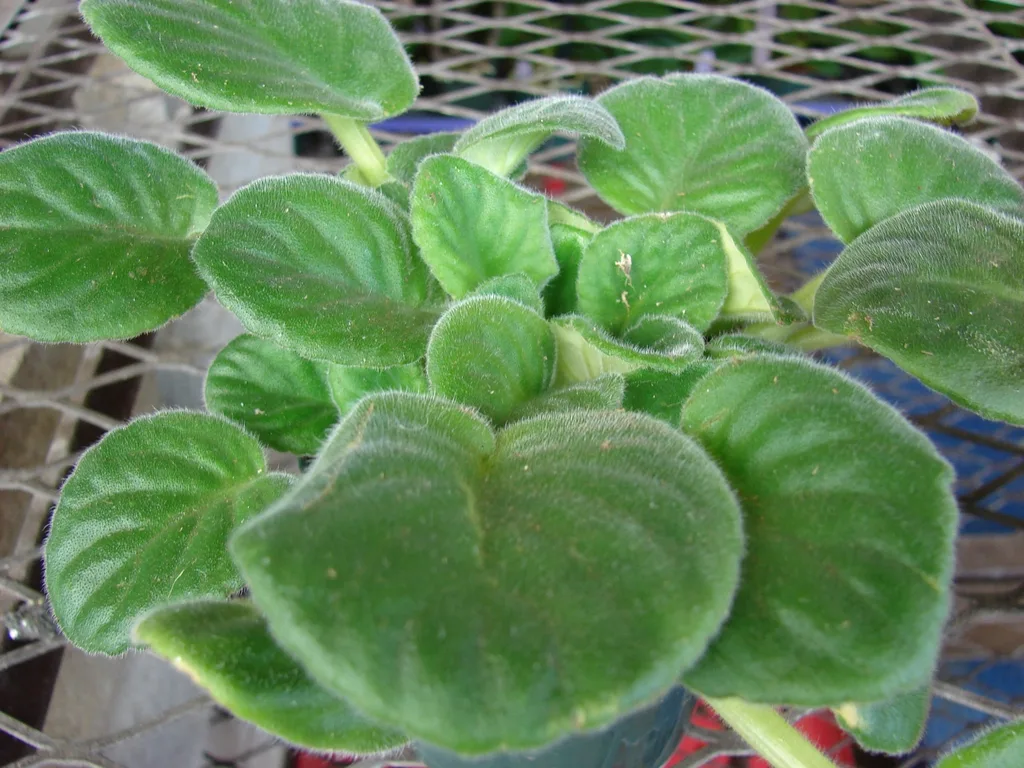
Use the cultivar label, not the flower color, for size
African violets include many cultivars and several size classes. A flower color or the word mini on a general display tag is not enough to assign a mature width. Retain the cultivated-form name and whether it is a rosette or trailing plant.
The photographed plant illustrates hairy foliage arranged around a central crown. Ordinary species-profile dimensions and RHS’s broad size bands provide context, not a guarantee for every cultivar. Measure the leaf span and allow space to lift the pot without scraping leaf stalks or flowers.
Inspect the center, undersides, and rootball
- Choose a clearly labeled healthy plantAsk for the size class and form. Look for healthy central growth rather than selecting only by open flowers.
- Check for hidden pests and wet decayInspect beneath leaves and around the crown without tearing the hairy foliage. Keep a suspect plant separate for identification.
- Test access for bottom wateringThe pot should be able to leave the decorative vessel, drain freely, and return without forcing the rosette through a narrow neck.
- Check the form and arrival condition with a seller Keep the identity and specimen checks above; compare seller information, arrival forms and delivery before ordering.
Plant with a clear crown; water the pot from below
Prepare a drained, aerated medium
Use a suitable African-violet container medium and a pot with drainage. Do not substitute a saturated terrarium reservoir for a root zone.
Keep the crown above the medium
Find the crown at the center of the rosette, where the newest small leaves emerge. Retain the existing rootball level and backfill around the roots, keeping that center and the leaf-stalk bases above the medium and clear of debris. Check from above and from the side. If filling the pot would cover the center, remove the extra medium or reset the rootball; do not pack soil into the rosette.
Check surface drying before watering
Inspect the rootball as well as the top. When watering is needed, place the pot where it can take up water from below without wetting the leaves.
Drain and empty the surplus
Remove the pot after the medium has taken up water, let it drain, and empty the saucer or outer vessel. Do not leave the roots continuously submerged.
- Keep the root mix separate from display decoration Use the material distinctions alongside this rosette’s planting and watering instructions.
Give the leaves light, warmth, and breathing room
Use bright filtered light and a stable warm indoor position. NC State gives 60–80°F (16–27°C) as cultivation guidance. Cold water and abrupt cold exposure are separate stresses; avoid cold drafts rather than reading a hardiness limit as a growing target.
Retain useful humidity without stagnant crowded wet foliage. Keep leaves away from condensation-covered glass and avoid misting the rosette as a substitute for root watering. Gentle indirect room airflow and spacing help make inspection possible.
If you want continued growth and flowering, use an appropriate feed at its product directions for the actual potting system. Diagnose poor light, root stress, or pests before adding more. A closed decorative vessel does not establish a safe fertilizer dose or guarantee repeat flowering.
Remove dead growth without crowding the center
Clear spent and damaged material
Remove dead or yellow leaves and finished flower material with clean tools, protecting the central growing crown. Keep debris out of the leaf bases.
Check whether extra crowns are intended
Suckers can create additional crowns. For a single-rosette display, remove unwanted offsets carefully rather than allowing several crowns to fill one inaccessible pot. A trailing cultivar is a different intended form.
Repot when roots or crown position need attention
Work outside the display and restore an aerated root zone. Do not hide an exposed or crowded plant by burying its crown deeper under wet medium.
Propagate separately if wanted
Leaf cuttings are a documented method. Use healthy material in a separate propagation container, and wait for actual rooted new plants before placing a replacement in the display.
Inspect the crown and roots before changing care
| Observation | Distinguishing check | Action |
|---|---|---|
| Spots or rings on leaves | Water contact and temperature, then signs of spreading lesions. | Keep foliage dry; isolate unexplained spreading damage rather than diagnosing from a mark alone. |
| Wilt with wet medium | Crown firmness, roots, and drainage. | Lift and inspect; stop adding water to a saturated rootball. |
| Healthy leaves but few flowers | Light, growth stage, feed history, and cultivar. | Improve the actual limiting condition; do not promise flowers on a calendar. |
| Crowded central growth | Extra crowns, pests, and the intended growth form. | Inspect closely and manage unwanted suckers; seek identification if distortion continues. |
- Inspect the crown and rootball safely Use the handling method for wet-medium wilt while retaining the violet’s crown and foliage precautions.
Compare conditions and companions
More detail when you need it
Explore more in plants
Sources and review
- Streptocarpus ionanthus — NC State Plant Toolbox · NC State Extension
- African Violets — Missouri Botanical Garden Fact Sheet · Missouri Botanical Garden
- Cultural Guidelines for Commercial Production of African Violets — UF/IFAS Extension · University of Florida IFAS Extension
- Streptocarpus ionanthus (AV) — RHS Plant Profile · Royal Horticultural Society
- Streptocarpus ionanthus — Flora & Fauna Web · National Parks Board, Singapore
- WFO Plant List 2026-06 · World Flora Online