Plants / Asparagus densiflorus
Sprengeri-type asparagus fern: allow an arching, removable clump
This source-named Asparagus group needs room sideways and a root zone that does not stay wet.
By Terrarium GuideSources & editorial method
Botanical identity: Asparagus densiflorus
The short answer
Use the source-named Asparagus densiflorus Sprengeri Group as an arching edge or background plant in a larger open glass display, with the pot reachable and stems free to spill toward the opening. Its broad clump is a poor filler for a small sealed bottle: fine foliage does not mean small growing space.
Use gentle room ventilation and check soil before watering. Keep the arching stems in open space; sealing a bottle to raise humidity does not solve crowding or wet roots. Asparagus setaceus has a different climbing habit and its own display plan.
Give the arching foliage an edge to occupy
Its useful role is an arching mass at the edge of an open landscape, where shoots can extend into free air instead of through a lid or across every neighbor. Keep the rooted clump in a draining removable pot with a clear lift-out route. Place it behind shorter planting only where its canopy will not hide their light and maintenance access.
Do not spread a starter plant through a shared bed to imitate a fine fern carpet. Crowded roots and arching shoots are separate maintenance problems: cutting one stem does not restore a congested pot. Move the clump when keeping the intended outline would require continual severe reduction.
For a low creeping texture in a humid planting, compare Selaginella kraussiana, with moist drained roots and reachable trimming boundaries. It does not inherit this Asparagus group’s watering or room-air routine. Choose the environment as well as the silhouette.
- Compare the smaller humid-plant alternative Check its own environment, growth and planting method before substituting.
Scope and important limits
A useful fit when
- Choosing, planting, and maintaining the named plant in the conditions described here.
Use another path when
- Transferring these conditions to an unidentified retail plant or assuming a permanent sealed display.
Published horticultural guidance and its application to display care; no Terrarium Guide growing trial is claimed.
Match the identified form to a reachable display
| Choice | What it means | Management consequence |
|---|---|---|
| Source-labeled Sprengeri Group plant | An arching or cascading rooted ornamental. | Allow the clump to widen and keep stems reachable. |
| A different foxtail or named selection | Related references do not establish identical architecture. | Confirm the actual label and dimensions rather than assigning one form’s traits to another. |
| A removable drained pot | Makes independent root inspection practical. | The surrounding display still needs canopy space and ordinary airflow. |
| A crowded, wet enclosed bed | Poor fit for the documented root care. | Change to a drained, accessible arrangement or another plant. |
Keep the sales name and photographed form separate
This page concerns the plant recorded from NC State as Asparagus densiflorus Sprengeri Group. It is a flowering Asparagus, not a true fern. Retail names overlap with other Asparagus plants, including A. setaceus, which has its own care page.
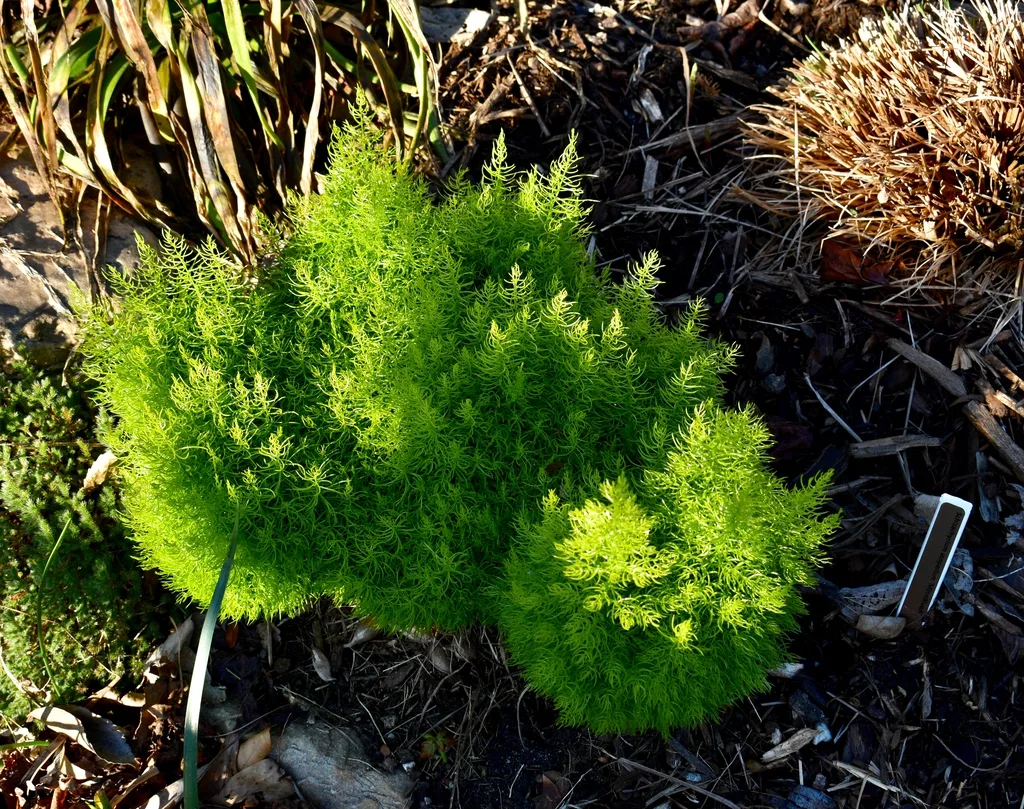
The source photograph is labeled Form ‘Graham Cracker’. It shows one cultivated appearance and does not establish the identity of an unlabeled purchase. The group profile gives ordinary dimensions of roughly 1½–3 ft (46–91 cm) high and 3–4 ft (91–122 cm) wide; a named selection can differ.
Think of a broad mass of arching shoots rather than a groundcover restricted to its nursery-pot circle. Measure how far the actual stems extend and how you will remove the pot without dragging them through other plants.
Check the label and condition before using glass
- Ask for the source-named group or cultivated formDo not substitute a generic asparagus fern label for an identified plant.
- Inspect the stem bases and rootballLook for congestion, standing water, dead material, and visible pests beneath the arching growth.
- Protect hands and contain loose berriesThe source records irritating plant parts and harmful ingestion. Handle with gloves where needed and keep ornamental material away from children and pets.
Evidence[1]
- Check the cultivated form before ordering Keep the identity and specimen checks above; compare seller information, arrival forms and delivery before ordering.
Use an inspectable pot with a clear water outlet
Choose a position with indirect light
Keep out of scorching direct sun behind glass. Leave room for stems to arch without pressing into a neighbor.
Plant at the existing soil level
Use well-drained container medium and keep the crown visible. Do not bury stems to make a tall nursery plant appear shorter.
Keep the pot removable
Check the route past glass and hardscape. If using an outer container, the inner pot must drain without sitting in retained water.
Check after watering
Water the root zone when needed and empty surplus. Observe how quickly that actual medium dries before setting a routine.
- Measure the canopy and working space Keep the form-specific outline here and compare it with usable vessel space.
Regular moisture does not mean wet soil
Water during active spring-to-autumn growth, checking the soil rather than using a fixed interval. Water less as winter growth and drying slow. Avoid wet soil and do not leave the nursery pot submerged in a decorative water reservoir.
Use gentle ordinary room ventilation without a direct fan or heating blast. Related cultivated-form guidance notes problems in very dry indoor air, but this does not establish a high-humidity enclosure requirement for the whole source-named group.
Keep the plant frost-free indoors. RHS’s advice about waiting for nights above 5°C before summer outdoor placement describes a transition condition, not an indoor growing target or permission to expose a small glass display to cold.
Reduce the arching mass while preserving a usable outline
Choose the shoot that causes the obstruction
Check its full route through the clump. Free it gently before cutting or lifting the plant.
Pinch a healthy tip or remove a complete stem
The source permits tip pinching and cutting back to soil level when needed. Use clean tools and avoid damaging adjacent emerging shoots.
Inspect the rooted plant if congestion persists
Lift the pot outside the display. Check whether roots and drainage, rather than only the canopy, are limiting care.
Move a plant that needs constant severe reduction
Use a larger pot or open arrangement when its arching habit can no longer fit the intended outline. Do not promise permanent size control from repeated clipping.
Inspect the root zone before changing humidity
| Observation | Check | Action |
|---|---|---|
| Drooping leaf-like cladodes | Root moisture, drainage, and very dry heated air. | Correct the observed stress; do not automatically close the display and saturate it. |
| Yellowing in wet soil | Water retained around the pot and root condition. | Remove surplus and inspect the roots outside glass. |
| Canopy blocks a neighbor | Width of the arching mass and reachable stem bases. | Remove selected shoots or move the pot. |
- Empty retained water around a removable pot Inspect yellowing wet-root growth while correcting the actual water route.
Compare conditions and companions
Explore more in plants
Sources and review
- Asparagus densiflorus Sprengeri Group — NC State Plant Toolbox · NC State Extension
- Asparagus densiflorus, 'Meyersii,' Foxtail Fern — Plant of the Week · University of Arkansas System Division of Agriculture Cooperative Extension Service
- Plants Grown in Containers — NC State Extension Gardener Handbook · NC State Extension
- Asparagus densiflorus — RHS Plant Profile · Royal Horticultural Society
- Sprengeri or Asparagus Fern — Aggie Horticulture · Texas A&M AgriLife Extension
- Asparagus fern, Asparagus densiflorus — Wisconsin Horticulture · University of Wisconsin–Madison Extension
- Asparagus Fern — Oklahoma State University Extension Plant ID · Oklahoma State University Extension
- WFO Plant List 2026-06 · World Flora Online
- How to Create and Care for a Terrarium · Iowa State University Extension and Outreach
- Selaginella kraussiana — NC State Plant Toolbox · NC State Extension